Coffee with Colleagues at Synergy Investments

The following blog post was submitted by David Fleming, Principal at PACE Communications Group, a marketing and PR firm that specializes in commercial real estate and retail.

cc8

“Wherever [coffee] is grown, sold, brewed, and consumed, there will be lively controversy, strong opinions, and good conversation.”
Mark Pendergrast, Uncommon Grounds: The History of Coffee and How It Transformed Our World

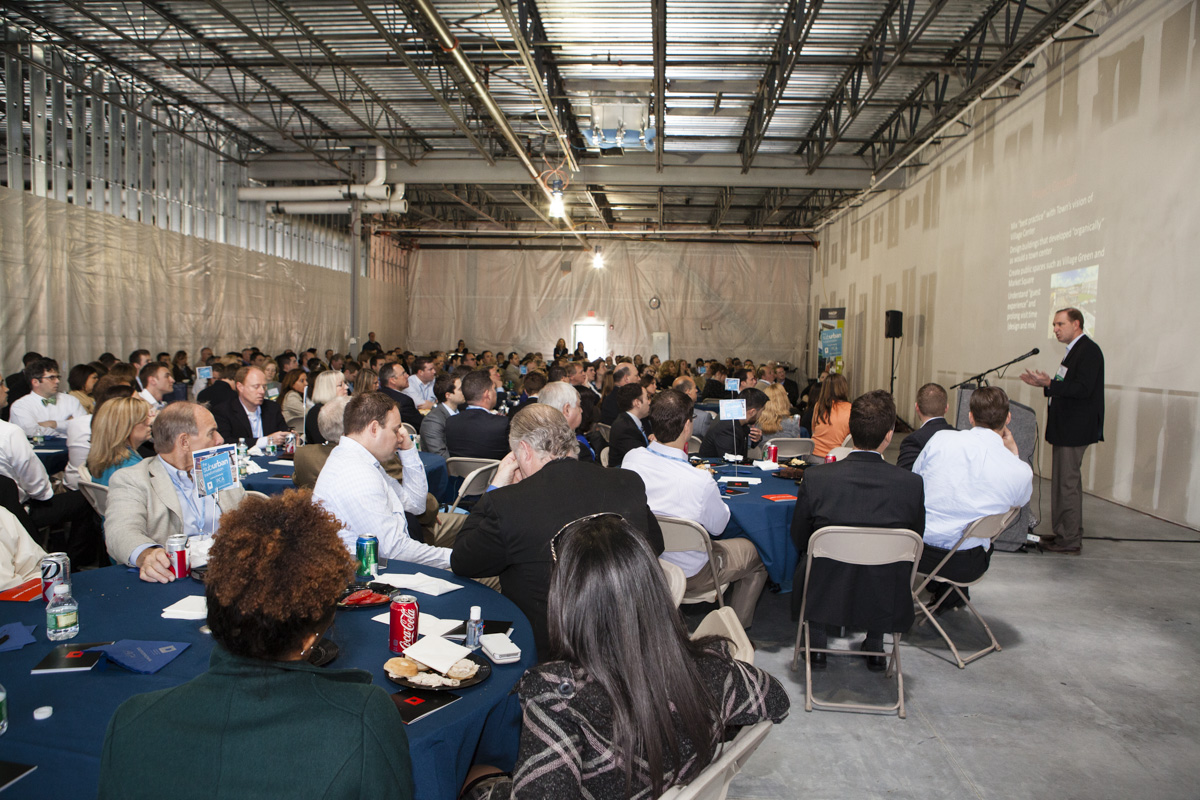
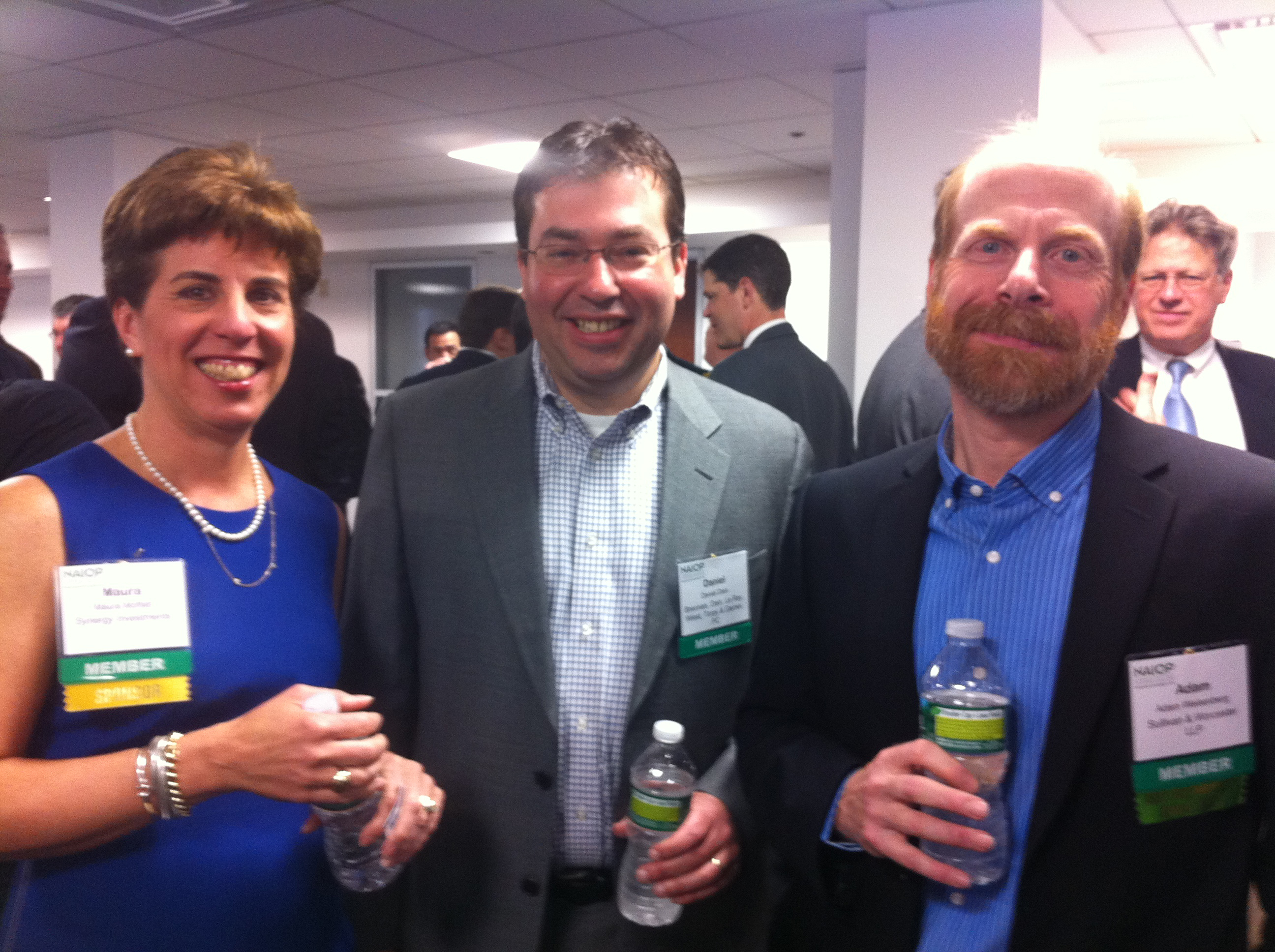
More than 100 people gathered on May 14th in Boston at Synergy Investments for NAIOP’s Coffee with Colleagues, a networking breakfast event. The sold out gathering was held at Synergy’s new corporate headquarters inside the 100 Franklin Street building, which Synergy owns. In addition to 100 Franklin, Synergy’s commercial real estate portfolio contains some of downtown Boston’s landmark buildings including 250 and 253 Summer Street, 211 Congress Street, and 185 Dartmouth Street, among others.

David Greaney, Synergy’s founder and president, kicked off the event with opening remarks touching on Boston’s favorable real estate market. After, the gathering of commercial real estate industry professionals enjoyed refreshments and engaged in lively conversation.

Steve Brodsky, Synergy’s Chief Operating Officer, stated that the event went well. “We were pleased to see the strong turnout, and it was a great networking event,” said Brodsky. “It was a terrific way to celebrate our one-year anniversary in our new space here at 100 Franklin Street, while working with NAIOP in support of the industry.”

Others commented positively about Coffee with Colleagues:

Dorrian Cohen Fragola, VP Marketing and Business Development, Janitronics: “This morning’s event was a wonderful opportunity to network, reconnect, and meet new people. Synergy has been so active in Boston recently. It was good to hear more about its plans and meet some of its people,” said Cohen Fragola. “Thanks to Synergy for hosting and to NAIOP for another successful event.”

Joel Loitherstein, P.E; Associate, Tata & Howard: “Coffee with Colleagues was well worth the trip into Boston. These events are a great way to meet new people and reestablish connections with past clients and colleagues. The atmosphere is very comfortable and you get a chance to meet senior level people at major development, legal, and consulting firms in the Boston area.”

Coming Up: Boston’s Other Waterfront

On May 22, don’t miss another exciting NAIOP event: Boston’s Other Waterfront featuring Joseph Shea, Kairos Shen, and Peter Spellios. Beyond the Seaport District, the panel will discuss the future of Boston’s waterfront from Lovejoy Wharf to East Boston, and beyond. It’s sure to be a good one!

To see other events NAIOP has in store, visit the Upcoming Events page. See you at the next great NAIOP event!

2013 Bus Tour Recap: The Suburban Transformation

The following blog post was submitted by David Fleming, Principal at PACE Communications Group, a marketing and PR firm that specializes in commercial real estate and retail.Elisif_20130501_0150

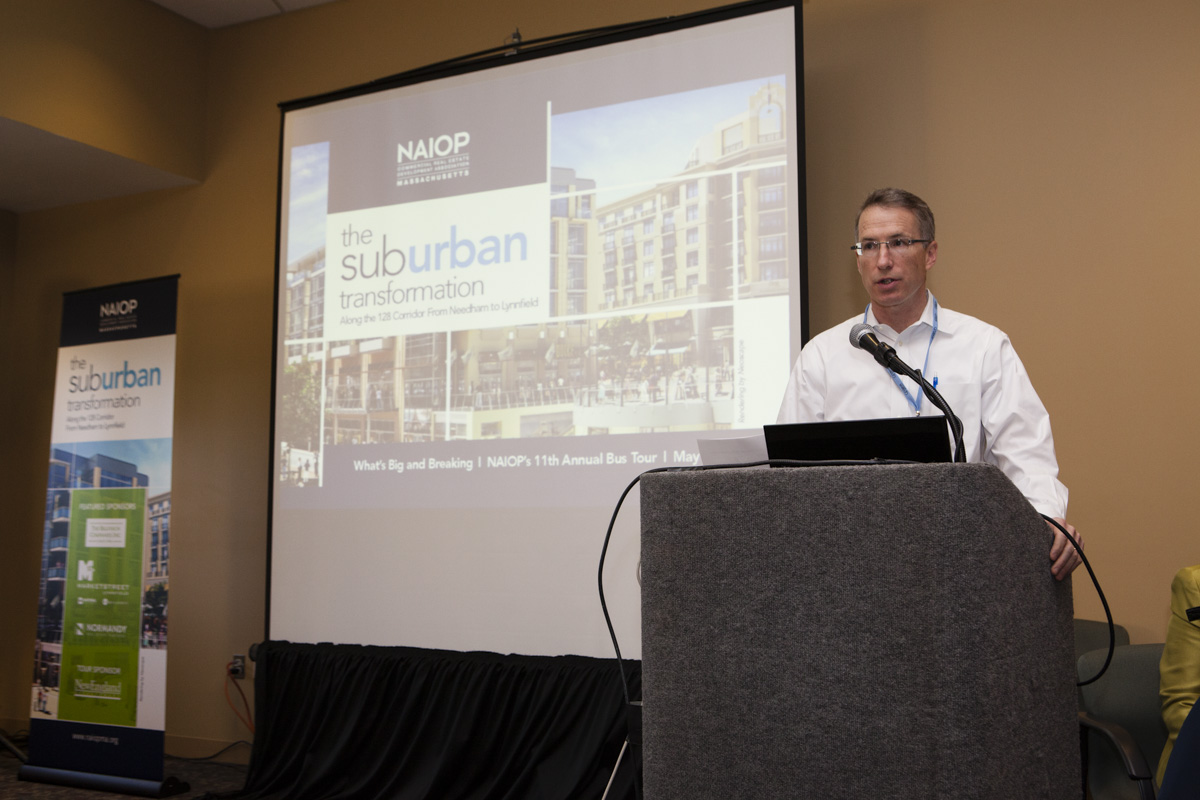
Three signs that spring has finally arrived in Boston: 1) green grass on the Esplanade, 2) the Red Sox back at Fenway Park, and 3) NAIOP MA’s Annual Bus Tour. The 11th edition of the tour took place on Wednesday as more than 250 people aboard five buses toured properties along what is suddenly one of the hottest stretches in commercial real estate in the region: the Route 128 Corridor from Needham to Lynnfield. Here’s a summary:

Elisif_20130501_0115Kickoff at Needham Crossing

  • Needham’s Economic Development Director Devra Bailin, discussed efforts to rebrand the former New England Business Center as Needham Crossing
  • Justin Krebs and Mark Roopenian described two of Normandy Real Estate Partners’ projects along the route:
    • Center 128, which will redevelop Needham’s former New England Business Center into an 825,000-square-foot “super-park,” including a Marriott Residence Inn Hotel
    • Station at Riverside, which will transform MBTA’s Riverside Station into a mixed-use development featuring 295 apartments, a 10-story 225,000 square foot office building, and a 20,000 square foot retail village
    • Mike Wilcox of The Bulfinch Companies discussed development at Needham Crossing and the branding and leasing efforts at Atrium Center. Wilcox concluded with an exciting Atrium Center video that you can see here.
    • In his market overview, Jeremy Grossman of CBRE/Grossman Retail Advisors noted the “flight to quality” among retailers, New Urbanism, the continued expansion of restaurants, the intensifying battle among grocers, and the strengthening of regional markets such as Chestnut Hill, Lynnfield, and Northborough as key trends

Elisif_20130501_0215Bus Tour Highlights

Six tour buses, escorted by members of the MA State Police, traveled along Route 128 beginning in the Needham/Newton area and ending in Lynnfield. Here are a few highlights:


Elisif_20130501_0268Lunch and Learn at MarketStreet Lynnfield

The tour stopped in Lynnfield for lunch at MarketStreet Lynnfield, a 680,000 square foot mixed-use development currently under construction. Inside a space that will become a Shoe Market store, WS Development’s Tom DeSimone and National Development’s Ted Tye shared details of the joint venture scheduled to open in August 2013.

When complete, MarketStreet Lynnfield will include 395,000 square feet of shops and restaurants, 80,000 square feet of office space, 180 residential apartments known as Arborpoint at MarketStreet, and the 9-hole King Rail Reserve golf course.

Elisif_20130501_0282Voices on Tour

I caught up with a few people on tour. Here’s what they had to say:

  • Tom DeSimone, partner, WS Development: “There’s no better way to understand real estate than to actually be there. The NAIOP Bus Tour gets you closer to the real estate by providing an introduction. Then you can go back and look at whatever may have peaked your interest.”
  • Ted Tye, managing partner, National Development: “It’s great to people out here having a nice day, getting out from behind their desks, and seeing some projects that are being built. And, it’s incredible that in 2013 that we actually have things being built.”
  • David Chilinski, co-founder and president, PCA: “The best part of the NAIOP Bus Tour is that you really get a sense of what’s happening and, importantly, what’s new in the marketplace.  We all know the tried and true properties, but the tour lets you see new projects as well as cases where people are reinventing or adding to projects. That’s the importance of this tour.”
  • Sarah Walker Weatherbee, managing director, Keller Augusta: “You get a sense of history as well as what the future holds for the Boston-area markets like the ones we saw today. And, the networking that the Bus Tour enables is unique to NAIOP—that really makes the day exceptional.”


While here, please read David’s important post below about National Development’s Roseann Sdoia, who was seriously injured in the Boston Marathon bombings. David includes a link to
Roseann’s Recovery Fund for those who wish to donate toward expenses for Roseann’s treatment and recovery.

Grim Optimism for Real Estate and the Economy

Goodwin Procter’s Real Estate Capital Markets Conference was recently held in New York City in partnership with Columbia Business School.  GP-REConferenceAn exceptional group of speakers discussed the real estate markets, investments, and the economy.

The keynote presentation was delivered by Austan Goolsbee, former chairman of President Obama’s Council of Economic Advisers, and now a Professor of Economics at the University of Chicago’s Booth School of Business. Goolsbee spoke with “grim optimism” about the US economy.  The US has the most productive work force in the world and low energy and new-energy sources will benefit our growth.  Relative to the rest of the world, our fiscal imbalance is manageable. All in all, he believes that the next six to twelve months will be a bumpy ride, but prospects in the long-run look good.

The following are a few interesting observations made during the panel discussions:

  • Demographics are playing a key role internationally, especially in the US. Effects of this will be seen in an increased demand for apartments, senior housing, and retail.
  • With accounting standards likely to change in the future, as relating to corporate leasing and ownership, more businesses will likely choose owning large amounts of their space.
  • Retail sales continue to be impacted by online competition, but retail is still a growing market. The future may move towards more hybrids that have both online and storefront locations.
  • Office space needs are dropping in terms of space requirements per new job. However, there is a sense that over time businesses will start to swing back towards a need for greater space.
  • Multifamily housing rents are back to pre-recession highs and it is likely that rents will experience slower growth going forward.
  • Record amounts of capital were raised both in the public and private markets last year. With less growth worldwide, real estate is very attractive to investors.  Investor interest is focused on yields and risk management. Where in the past, “cash is king”, now, “cash flow is king”.
  • Rates should not be rising in the short term, but that is a big risk for all asset classes. The markets could wake up to a starting spike in rates that, in hindsight, will have seemed inevitable.

Optimism: the way to start your day

This post was written by Kimberly Sherman, and originally appeared on the Nickerson PR blog, CheersLive!

On Thursday November 29, 2012, over 400 attendees gathered at the Seaport Hotel Boston for the NAIOP/SIOR Annual Market Forecast, one of the industry’s leading market forecasts. Nickerson PR was the sponsor of the much-anticipated event. “Being knowledgeable as a peer in the field, helps Nickerson PR to provide a better service to our clients – we want to be a knowledgeable business partner to every client – not just a vendor. It was very important to sponsor such an event,” said Lisa Nickerson, Principal of Nickerson PR and Board Member SIOR New England.

Barry Bluestone NAIOP.jpgBarry Bluestone, Dean, School of Public Policy &
Urban Affairs at Northeastern University

David Begelfer, CEO for NAIOP Massachusetts moderated the program. The Keynote speaker, Barry Bluestone, Dean, School of Public Policy & Urban Affairs at Northeastern University, offered an optimistic and timely economic snapshot of our local real estate market. Bluestone’s economic overview mostly centered on why we will return to a 0.2% growth rate. He outlined six things we haven’t paid enough attention to.

1. The demographic boon is over
2. The plateau in educational attainment
3. Increase in inequality
4. Globalization and outsourcing
5. Energy and environment
6. Twin deficits

In closing, Bluestone firmly stated that to avoid this path, we would need major innovation and investment for large-scale ideas. He reminded us that the good thing is the US has accomplished this before, so we should have the confidence that we can do it again.

NAIOP Panel.jpg

Some of Greater Boston’s most active real estate professionals presented an analysis of the Massachusetts commercial markets, with a special look at the office, industrial and capital markets. Panelists discussed the drivers and fundamentals behind 2012 statistics, including emerging trends in specific markets, new growth areas and a general outlook for the future. Among these market experts were:

The majority of attendees I spoke to were pleased to leave the event with a feeling of optimism. In the words of market expert panelist Petz, “Boston is hot, we are lucky to both live and work here.”

Some take-aways from NAIOP Forecast attendees:

“It’s always great to hear lots of optimism about the direction of the commercial real estate markets for 2013 and beyond. Absorption rates are increasing significantly throughout the region which bodes well for the CRE market for years to come.” Bud LaRosa, Chief Business Performance Officer, Tocci Building Companies

“It was refreshing to hear Barry Bluestone speak to overcoming the fiscal cliff and offer insight as to why there is plenty of good news ahead for the real estate market.” Merrill H. Diamond, Founding Partner of DIAMOND SINACORI, LLC and IGNITION Residential, LLC

“With 7,500 new multi-family units planned and Boston supporting the effort, it’s nice to be assured that Boston real estate is hot right now.” Markell Blount, Partner, Sparta Consulting Inc.

“I am happily surprised by the level of optimism expressed today. The last few events have been more doom and gloom, so I’ll take this news any day.” Mark Glasser, Principal, Packard Design

Strategies for Today and Predictions for Tomorrow

The following blog post was submitted by Ally Quinby, Account Executive at Solomon McCown.

NAIOP Massachusetts’ Smart Money in Real Estate event, on September 19, gathered together a distinguished panel of Boston’s real estate professionals to discuss the state of today’s market, as well as their predictions for the future.

To set the table for the event, NAIOP MA disseminated a poll to members regarding their current perceptions and future predictions. Doug Poutasse, Executive Vice President, Head of Strategy and Research at Bentall Kennedy, and moderator of the panel, leveraged the results from the poll during the discussion.

In regards to real estate investment, Jeff Furber, CEO of AEW Capital Management, listed the four qualities investors are seeking currently: Safety, Income, Control and Liquidity. Tier 1 core costal markets like Boston have been a major beneficiary of this fact due to the lack of risk associated with investing in stable regions.

Similarly, Jon Davis, CEO of The Davis Companies, believes there are many value-add opportunities in healthier cities, “Here in Boston, we are transforming neighborhoods. Take Kendall Square and the Fort Point Channel; there is so much vibrancy in these areas.”

According to one panelist, what the Boston area is lacking is supply of retail space. Despite the recent buzz around grocery-anchored retail centers, Tom DeSimone, Executive Vice President of WS Development, believes centers like this are “overplayed” and the increase in food sold outside grocery stores across the country, in retail shops like Wal-Mart, will be a problem in the future. In agreement, Mark Weld, Managing Director of Clarion Partners, said, “Distressed debt is aggregating in grocery-anchored retail centers across the country that people thought were on the path to growth.”

Looking forward, all the panelists agreed the looming effects of sequestration raise many questions for real estate professionals across the country. Despite the increased activity seen in markets like Boston, New York, San Francisco and Washington, D.C., uncertainty of this type has its effects. According to Jon Davis, “cleaning up from sequestration is the single biggest risk” we are facing today. There is no indication of whether or not Congress is going to be able to come together.

General sentiment among the panelists regarding the economic future was mild, noting there will not likely be significant improvement or dramatic decline in the state of the market.  Instead, all panelists agreed success today—and in the future—will rely heavily on partnering with the right people for leverage. Especially in times like these, what matters is one’s character and ability to execute.

Governor Patrick signs Jobs Bill into law

The “Jobs Bill” – An Act Relative to Infrastructure Investment, Enhanced Competitiveness & Economic Growth in the Commonwealth – was signed into law August 7, 2012 by Governor Patrick.

As I was quoted in the Governor’s press release: “This bill is the result of a close collaborative effort by the House, Senate, Governor’s economic team, and the business community. Although the Commonwealth has fared better than most of the country, this wide-ranging bill creates a welcoming environment for innovation and growth. Combined with the ongoing, system-wide regulatory review process, Massachusetts continues to be attractive for business expansion.”

A summary of the various sections of the bill is available for review.  NAIOP is most pleased with the extension of the Permit Extension Act (Section 173 of Chapter 240 of the Acts of 2010).  Permits in effect or existence at any time between August 15, 2008  and August 15, 2012 will be extended by a total of 4 years (an addition of two years to the previous extension and four years for permits issued during the past two years). The extension will preserve state and local permitting decisions, allowing permitted projects to move forward without costly and time consuming delays to reissue permits. This impacts  all properties: commercial, housing, business expansions, universities, hospitals, and infrastructure projects.

In addition, the bill creates a new Local Infrastructure Development Program (Chapter 23L) that gives municipalities another tool for leveraging private funding to finance infrastructure improvements that are needed to support economic growth. It would fund infrastructure for homeowners and commercial projects without using local or state funds.  This is strictly a local municipal option to assist property owners who desire to finance infrastructure (e.g. roads, water, sewer, alternative energy, etc.)  The MassDevelopment-issued bonds would be secured and paid back by betterment liens on the benefited real estate.

Another win is the expansion of the successful I-cubed (Infrastructure Investment Incentive) program, which increases the number of projects per community from two to three. It also increases the available funding for the program from $250 million to $325 million.  It will add parking garages to the definition of public infrastructure improvements, and will include the taxes generated from construction jobs and purchases as part of the calculation for new state tax revenues.  I-cubed, which originally passed in 2006, was designed to finance significant new public infrastructure improvements necessary to support major new private development.

The Act will also streamline the current District Improvement Financing (DIF) program, by eliminating the required EACC review of DIF districts and development plans, which will make the program more accessible to cities and towns.

Although the Governor did veto the Brownfields tax credit extension, we are confident that the internal review of this program will result in its extension prior to its expiration a year from now.

This fall, NAIOP will be presenting a special Governmental Affairs educational seminar on this important economic development bill, as well as an update on the many regulatory changes occurring throughout the Administration’s various Departments. Keep an eye out for details!

BIDS: Taxation Without Representation

The new “Jobs bill” recently passed by the Massachusetts House and Senate, and now awaiting the Governor’s signature, has a lot of “goodies” for economic development. However, there is a little surprise for businesses who are in, or might be in, a Business Improvement District (BID).

Currently, the BID law does not require every business in the district to contribute to the BID. However, with the new law, if 60% of the businesses in the district vote to form a BID, every business will be required to pay.

What this might mean is that existing BIDs (e.g. Downtown Crossing in Boston) and future proposed BIDs (e.g. Rose Fitzgerald Kennedy Greenway) will be able to force commercial landlords to pay into these districts.  If the city can convince/coerce 60% of the owners of a district to accept this, the others will have no say.  This can also lead to some interesting “Gerrymandering”, creating boundaries to capture large properties. Owners that may be further away from the core area will be obligated to new property tax surcharges to fund maintenance, security, and marketing initiatives for areas not necessarily benefiting these outlier properties.

That sounds like the situation with the current Downtown Crossing BID, and is part of the impetus behind this legislative action.  Some property owners further away from Washington Street, decided not to participate, to the consternation of the city.

What we may now see is new taxation for new services benefiting some, but paid for by many more.

Out front on climate change

This article appeared in the Summer 2012 issue of Commonwealth Magazine.

Massinc’s recent research report, Rising to the Challenge: Assessing the Massachusetts Response to Climate Change, was billed as “the first independent assessment of state action on climate change.” We, at NAIOP Massachusetts, believe that it missed an opportunity to provide a more complete, non-partisan account. Although it is acceptable to inquire into the progress that the state is making to reduce greenhouse gas emissions as required by statute, this report is by no means a sufficient analysis of the issue.

The Massachusetts Global Warming Solutions Act, passed in 2008, required the state’s secretary of energy and environmental affairs to set a greenhouse gas reduction goal of between 18 and 25 percent for the year 2020 (one of the most ambitious in the nation). Ian Bowles, who was the secretary at the time, chose to set that target at 25 percent. The secretary was required to submit an action plan to the Legislature that could assist in meeting this goal; however, there was no requirement that the plan be followed or that other means could not be used to achieve this target.

We have no argument with the statute’s basic premise that climate change is a serious global problem and there need to be international and national plans in place to reduce greenhouse gas emissions in a timely manner. But we feel that questions need to be raised regarding the practical challenges of emissions reductions—where and how they can best be achieved, at what cost, and over what period of time?

Climate change is not a local issue. One state’s reduction in greenhouse gas emissions will have little impact on how that state will be affected by global climate change. Any other expectation is un­realistic. However, pursuing policies that could unintentionally hinder growth will most definitely put the Commonwealth at a competitive disadvantage when it comes to attracting or retaining jobs.

MassINC’s stated goal was to uncover the facts and reach independent conclusions based on evidence. Its approach was developed from the perspective that the state has committed to achieving ambitious greenhouse gas reduction goals, and that there should be a dialogue about the best way to do so. Unfortunately, the report comes up somewhat short. Rather than offering a dialogue, the report simply checks off which measures in the plan have or have not been completed to date. It accepts these recommended measures as the only path to achieving the required reductions and lacks any qualitative critique of these mitigation methods.

A comprehensive assessment of this issue would include a serious discussion of the economic and financial impacts that will result from recommendations of the state plan. This includes a cost/benefit analysis of any presumed impacts on businesses and residents. However, the only mention of cost impact in MassINC’s report is general statements from environmental advocacy groups indicating that these measures are fully balanced by the savings they will produce. The groups also imply that the costs would be less detrimental as valued against the cost of building a new power plant, which is a very unsuitable standard by which to judge individual policies. In addition, many of the policies outlined in the plan would have dramatic impacts on the economic development goals of the Commonwealth and should be questioned accordingly

The report is also lacking more substantive examination of the controversial decision to fund many of the alternative energy and efficiency programs with increased electricity costs for ratepayers. What are the impacts of the plan’s recommendations? What are the associated costs to those existing businesses that are dependent on high energy consumption? Are these investments the right ones for the Commonwealth? Does the growth of new jobs created by the grants and incentives justify the jobs lost due to high energy costs?  Besides the anecdotal evidence, what are the firm data regarding these investments and the return in terms of jobs, tax revenue, and economic development?

Also overlooked is the question of whether the aggressive greenhouse gas target for Massachusetts will significantly alter the projected impacts of climate change in the Commonwealth. The report describes projected climate change threats that include a rise in sea level, more frequent severe storms, and temperature spikes in the summers. If the Commonwealth is successful in meeting (and even exceeding) its greenhouse gas reductions at a substantial cost to the public, does anyone credibly believe such reductions would meaningfully reduce potential climate change impacts?

The Massachusetts Department of Energy Resources needs to be more open and transparent with its decisions to pursue mitigation plans. These should be grounded in sound economic cost-benefit analyses using data from its regulated industry stakeholders. Advancing policies without reliable data and analysis of their impact could cause the state to make decisions that have unintended negative consequences on our future economic growth.

Critical first steps would be to educate the marketplace, provide additional support to make these methods financially attractive, and recognize that the state of the economy is an important determinant of when to require greater efficiency measures. We should be researching whether there are more cost effective ways to get to the appropriate goals before we accept and mandate the most expensive solutions.

Increased energy efficiency in new development and existing buildings is a prime target for achieving the 2020 target goals. But it is important to keep in mind that not all markets around the Common­wealth are created equal. Statewide energy mandates for all building types will create a disincentive to develop new properties in areas where the markets cannot absorb the increased costs. Unfortunately, many of the “one-size-fits-all” government proposals do not account for varied building types or tenant energy requirements, and they rarely take into account actual investment/payback ratios.

The more stringent energy efficiency requirements disregard the mismatches between who pays the cost of an option (owner) and who gains the benefit (tenant), making it difficult to justify economically the investment in the first place. There is also too much emphasis being put on regulating the energy efficiency of the building shell. Much of a building’s energy use actually falls within the tenant spaces and therefore is not directly influenced by mandates for increased energy code efficiency. However, with appropriately scaled tax incentives, owners could receive financial benefits for the upfront investment and tenants could see reductions in their operating costs.

On a national basis, rather than using regulatory mandates, President Obama has announced the Better Buildings Initiative, an innovative economic development program using tax incentives to make existing buildings more energy efficient through retrofit projects. The amount of the incentive would grow with increased energy savings, encouraging ambitious projects and also rewarding more moderate retrofits that achieve meaningful levels of energy savings.

Since Massachusetts has among the highest energy costs in the nation, it makes good business sense to reduce a property’s controllable operating costs, especially if it can help to also reduce greenhouse gas emissions. Becoming more energy efficient is an important consideration in today’s commercial real estate industry. Many developers, owners, and tenants understand that it makes economic sense to find ways to increase initial capital investments for energy efficient technology and design elements that will result in a reasonable payback of energy savings.

As a result, the market is becoming more responsive to the need for energy efficiency, especially with volatility in energy costs, and a more educated and demanding tenant base. We have already seen that, without regulatory requirements, more buildings are now built as LEED-certified “green buildings.” Before the state moves toward aggressive mandates, policy makers should consider incentive-based solutions. Doing so could leverage and support private investments in order to help businesses reach higher levels of energy efficiency. MassINC should follow-up its report with a more critical look at the existing, proposed mitigation measures, as well as other alternatives, which could lead the Commonwealth down the right path to our greenhouse gas reduction goals.

Getting Real in Affordable Housing

The following blog post was submitted by Anne Baker, Account Executive at Solomon McCown.


It’s all about perception versus reality.

That was the takeaway message from NAIOP’s Affordable Housing: Challenges and Initiatives panel on May 23.  The panel included Howard Cohen, Chief Executive Officer at Beacon Communities; Lawrence Curtis, President at WinnDevelopment; Tony Fracasso, Senior Vice President at MassDevelopment; Bart Mitchell, President & CEO at The Community Builders, Inc.; Jeanne Pinado, Chief Executive Officer at Madison Park Development Corporation; and was moderated by Solomon McCown CEO Helene Solomon.

The meeting was kicked off by Aaron Gornstein, the newly appointed undersecretary for the Department of Housing and Community Development (DHCD).   Gornstein outlined his plans for DHCD, emphasizing that the agency is planning ahead for growth in the state.  Streamlining the permitting process, giving support to promising communities, marketing the opportunities available to developers and building needed infrastructure are all essential elements of Gornstein’s affordable housing plans.

But while some may only see affordable housing as a social issue, Gornstein was clear that the high cost of living in Massachusetts has serious long-term ramifications for whether businesses decide to locate here and that the construction of affordable housing creates needed jobs.

False perceptions were also a constant theme throughout the panel discussion. The public is not aware that family homelessness is a relatively recent problem and that it’s easily solved through the construction of affordable housing, Pinado said.  Mitchell and Fracasso both emphasized the creative financing options that are available to affordable housing developers who are looking for them.

Curtis argued passionately that while the construction of affordable housing is important, it alone can solve the housing gap in Massachusetts; we must work together for the preservation of existing low-income and affordable housing.  Cohen also noted that while many upscale communities fight affordable housing developments out of a fear for negative impacts on their school systems, there is little evidence to suggest that is reality. It’s all about overcoming how local communities often approach affordable housing and making the case that inclusion will benefit us all.

View video of Affordable Housing panelists.

NAIOP Bus Tour: 10 Facts Learned on the Trial Run

The following blog post was submitted by Duncan Gratton, Senior Managing Director, Principal at Cassidy Turley FHO.

This year marks the 10th Anniversary of NAIOP’s Bus Tour, and as the Vice President of the Bus Tour Committee, I had a hand in planning and designing it. The 2012 Bus Tour, What’s Big and Breaking in Greater Boston, is a fast-paced live market update on some of the most dynamic markets in the area, including Boston’s Seaport, Fenway, Longwood and Cambridge.

The actual date of the Bus Tour is May 2, but this week – along with Bus Tour Captains and NAIOP staff – I went on a dry run of the route. We saw a lot of projects breaking ground and learned several interesting facts from the knowledgeable Bus Tour Captains! Here are the ten I found most interesting:

  1. The largest private construction project in the US is located at Fan Pier. The Vertex buildings are 1,100,000 SF and $900,000,000!
  2. Three of the largest academic/medical clusters in the US are located in Boston. They are:MGH/Partners

    Longwood Medical/Harvard

    Boston Medical Center/Boston University

  3. Kendall Square in Cambridge was supposed to be the original site of NASA. After JFK was assassinated, Lyndon Johnson became President and being from Texas, he chose Houston as the new location.
  4. Boston University is one of the largest landlords in Back Bay/Fenway. They control over 1,000,000 SF of commercial and non-academic real estate.
  5. There are three new life science buildings under construction in Kendall Square (Pfizer, Novartis and Broad Institute) and two new office buildings (Biogen Idec). All are 100% leased.
  6. Rents in Kendall Square and the Seaport District have jumped over 10% in the last 12 months.
  7. New apartment construction is booming – at least six new projects are underway or about to start in Boston!
  8. New Balance has announced plans for four new buildings at Brighton Landing, including a new 250,000 SF world headquarters building. In addition, they are planning a 345,000 SF sports facility that will include a hockey rink and track.
  9. Harvard is constructing an ‘Innovation Lab’ in the former WGBH buildings on Western Avenue in Allston.
  10. Boston University has announced that construction will commence this summer on a new lacrosse stadium on Babcock Street, thanks in part to a $3,000,000 donation from New Balance.

I hope you will join us on May 2 to learn more about What’s Big and Breaking in Greater Boston. Get a sneak peek of what’s in store.