Patience for a 1,000 Foot Tower

In a recent BBJ article by Thomas Grillo, there seems to be some interest from the BRA to renew its search for a developer of the city-owned Winthrop Street Garage site on Devonshire Street between Winthrop Square and Federal Street. The previous proposal was to build a 1,000-foot tower with 1.3 million square feet of office space on the approximately one acre parcel.

It’s always exciting for a city to talk about the prospects of having the tallest tower in the city built. However, historically, this city sometimes lacks the patience to allow the marketplace to support the new venture.  It is difficult enough to build an office building a quarter of the size of this dream project without substantial pre-leasing at rents that justify the expense of constructing a tower. A delay in development does not equate with a lack of expertise or, even, capital. It just means that there are economic cycles that affect these decisions. To ignore market demand would be at the owner’s financial peril.

If we want to attract serious interest from developers in this site, the BRA and the new Mayor will have to understand that giving a permit to build a project of this magnitude will require the patience of Job!

The Seaport’s Time Has Come

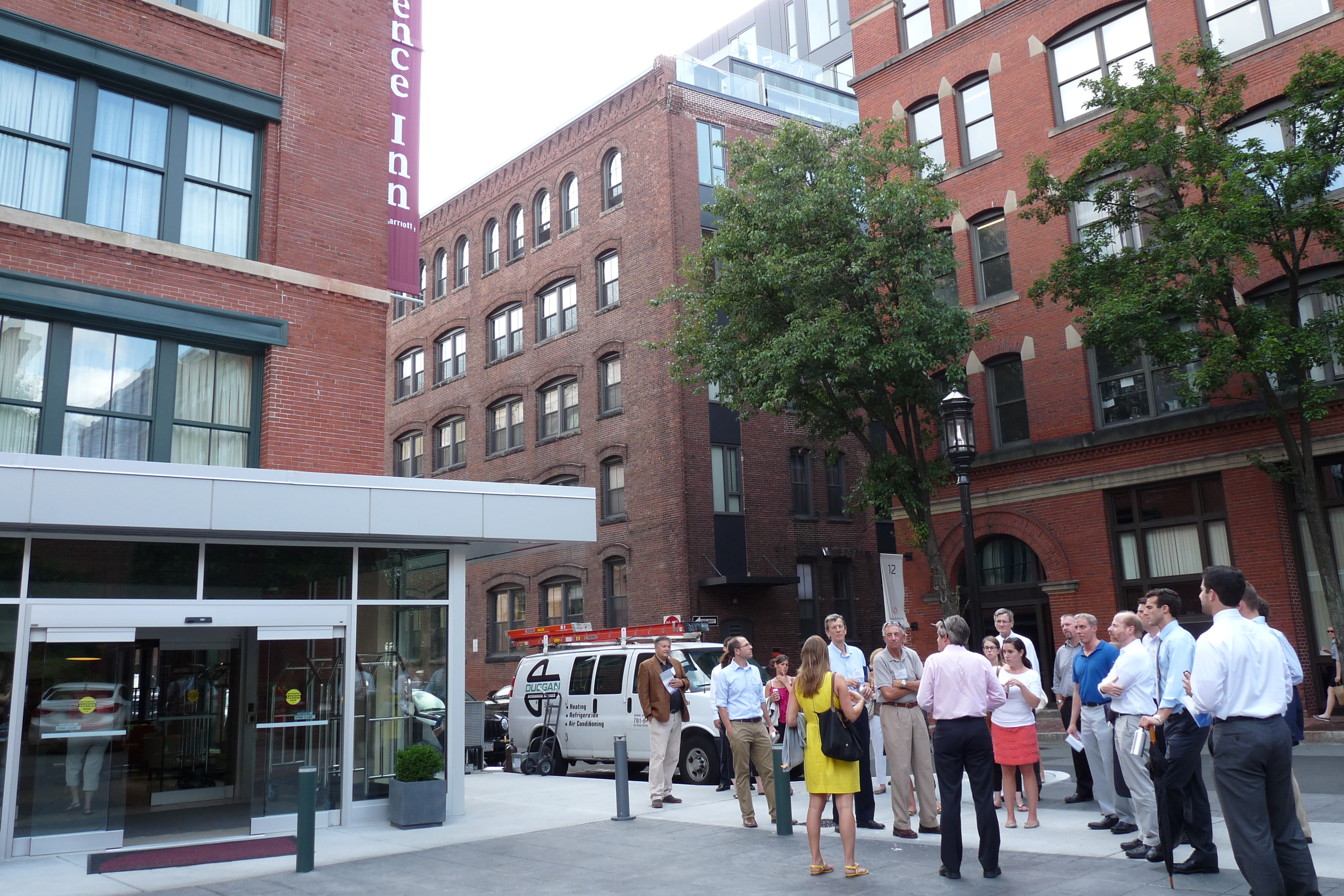
P1090057For many years, the transformation of the Boston Seaport District into a vibrant mixed-use market seemed to always be decades away. For those of us who participated in the NAIOP Seaport Walking Tour, we know that this massive area across Fort Point Channel is finally living up to the hype.

David Manfredi, Principal at Elkus Manfredi, began the program by describing the development over the last 10 years, which includes 2.3 mm sq. ft. of office, 750 new residences, 1,700 hotel rooms, 40 restaurants & cafes, 3 acres of parks, and the ICA and the convention center. This transformation was enabled, in part, by the massive public sector investment in infrastructure and the success of the pioneering development, including the Federal Court House and the Boston Convention and Exhibition Center.

000_0007
Anyone who has been down by the waterfront recently knows there is an enormous amount of construction currently underway, including another 1.8 mm sq. ft. of office, 1,100 apartments, 120 hotel rooms, 30k sq. ft. of retail and many more restaurants, and .5 acre of park space. Highlights include:

• Residences at 399 Congress
• Watermark Seaport apartments
• Boston Wharf Tower apartments
• 411 D Street apartments
• Pier 4 Apartments
• Waterside Place mixed use
• Marriott Residence Inn
• A Loft & Element Hotels
• Tavern Rd, Blue Dragon restaurants
• Bee’s Knees store
• One Channel Center (State Street Bank)
• Block L1 Seaport Sq. (Price Waterhouse)
• 49, 51 and 63 Melcher Street offices
• Vertex at Fan Pier
• Channel Center park
• Q park
• District Hall Innovation Center

Upcoming construction includes yet another 1.1 mm sq. ft. of office, 700 residences, 750 hotel rooms, 300k sq. ft. of retail and many more restaurants, as well as an expansion of the BCEC.

Thousands of new employees will be working in this district, with a likely significant number choosing to live in the area, and all of them spending at least some time in the many restaurants and shops along the waterfront. The need for diversity, options and vitality in this mixed-use area is clear. There is probably more happening in the Seaport District right now than in any other area in Massachusetts (or in any other major metropolitan area across the country, for that matter), and it doesn’t look like it will be slowing down anytime soon.

View photos from the event.

State Adopts New Energy Code

On Tuesday, the Board of Building Regulations & Standards (BBRS) voted to adopt the latest version of the International Energy Conservation Code (IECC), making Massachusetts one of the first states in the nation to have it take effect statewide. This change represents a 20% increase in energy efficiency over the current statewide energy code. Under the Green Communities Act, the Massachusetts state energy code must be updated within one year of any revision to the IECC, so there was a statutory requirement to adopt this code.

The IECC is widely recognized as one of the most energy efficient codes. There is no question there are significant costs and design impacts associated with this code change. The IECC 2012 is approximately equal to the energy efficiency requirements of the stretch energy code, now in place in 131 communities in Massachusetts. Because of the Green Communities Act, Massachusetts will continually be updating its energy code to ensure it has the most energy efficient requirements in the nation.

Yesterday, the Legislature held a hearing on several bills addressing the concept of local option codes. NAIOP strongly opposes such codes, including the stretch energy code. Given that Massachusetts is required to have a very aggressive and energy efficient statewide code, NAIOP does not believe there is a need for a stretch energy code that would go beyond the latest version of the IECC. NAIOP testified in support of legislation that would ensure the IECC would be the energy code for all communities in Massachusetts. It would create one uniform, statewide energy code. By discontinuing the use of two or more energy codes for the state, it eliminates confusion for local building inspectors who are responsible for safely enforcing such codes. The legislation also clarifies that communities could be designated as Green Communities, and eligible for the grants associated with such a designation, by adopting this code. Most importantly, rather than having different requirements in different communities, it puts all communities on a level playing field – helping to ensure the Commonwealth’s competitiveness.

NAIOP will be hosting a special program on the energy code changes later this year and we will continue to push for one, statewide energy code.

Bullet Trains for Boston?

photo
It’s an interesting time to think about investments in infrastructure, as the state legislature’s major transportation bill is now being finalized. As I experience Japan’s modern, expansive train system, I wonder what a bold transit plan for our Commonwealth, and the greater region, could do for our economic future?

For example, imagine a “bullet” train that travels, at least, 150 miles/hour (certainly, a far cry from our aging T fleet.) After years of hunting for an economic solution to our western region, what could a 30 minute commute between Boston and Springfield mean? Talk about an economic development engine that could also open up affordable housing alternatives!

Konnichiwa from Tokyo – Low Vacancy Rates & New Development

TOKYO_2013

I came to Tokyo expecting to find an aging office stock with little new construction and extremely high vacancy rates. I am surprised to report that not only are there magnificently designed, new, mixed-use projects, especially in the Shiodome area, vacancies are at levels that would make us envious. It turns out that vacancy rates in the 7% range (including the older stock) are considered dangerously high. Historically, rates have been under 4% in the Tokyo prime markets, only rising in response to major global impacts like the “dot com bubble” or the recent recession started by the U.S. subprime mortgage crisis. Curiously, real rents have not grown that much. With vacancies like this in Boston, rents would be spiking. Clearly, it’s a different economy!

Coffee with Colleagues at Synergy Investments

The following blog post was submitted by David Fleming, Principal at PACE Communications Group, a marketing and PR firm that specializes in commercial real estate and retail.

cc8

“Wherever [coffee] is grown, sold, brewed, and consumed, there will be lively controversy, strong opinions, and good conversation.”
Mark Pendergrast, Uncommon Grounds: The History of Coffee and How It Transformed Our World

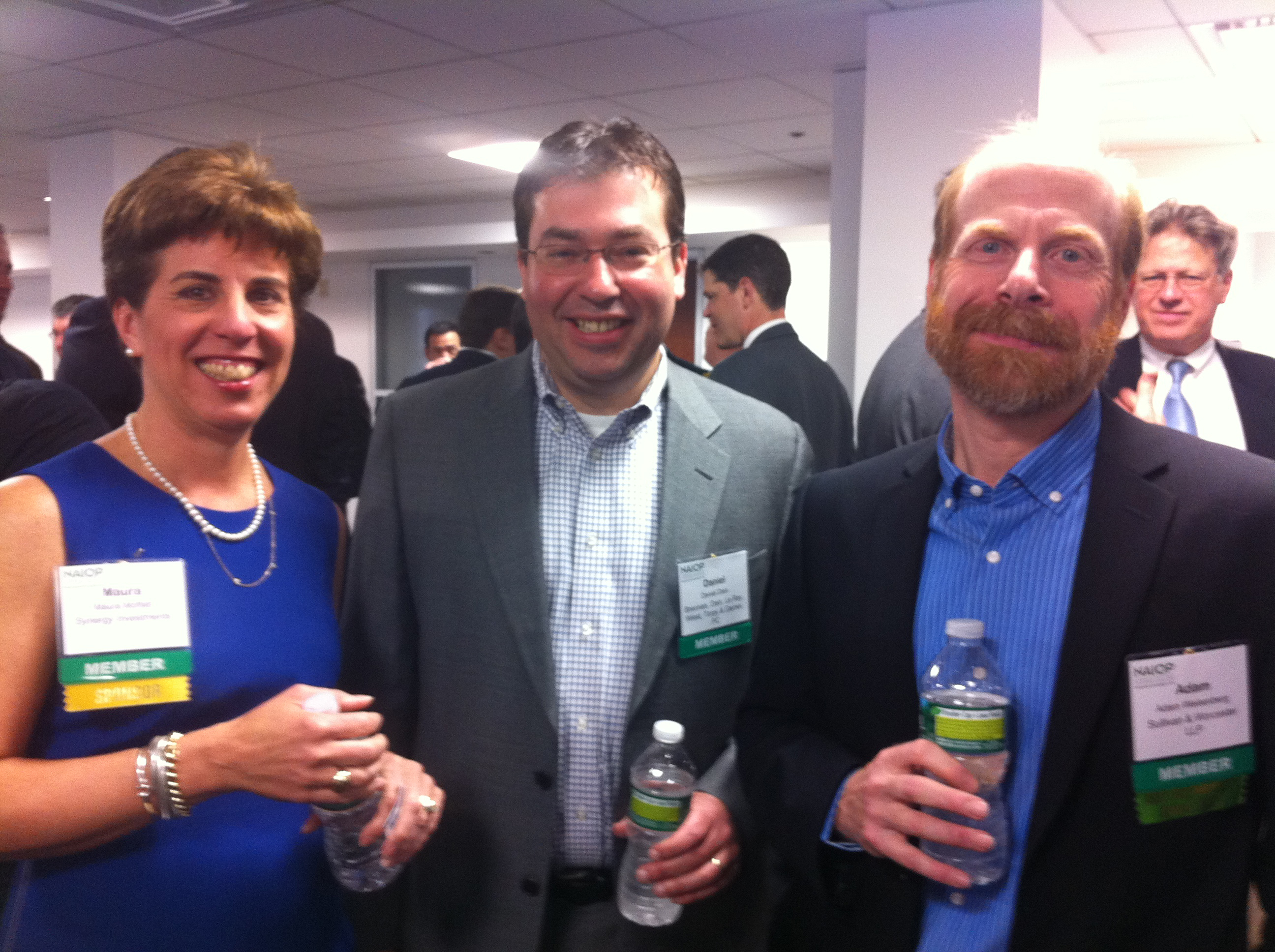
More than 100 people gathered on May 14th in Boston at Synergy Investments for NAIOP’s Coffee with Colleagues, a networking breakfast event. The sold out gathering was held at Synergy’s new corporate headquarters inside the 100 Franklin Street building, which Synergy owns. In addition to 100 Franklin, Synergy’s commercial real estate portfolio contains some of downtown Boston’s landmark buildings including 250 and 253 Summer Street, 211 Congress Street, and 185 Dartmouth Street, among others.

David Greaney, Synergy’s founder and president, kicked off the event with opening remarks touching on Boston’s favorable real estate market. After, the gathering of commercial real estate industry professionals enjoyed refreshments and engaged in lively conversation.

Steve Brodsky, Synergy’s Chief Operating Officer, stated that the event went well. “We were pleased to see the strong turnout, and it was a great networking event,” said Brodsky. “It was a terrific way to celebrate our one-year anniversary in our new space here at 100 Franklin Street, while working with NAIOP in support of the industry.”

Others commented positively about Coffee with Colleagues:

Dorrian Cohen Fragola, VP Marketing and Business Development, Janitronics: “This morning’s event was a wonderful opportunity to network, reconnect, and meet new people. Synergy has been so active in Boston recently. It was good to hear more about its plans and meet some of its people,” said Cohen Fragola. “Thanks to Synergy for hosting and to NAIOP for another successful event.”

Joel Loitherstein, P.E; Associate, Tata & Howard: “Coffee with Colleagues was well worth the trip into Boston. These events are a great way to meet new people and reestablish connections with past clients and colleagues. The atmosphere is very comfortable and you get a chance to meet senior level people at major development, legal, and consulting firms in the Boston area.”

Coming Up: Boston’s Other Waterfront

On May 22, don’t miss another exciting NAIOP event: Boston’s Other Waterfront featuring Joseph Shea, Kairos Shen, and Peter Spellios. Beyond the Seaport District, the panel will discuss the future of Boston’s waterfront from Lovejoy Wharf to East Boston, and beyond. It’s sure to be a good one!

To see other events NAIOP has in store, visit the Upcoming Events page. See you at the next great NAIOP event!

Where Did All the Parking Go?


The city-owned Winthrop Square Parking Garage, at 240 Devonshire Street, recently closed due to serious structural problems. Built in the 1960s, this Boston garage accommodated 550 cars at discounted rates from the much higher priced private facilities.

This now further exacerbates the commuter parking problem, already destabilized by the continuing loss of surface parking spaces due to the heated development activities in the Seaport area. Employers may soon start to hear the complaints, as workers begin to personally absorb these increased costs.

The “dirty secret” is that the only reason the Financial District’s parking freeze has worked for so long was that there was a large surplus of low-cost parking nearby.  The same goes for the Seaport’s parking freeze.  As more buildings eat up the surface lots, fewer spaces will remain – as demand increases substantially.

Commercial parking freezes are an ineffective means of providing cleaner air, especially when they are targeted exclusively at a particular municipality.  An unintentional result of a parking freeze is its negative effect on economic development, limiting the ability of new businesses to create jobs, existing businesses to expand, and leading, in many cases, to shifting growth to areas without such restrictions.

Maybe now is the time to rethink this outdated method of controlling auto emissions.


2013 Bus Tour Recap: The Suburban Transformation

The following blog post was submitted by David Fleming, Principal at PACE Communications Group, a marketing and PR firm that specializes in commercial real estate and retail.Elisif_20130501_0150

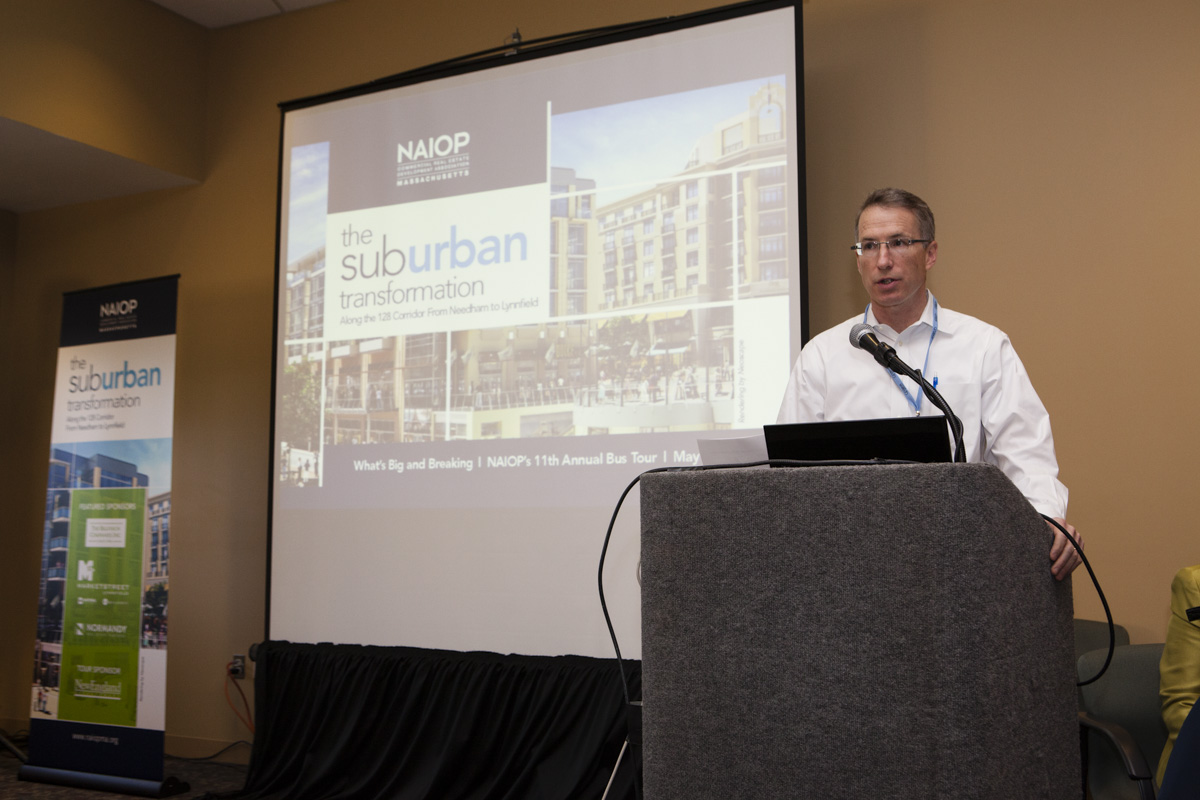
Three signs that spring has finally arrived in Boston: 1) green grass on the Esplanade, 2) the Red Sox back at Fenway Park, and 3) NAIOP MA’s Annual Bus Tour. The 11th edition of the tour took place on Wednesday as more than 250 people aboard five buses toured properties along what is suddenly one of the hottest stretches in commercial real estate in the region: the Route 128 Corridor from Needham to Lynnfield. Here’s a summary:

Elisif_20130501_0115Kickoff at Needham Crossing

  • Needham’s Economic Development Director Devra Bailin, discussed efforts to rebrand the former New England Business Center as Needham Crossing
  • Justin Krebs and Mark Roopenian described two of Normandy Real Estate Partners’ projects along the route:
    • Center 128, which will redevelop Needham’s former New England Business Center into an 825,000-square-foot “super-park,” including a Marriott Residence Inn Hotel
    • Station at Riverside, which will transform MBTA’s Riverside Station into a mixed-use development featuring 295 apartments, a 10-story 225,000 square foot office building, and a 20,000 square foot retail village
    • Mike Wilcox of The Bulfinch Companies discussed development at Needham Crossing and the branding and leasing efforts at Atrium Center. Wilcox concluded with an exciting Atrium Center video that you can see here.
    • In his market overview, Jeremy Grossman of CBRE/Grossman Retail Advisors noted the “flight to quality” among retailers, New Urbanism, the continued expansion of restaurants, the intensifying battle among grocers, and the strengthening of regional markets such as Chestnut Hill, Lynnfield, and Northborough as key trends

Elisif_20130501_0215Bus Tour Highlights

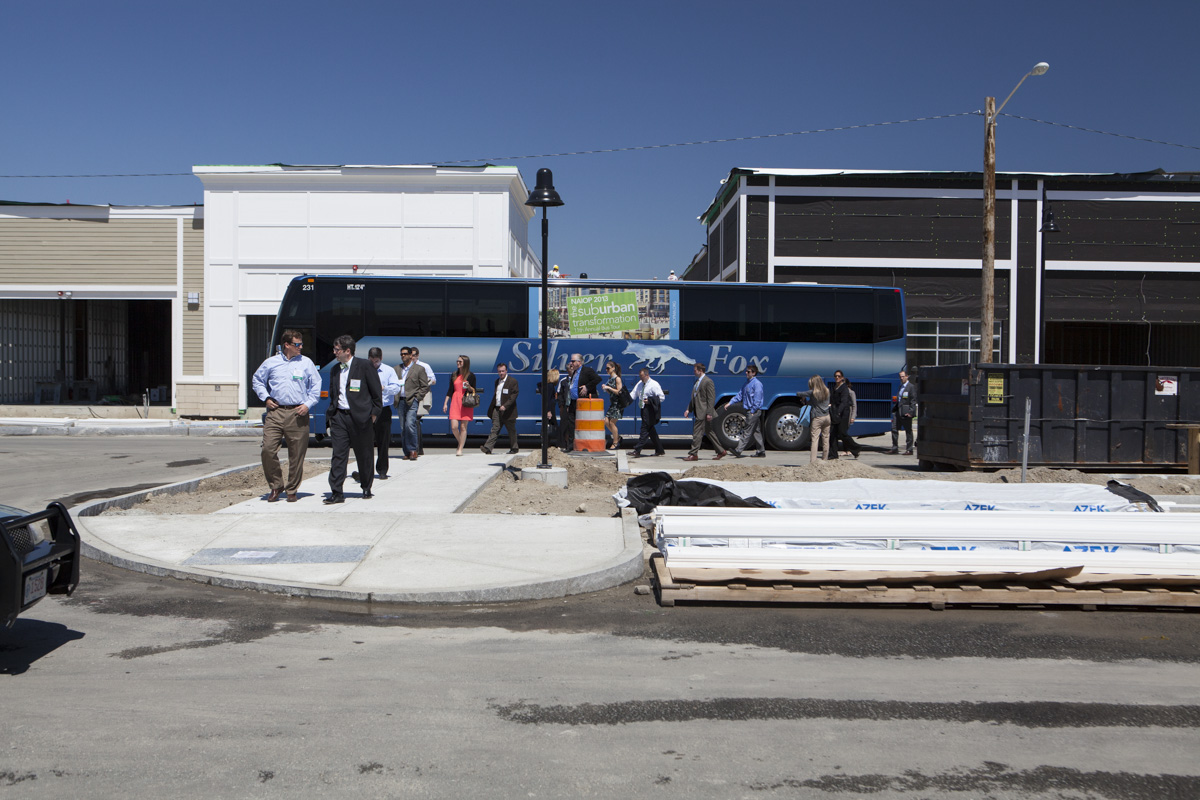
Six tour buses, escorted by members of the MA State Police, traveled along Route 128 beginning in the Needham/Newton area and ending in Lynnfield. Here are a few highlights:


Elisif_20130501_0268Lunch and Learn at MarketStreet Lynnfield

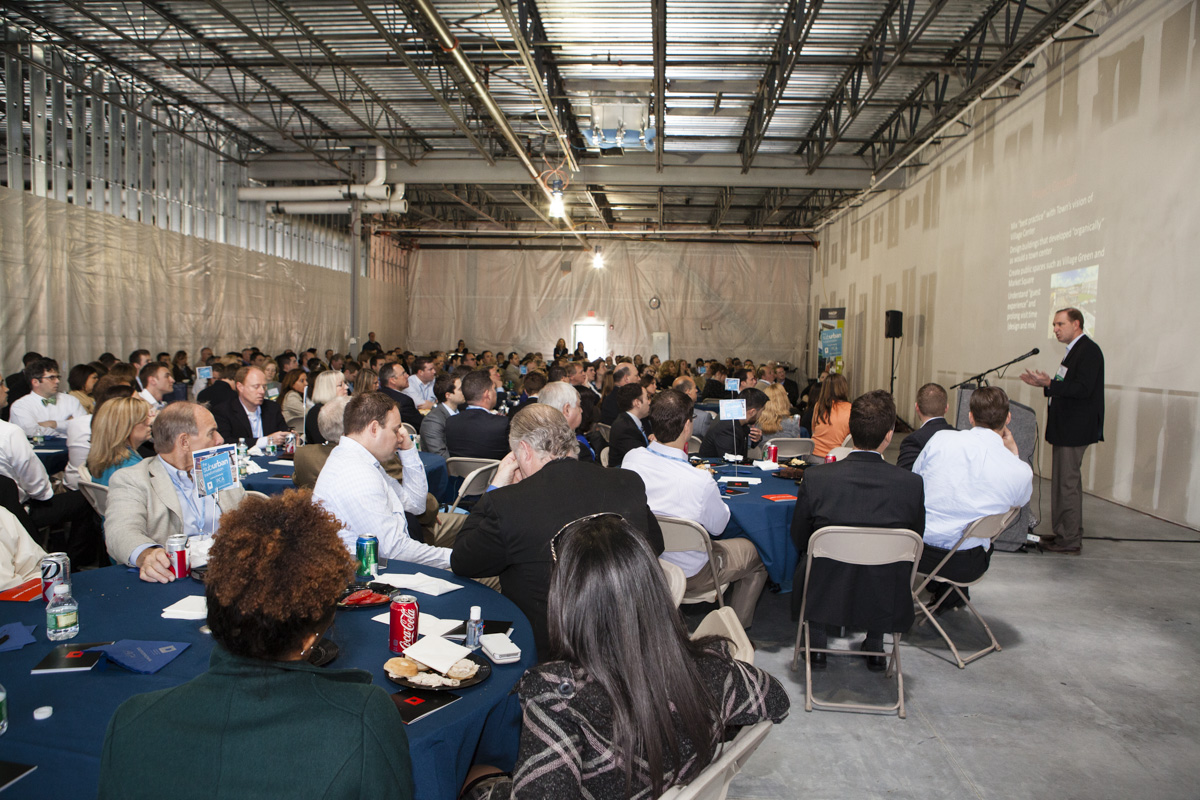
The tour stopped in Lynnfield for lunch at MarketStreet Lynnfield, a 680,000 square foot mixed-use development currently under construction. Inside a space that will become a Shoe Market store, WS Development’s Tom DeSimone and National Development’s Ted Tye shared details of the joint venture scheduled to open in August 2013.

When complete, MarketStreet Lynnfield will include 395,000 square feet of shops and restaurants, 80,000 square feet of office space, 180 residential apartments known as Arborpoint at MarketStreet, and the 9-hole King Rail Reserve golf course.

Elisif_20130501_0282Voices on Tour

I caught up with a few people on tour. Here’s what they had to say:

  • Tom DeSimone, partner, WS Development: “There’s no better way to understand real estate than to actually be there. The NAIOP Bus Tour gets you closer to the real estate by providing an introduction. Then you can go back and look at whatever may have peaked your interest.”
  • Ted Tye, managing partner, National Development: “It’s great to people out here having a nice day, getting out from behind their desks, and seeing some projects that are being built. And, it’s incredible that in 2013 that we actually have things being built.”
  • David Chilinski, co-founder and president, PCA: “The best part of the NAIOP Bus Tour is that you really get a sense of what’s happening and, importantly, what’s new in the marketplace.  We all know the tried and true properties, but the tour lets you see new projects as well as cases where people are reinventing or adding to projects. That’s the importance of this tour.”
  • Sarah Walker Weatherbee, managing director, Keller Augusta: “You get a sense of history as well as what the future holds for the Boston-area markets like the ones we saw today. And, the networking that the Bus Tour enables is unique to NAIOP—that really makes the day exceptional.”


While here, please read David’s important post below about National Development’s Roseann Sdoia, who was seriously injured in the Boston Marathon bombings. David includes a link to
Roseann’s Recovery Fund for those who wish to donate toward expenses for Roseann’s treatment and recovery.

Support One Fund, Support Boston

OneFund
All of us at NAIOP Massachusetts are saddened by the tragic events that occurred at the Boston Marathon on April 15. Times like these make us realize that Boston is basically a small town – it seems like we are all either connected directly, or by one degree of separation, from someone hurt in Monday’s explosions.

Governor Patrick and Mayor Menino announced the creation of One Fund Boston, which was established to provide assistance to those who were directly impacted by the tragedy. The local business community, including several NAIOP members, immediately stepped up to support the fund. We encourage the commercial real estate industry to show its support. To learn more, or to make a contribution, visit http://onefundboston.org.

In addition, we’ve learned that Roseann Sdoia of National Development, a NAIOP Gavel Firm, was severely injured in the explosions. Her friend set up Roseann’s Recovery Fund, where you can donate towards her treatment and recovery expenses. Our thoughts are with Roseann and the many other victims hurt by this tragedy.

NAIOP Testifies on Energy Disclosure Ordinance

On March 28th, I testified on Mayor Menino’s proposed Energy Disclosure Ordinance before Boston City Council’s Committee on Government Operations.  Neither of the two major real estate trade associations were asked to be involved in the development of this ordinance.  After it had been developed, NAIOP submitted detailed comments in October on a draft summary of the ordinance.  Unfortunately, none of our recommendations were incorporated in the final version that went out for public comment in February.

Brian Swett, Boston’s Chief of Environment & Energy, testified at the hearing in support of the ordinance along with representatives from other cities that have energy disclosure programs in place.  They agreed that because of these programs owners were better able to make investment decisions for their properties once they had information about their tenants’ energy use.  Interestingly, no one explained the value (if any) of publicly disclosing this information (as is required under the current draft ordinance).  While some property owners did testify in support of the program, many others expressed serious concerns with what was proposed.

During my testimony, I offered the following four critical changes to the ordinance:

 1.      Utility companies should be required to obtain tenant energy data and the reporting requirements should be delayed until such a system is in place.
In many buildings, owners do not have access to the energy data for separately metered tenants.  NAIOP believes that the utility companies should be responsible for submitting this data to building owners, and the reporting requirements should be postponed until such a system is in place.  Furthermore, utilities should provide such information to building owners no later than 4 months prior to the first reporting deadline to ensure adequate time for compliance.

 2.      Multifamily properties should not be included in the ordinance.
As currently drafted, this program would be very difficult to implement for multifamily property owners, due partly to the fact that the Energy Star Portfolio Manager tool is not designed to adequately measure multifamily properties.  Like many of the other cities that have adopted similar energy disclosure requirements, we believe that Boston should not include multifamily properties in the ordinance.  However, if the City chooses to require them to comply, the reporting dates should be delayed by two years.  Furthermore, owners should not be required to comply until a tested and proven tool for this product type is developed with input from an industry advisory committee.

 3.      Involve landlords & owners in determining the disclosure strategy and allow for changes to the program before publicizing data.
Given the significant impact such a rating could have on individual buildings, property managers and landlords must be involved in determining how such information would be made public.  Several other cities that have required energy disclosure allowed for a one year trial where the energy data was reported, but was not available to the public.

 4.     Involve NAIOP, other industry groups, and property managers & building owners in developing regulations and overseeing the program’s implementation.
Much of this program will be left to interpretation by those developing the regulations.  We urged the City to formally include representatives from multiple industry groups representing retail, residential, lab, and office space, as well as individual property managers and building owners on the regulatory task force.

A vote on the ordinance is required by April 25.  The Chair of the Committee, Councilor Matt O’Malley, has indicated that he will be scheduling a working session in the near future to discuss potential modifications to the ordinance.  NAIOP looks forward to participating in the working session. If the City Council votes favorably on this ordinance, we are hopeful that our comments and those of the vast majority that testified will be included in the final language.