Welcome to Your New Home, General Electric

2000px-General_Electric_logo.svg

The Greater Boston region’s research and higher education institutions are the envy of most of the world. While financial incentives helped seal the General Electric deal, this was not a cost-driven determination. It was a desire by the company to be housed in an innovation ecosystem that can provide the highest levels of skilled talent and technology. And, as a company doing business worldwide, GE will become an integral part of the local culture that successfully produces new ideas, products and technologies.

Kudos to Governor Baker and Mayor Walsh! This is a clear endorsement for the Commonwealth’s and the City‘s ability to market the region and all it has to offer to a business that could have relocated anywhere in the country (even in locations that could have provided greater financial incentives). The Legislature also deserves recognition for the important economic development bills passed over the last 6 years, which provided many of the tools needed to attract and close the deal with GE.

We may not have an Olympics here in Boston to remind the world that we are a global leader, but we do have the vote of a $130 billion high-tech industrial company (the 8th largest U.S. corporation) who will bring over 800 jobs to the “Innovation” Seaport District. Welcome home, General Electric.

My Top Ten Predictions for 2016

2015-6

With one of the best years for the commercial real estate industry almost behind us, what does 2016 look like?  Here are my predictions for the coming year:

1.    Neither casino (Springfield and Everett) will get their final clearances and will certainly not start construction.

2.    The Fed will make another move up in the interest rates.

3.    Foreign investment will dominate investments in commercial properties in the Greater Boston area, but local buyers will still be the major high-end condo buyer.

4.    The Green Line extension will be redesigned at a lower projected cost and will move forward.

5.    Some Boston or Cambridge office leases will hit $90 PSF gross.

6.    The Northern Avenue Bridge will be approved to accommodate vehicular access.

7.    A major office lease will be penned for either of the spec Seaport buildings (Pier 4 or 121 Seaport Boulevard).

8.    A developer will be selected for the Winthrop Square garage site.

9.    Patriots win the Super Bowl!

10.    The Republican presidential convention will not reach consensus on the first 5 ballots.

By the way, here were my predictions for 2015. I think I did pretty well, don’t you (well, other than the hurricane!)?

1.    Foreign buyers will outspend domestic investors for Boston and Cambridge properties and will make a dent in some communities along 128 (e.g. Burlington and Waltham). They will also be a major buyer of Boston condos.

2.    Boston properties will be seeing a record number of office properties changing hands with some of those properties having already transferred ownership within the last 3 years.

3.    No surprise that office rental rates in Boston and the surrounding areas will be increasing. I predict a minimum of 10% over this year. Apartment rents will continue to rise with some resistance in the newest buildings.

4.    The Wynn Casino construction project will not be starting in 2015.

5.    There will be one speculative office building announced in Cambridge, that’s it.

6.    Design firms will have their busiest year renovating spaces and providing greater efficiency for existing tenants.

7.    Construction costs are going to be up substantially, especially in downtown Boston, with greater difficulties getting multiple competitive subcontractor bids.

8.    Boston will experience a major hurricane this coming Fall with substantial flooding due to storm surge.

9.    The Federal Reserve will finally raise rates.

10.    Boston will be selected by the US Olympic Committee to represent the US bid for the Summer Olympics.


Housing Costs May Cost Us Our Young Talent

This post originally appeared in the Boston Business Journal on November 20, 2015.
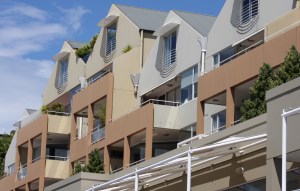
ApartmentsIn the coming years, the Massachusetts economy may be at serious risk. The Commonwealth’s most valuable resource is its educated, skilled talent. Maintaining that resource is essential for continued economic growth. However, there is a threat which is making that goal harder and harder to achieve. Massachusetts has one of the highest housing costs in the nation – a significant barrier for talent recruitment and retention. Without an adequate supply of workforce housing, Massachusetts may soon lose that talent to other, more affordable, markets.

The UMass Donahue Institute’s Population Estimates Program concluded that the state’s population will increase by nearly 300,000 over a 20-year period. Good news, but the population of Massachusetts grew only by 3.1 percent between 2000 and 2010, while the U.S. population increased by 9.7 percent. Of concern, the study also projects an increasingly older population for the state.

Though a good portion of Massachusetts’ growth is driven by a net natural increase (number of births greater than deaths), a larger share of the growth is attributed to net immigration. Looking more closely, there is a net domestic outflow of residents (more people moved out of Massachusetts than into it from other parts of the U.S.), offset by a large number of international immigrants.

This is occurring during a boom time for the Greater Boston region, while the rest of the country, with a few exceptions, is still working its way out of the recession. Another way of looking at it is that, for the past few years, there have not been many job opportunities attracting our younger workers away from the state.

It was not that long ago that most of the country was experiencing stronger job growth than Massachusetts. As documented in a 2003 University of Massachusetts/MassINC report, Mass. Migration, over 200,000 more domestic residents moved out of Massachusetts than moved into the state between 1990 and 2002. And then, between 2002 and 2004, that imbalance became worse.

Fortunately, at that time, foreign immigrants helped to offset these population losses, but they frequently arrived with lower levels of education and skills than those who were leaving. Those departing tended to be younger, better educated, and more likely to be employed in a knowledge-intensive industry.

These trends will have substantial workforce and business implications and should be a call to action. The costs of both rental and for sale housing have been accelerating, reaching record highs. More and more young individuals and families are being priced out of the market. In some cases, the problem is restrictive zoning, other municipalities are shunning any housing that increases the school population, and in some markets, the cost of construction makes workforce housing uneconomical.

The solutions may be difficult, political, and costly, but without action at the state and local levels, the future of the Massachusetts economy is at risk.


Event Recap: Leadership Lunch + Learn at 101 Seaport

The following blog post was written by Chloe Louise Bouscaren, Marketing and Business Development at CBT Architects.

“An Inventive Setting to Spark Inventive Thinking”

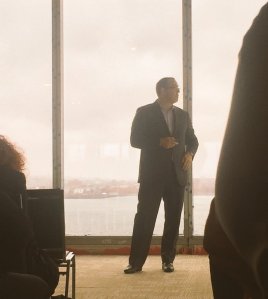
IMG_20151111_122627151On Wednesday, Nov 9th NAIOP hosted a Members-Only Leadership Luncheon at 101 Seaport Boulevard, the new home for PricewaterhouseCoopers, a multinational professional services network. PwC relocated 3000 employees from 125 High Street to Boston’s Seaport District. Shawn Hurley, the Executive Vice President and Regional Manager of SKANSKA USA Commercial Development hosted NAIOP on the building’s 7th floor, the only space that has yet to be leased. Shawn was joined by Charley Leatherbee, VP of Development; Levi Reilly, Director of Development; and Patrick Sousa, Manager of Development, who all played important roles in the success of this high-profile project.

IMG_20151111_121118778The newly constructed 17-story, 440,000 RSF, LEED Platinum state-of-the-art office building was developed by SKANKSA USA Commercial Development Team in Boston. Highlights included a chilled beam mechanical system, triple glazing curtain wall, 300 underground parking spaces, world class retail by WS Development, expansive views of the harbor and Seaport, conference and training centers, and virtually column free floorplates. 82% of the building is occupied by PwC, tenants Red Thread and Skanska will be joining them soon. NKGF’s Dave Martel and Bill Anderson are responsible for the leasing and deal negotiation.IMG_20151111_120951643_TOP

Located on what will be the new Seaport Square Green, 101 Seaport connects directly to Fan Pier Park, creating a continuous public space that reaches Boston Harbor and connects to the Harborwalk Grand civic lawn to support active recreation and public events.CBT2

SKANSKA is also currently working a neighboring 17-story office tower, 121 Seaport, as well as Watermark Seaport, a 300-unit residential complex both on neighboring parcels.CTjJnD2VAAAiuyx.jpg large

For those who have yet to hear Shawn’s presentations on SKANKSA’s developments in the Seaport and beyond, his confidence and presence is unparalleled. Shawn has an innate way of making an audience feel comfortable and that day, we all felt we were part of something big. SKANSKA is clearly making development history in Boston and Shawn and his group are leading that charge the titans of the real estate industry. Hats off gents.

Quick Project Stats
Project Cost: $290M
Project Duration: 26 months
PwC Employees: 3000 (20% more people in 12% less space)
Designer / Design Firm: Jonathan McGuiness, Jacobs Engineering Group

NAIOP’s on-going Leadership Lunch and Learn series is open only to Members and offers unparalleled access to top local real estate leaders. Attendees get an inside look at the area’s most active CRE companies and hear about their latest developments, recent activity, upcoming projects, and more. Not yet a NAIOP Member? Join today!

Fraunhofer CSE’s Living Lab – The Future of Sustainable & Energy Efficient Building Technology

LIving Lab

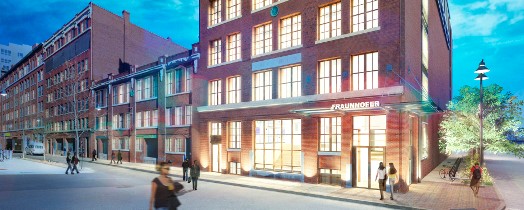
NAIOP’s Gavel members recently toured the Fraunhofer Center for Sustainable Energy Systems (CSE) Living Laboratory, a cutting-edge R&D center for the advancement of sustainable energy systems. Born out of a 2013 energy-retrofit of a 100-year-old building in the Channel Center neighborhood in South Boston, the Lab leverages cutting-edge design concepts and historic architecture alongside in-house research facilities, including a pilot solar module fabrication line, dedicated thermal testing laboratory, and extensive characterization/environmental testing resources. Its mission is to foster economic development through the commercialization of clean energy technologies for the benefit of society.

Besides providing clients with services like testing the energy efficiency of exterior wall designs and new photovoltaic panels, the building is an exhibit for new technologies in HVAC systems, lighting, and energy efficient fenestration.

Fraunhofer CSE’s Building Energy Technology Group applies its expertise in four main areas:

  • Working with clients from industry, academia and government to develop new products
  • Field testing of novel building technologies and materials
  • Evaluating product performance through laboratory testing, field deployments, and modeling, simulation, and analysis.
  • Demonstration projects to acquire real-world performance data

NAIOP members may be interested in learning more about the cutting edge research now underway at the Living Lab. Tours are available by appointment.

Ridesharing May be Saved by Technology

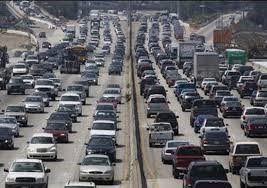
RideshareThe Clean Air Act was created to respond to the ever-increasing air pollution that has come from industrial expansion and a reliance on fossil fuels for energy and transportation. Automobiles are a major source of air pollution (e.g. hydrocarbons, nitrogen oxides and carbon monoxide). It is estimated that road traffic accounts for about 40 percent of the pollution that contributes to ground-level ozone (the main ingredient in smog).

Single occupancy vehicles have long dominated the roadways, especially for commuters. In an effort to reduce pollution, states, like Massachusetts, have adopted Rideshare Programs. Ridesharing is the sharing of vehicles by passengers to reduce vehicle trips, traffic congestion and automobile emissions. Ridesharing (carpooling, vanpooling, public transport), as well as bicycle commuting and walking, are all goals of these programs.

Locally, the idea has been for Massachusetts Department of Environmental Protection (MassDEP) to work with large employers (with more than 1,000 employees) to promote commuting options. The program depends on corporate surveys of worker commuter patterns, providing a menu of commuting options, offering incentives, and documenting the resulting annual changes in patterns, hopefully to successfully meet a specific performance goal of reducing by 25 percent the number of times commuters drive alone to work.

Unfortunately, for various reasons, these programs have had limited success, but continue to burden the employer with annual compliance costs. Part of the problem has always been the difficulty of organizing car-pooling and the uncertainties due to the drivers’ and passengers’ daily schedules.

We are all getting accustomed to technology searching for logistical problems to solve. The ridesharing conundrum is one of those problems and “real-time ridesharing” are the solutions beginning to be provided by Transportation Network Companies, such as LyftUber and Sidecar. These companies, with their mobile apps, arrange one-time rides on an on-demand basis.

Both Lyft (Lyft Line) and Uber have now introduced a carpooling service in Boston. Passengers along a route get in the car at a price cheaper than the ride-for-hire alternative. The trip has to maintain its original route as it picks up other customers, who have to be ready immediately to get in the car when it arrives for them.

Although this service is currently limited to the Boston/Cambridge market, there is no question that an expansion of this service into the suburban market is inevitable.

It is also not very difficult to foresee an app that allows single occupancy drivers to easily connect with fellow commuters heading in the same direction, on a ride by ride basis. With no long-term commitments and many scheduling alternatives available, it seems like an easy fix. Yeah, we’ve got an app for that!

MBTA Control Board’s First Report Shows Urgent Need For Change

The MBTA’s new Fiscal and Management Control Board (FMCB) has just issued its first 60-day report identifying the scope of the challenges facing the T. The GreenLineFMCB has been tasked with identifying and shaping solutions to improve operations and performance. The report is extensive, probing, and extremely candid. The Board members should be congratulated on producing such a clear case for moving from the status quo to a system that is reliable, transparent, and sustainable.

It is no surprise that the some of the underlying problems are even more serious than originally thought. Firstly, the MBTA’s annual operating budget is unsustainable, with expenses increasing at nearly three times the rate of revenue growth. Secondly, annual capital spending on deferred maintenance and capital investment is substantially below the $472 million annual spending needed to prevent the backlog from further increasing. The prolonged under-spending has caused the backlog in capital investment to rise to $7.3 billion. The report states that the management team has committed to ensuring that available capital funds are spent, maintaining the MBTA system at a level that will prevent the backlog from further increasing while improving the overall condition of the system and its facilities as expeditiously as possible.

The FMCB has reported some progress:

• Total Capital spending increased to $740 million in FY2015 and is budgeted to be $1.05 billion in FY2016.
• The MBTA planned, designed, and is executing a Winter Resiliency Plan to better prepare the system to withstand major storms and extended periods of cold.
• The MBTA and Keolis Commuter Services have signed a Performance Improvement Plan and are working to address identified shortfalls in performance.
• The FMCB and MBTA management are developing a strategy to make improvements in the procurement and contracting processes and to review all existing service contracts (e.g., the MBTA issued a Request for Information for the private-sector on some low and moderate ridership bus routes, express bus routes, and late-night bus service).
• The FMCB and MBTA management are focusing on performance metrics to drive improvement in MBTA operational practices and to expand transparency and accountability with the riding public.
• The FMCB and MBTA leadership are also pursuing efforts to increase workforce productivity and to reduce absenteeism among MBTA staff.
• The FMCB is committed to a positive employee engagement program, understanding that morale, sense of mission, clear management and decision-making structures, and workforce investments are all necessary ingredients for any successful organization.

It is very clear to the reader of this report that the work of FMCB has just begun. The goal is to have a transit system that is sustainable and accomplishes its mission. Hopefully, in the not too distant future, the MBTA will be operating efficiently. It will certainly take a lot of work by a dedicated management team and workforce. However, there is no alternative. Businesses, residents, and workers must have an MBTA that is reliable.

Social Media in the Real Estate Industry

The real estate industry is all about people. Whether you’re a developer working to find an investor or a leasing agent trying to reach potential tenants during lease-up, real estate professionals are all looking to make the personal connections that are vital to success in the industry.

Social media in an incredible tool for reaching the people who drive the real estate industry. NAIOP Massachusetts, in partnership with communications firm Solomon McCown & Company, surveyed more than 100 real estate professionals in June 2015 on how they use social media for their business. How do architects, construction professionals, brokers, developers and professionals in all aspects of the business use digital communication tools? Here are the key takeaways from our survey.

LinkedIn is the most popular social media platform for real estate professionals (Tweet this!), with 52.3 percent of those polled saying they use it. Facebook was a distant second place, with 20 percent of professionals saying they use the world’s largest social media network.

Only 6.5 percent of those surveyed said they don’t use social media for personal or professional use. (Tweet this!) It’s clear that professionals in all areas of the industry are active on social channels.

81 percent of professionals in the real estate industry access social media networks on mobile devices. (Tweet this!)

Social media isn’t just used by young professionals. (Tweet this!) While nearly 81 percent of 21-30 year olds in our survey say they use social media both personally and professionally, 66.7 percent of 61-70 year olds also use digital communication tools.

100 percent of real estate brokers surveyed believe social media helps them to do their jobs. (Tweet this!) The only differentiation is to what degree social media is helpful: 61.9 percent of brokers consider social media to be very helpful, while 38.1% consider it somewhat helpful.

89 percent of brokers surveyed have found new leads through social media. (Tweet this!) No wonder 100 percent of brokers say that social media helps them in their professional lives!

One-third of real estate owners say they only use social media a few times a year. (Tweet this!) A scant 22 percent of owners say they understand social media enough to do it in-house at their companies. (What a missed opportunity!)

How do professionals measure success? In our poll, 65 percent of respondents said that engagement with their target audience was the most important goal for their social media campaign. Sourcing new leads was the primary indicator of success for 26 percent of those surveyed.

Take a deep dive into the data unearthed by the NAIOP/Solomon McCown survey in the infographic below.

SMC-NAIOP_SocialMediaRE-infographic

Plaintiffs Drop Stormwater Lawsuit Against EPA: NAIOP Applauds Decision & Remains Opposed to RDA as Regulatory Tool

Yesterday, the Conservation Law Foundation and Charles River Watershed Association, plaintiffs in Conservation Law Foundation, Inc., et al v. United States Environmental Protection Agency, et al., voluntarily dismissed the lawsuit without prejudice. NAIOP Massachusetts filed a Motion to Intervene in the case.

The plaintiffs in that case sought to compel EPA to impose a new regulatory program that would have required owners of commercial, institutional, industrial and high density residential properties in the Charles River watershed with one acre or more of impervious area (parking lots, roofs, sidewalks) to apply for a stormwater discharge permit through the use of EPA’s rarely used “Residual Designation Authority” (RDA). NAIOP decided to intervene in the case given the significant impact this duplicative and burdensome regulatory program would have had on property owners in a watershed that includes 35 communities and covers 310 square miles.

“NAIOP has long supported the overall objective of improving water quality throughout the Charles River Watershed, but with compliance costs estimated to be in excess of $1 billion, the RDA approach is simply not the right tool,” said David Begelfer, CEO of NAIOP Massachusetts. “We are pleased the plaintiffs dropped the suit. Such important policy decisions should not be negotiated behind closed doors. NAIOP urges EPA to carefully think through this issue, seek feedback from affected stakeholders, and ensure any potential programs are cost-effective, feasible and fairly allocate the regulatory burdens and costs.”

NAIOP will continue to monitor this issue closely and keep members informed of any new developments.

NAIOP Files to Intervene in Costly Charles River Watershed Stormwater Court Case

NAIOP Massachusetts recently filed a Motion to Intervene in Conservation Law Foundation, Inc., et al v. United State Environmental Protection Agency, et al. The plaintiffs in that case seek to compel USEPA to impose a new regulatory program that would require owners of commercial, institutional, industrial and high density residential properties in the Charles River watershed with one acre or more of impervious area (parking lots, roofs, sidewalks) to apply for a stormwater discharge permit. NAIOP decided to intervene in the case given the significant impact this duplicative and burdensome regulatory program would have on property owners in a watershed that includes 35 communities and covers 310 square miles.

On April 28, the Conservation Law Foundation and the Charles River Watershed Association filed a complaint in federal court alleging that nutrients, including phosphorus, in runoff from a number of “commercial, industrial, institutional, and high density residential” properties are polluting the Charles River. The goal of the lawsuit is to force EPA into using its rarely used “Residual Designation Authority” (RDA) in the 35 communities that make up the Charles River Watershed to create a new stormwater permitting program. This proposed program would be in addition to the recently issued stormwater permitting program for municipal separate storm sewer systems (MS4s), which collect and manage a substantial portion of the stormwater discharged into the Charles River from developed properties. In this case, CLF is incorrect; EPA does not have a requirement to use the RDA.

This will affect all privately owned commercial and multifamily properties in the Charles River Watershed (communities including Boston, Cambridge, Needham, Newton, Natick, etc.) with more than one acre of impervious area.

In 2010, EPA proposed an RDA pilot stormwater permitting program in the towns of Milford, Franklin and Bellingham. As proposed, this program would require property owners to construct costly, retrofitted stormwater treatment systems. EPA funded a study to determine the potential costs to comply with its proposed permitting program. Though the pilot program targeted sites with two acres or more of impervious area, compared to the one acre threshold now being considered, the total cost in the three communities to comply with the draft permit was astronomical. EPA’s own consultants estimated that the costs would be at least $180 million for the three communities. Expanding such a program to all 35 communities in the Charles River Watershed would easily move that number into the billions. Costly and substantial retrofits of privately owned property would be immediately required if this is implemented. We estimate the costs to be at least $150,000 per acre for compliance. This would apply to existing owners, even if they are not redeveloping or renovating their property.

NAIOP supports the overall objective of improving water quality throughout the Charles River Watershed. However, any regulatory program developed to achieve that objective must be cost-effective, feasible and fairly allocate the regulatory burdens and costs. As we learned through the pilot program, the RDA approach is not the right tool. NAIOP has long championed alternative approaches that focus on public education, source control, and Best Management Practices. We actively supported the recent legislation restricting the use of phosphorous-containing fertilizers. Our intervention in the lawsuit will provide an important stakeholder group with an opportunity to have a seat at the table as these important policy and economic issues are being discussed.