NAIOP Policy and Trends Watch

The Commercial Real Estate Development Association

NAIOP Policy and Trends Watch

Beyond Traffic: Imagining a Brighter Infrastructure Future

The following is a guest blog by Fred Wagner, Principal at Beveridge & Diamond, former Chief Counsel of the Federal Highway Administration (FHWA), and moderator at the upcoming NAIOP Transportation Transformation Conference in Boston on April 9.The post originally appeared on Enviro Structure. The Beyond Traffic report will be one of many topics discussed at the upcoming event. We hope to see you there!

U.S. Department of Transportation Secretary Anthony Foxx has a favorite saying that he attributes to one of his public school teachers:  “Having no plan is a plan.”  Well, now the USDOT has a plan, or, as it calls it, a “framework,” to create the foundation for transportation infrastructure improvement for the next 30 years.  It’s called “Beyond Traffic,” a remarkably comprehensive analysis of existing data, expected trends, and policy suggestions for the entire spectrum of future transportation choices.

On April 9, NAIOP Massachusetts, The Commercial Real Estate Development Association, will host a forward-thinking conference  -“Transportation Transformation” – examining the role of transportation in a growing Massachusetts economy and its impact on real estate development.  A representative of the USDOT’s Office of Policy will kick off the NAIOP event by describing the Beyond Traffic framework and offering ideas on how the concepts reflected in Beyond Traffic could be applied to regional and local transportation planning efforts. Beveridge & Diamond is proud to sponsor this important event.

While it’s difficult to summarize a 300+ page document in one blog post, I’ll give it a go.  The over-arching theme could be this:  “Let’s make infrastructure investment decisions based on the reality of what is and what is likely to be, rather than simply based on short-term fixes to maddening congestion challenges.”

What are some of those realities?

  • We face an aging transportation system that desperately needs attention.
  • More and more Americans will be settling in “mega-regions” around the country, potentially exacerbating congestion in our already most populated cities.
  • Younger people will likely continue to drive less, and look to alternative means of mobility.
  • At the same time, the proportion of older Americans will continue to grow, placing greater demands on travel for work and leisure in that segment of our population.
  • Innovation will alter the way we think about commuting, from ride-sharing options, to increased telecommuting, to autonomous vehicles.
  • Our changing climate will demand that we stress adaptation for some of our most crucial transportation infrastructure.

Some of the data revealed in Beyond Traffic is no doubt sobering.  The U.S. population is expected to increase by 70 million by 2045.  Transportation costs will continue to be the second largest expense for U.S. households (besides shelter) and, at the same time, will likely remain the second highest source of GHG emissions.  We face a huge investment gap at the same time a political solution to long-term funding at the federal level remains a daunting challenge.

Yet, for every significant challenge, great opportunities exist.  Technological advances have resulted in a doubling of vehicle fuel efficiency standards.  Americans have much greater flexibility in how and where they work.  GPS technology tells us where we need to go, but can also be used to help us find parking spaces downtown or in garages more efficiently.  Autonomous vehicles can potentially allow even more vehicles to use our highways and streets, but do so more safely and efficiently.  (Never mind getting additional work done while your car drives you to your destination.)  Freight shipments will also become more efficient as automation connects ports to rails to trucks.

Beyond Traffic challenges all of us to confront how future policy choices could either complement or conflict with these trends.  While the USDOT stresses that this framework is not an action plan, it cries out for all of us to consider how to create such a plan.  Anyone interested in this topic should go to www.dot.gov/beyondtraffic to offer comments before a final version of the report is published later this year.

NAIOP Supports MTF Report on MBTA

The recent Massachusetts Taxpayers Foundation’s report The T: The End of Its Line is a must read. NAIOP Massachusetts fully endorses the report and its recommendations.

According to the report, there are some critical next steps that decision makers can and must take in the near term. The Foundation recommends that the state prioritize the following nine steps to inform a more detailed analysis so that it may develop a plan for rescuing the T:

•    Tie FY 2016 state contract assistance to the release of up-to-date State of Good Repair (SGR) backlog data
The MBTA’s asset management system, which quantifies the SGR backlog and helps to prioritize maintenance projects, has been inoperative for several years and full implementation of a new Federal Transit Administration (FTA)-funded system is several years away. This is an enormous management failing and the state should withhold additional assistance until the T can produce a comprehensive SGR backlog project list that clearly and accurately states both the size of total maintenance shortfall and the cost to keep the system from deteriorating further.
•    Conduct a detailed audit of the MBTA’s maintenance protocols
The state should insist on an independent assessment of the T’s maintenance protocols, project selection criteria, and capital spending to determine whether the T has the capacity to bring its infrastructure into a state-of-good repair.
•    Require an independent fiscal audit of the T
The Governor should request an independent, third-party, in-depth analysis of the T’s finances. The T’s long history of using financial maneuvers such as debt restructurings and securitizing long-term revenue streams have complicated its debt obligations, and the T provides minimal information on unfunded pension and retiree health care liabilities. All pose substantial hurdles to the T’s ability to continue as a going concern. Full analysis and disclosure of the T’s financial exposures is necessary before solutions can be found.
•    Halt expansion contracts for the remainder of 2015
Before the MBTA undertakes any further expansion (with the exception of the Green Line Extension), it must get its current fiscal house in order. The state and the T must perform more analysis of the impact that expansions will have on the operating budget and maintenance expenditures and must identify revenue streams to cover the ongoing costs of expansions before any additional outlays are made. A brief delay will afford an opportunity to re-examine both the way in which projects are being carried through and the sustainability of each expansion as a part of the T system as a whole.
•    Reform the procurement process including a two-year moratorium of the Pacheco Law with a report on savings
Just as its maintenance systems require a careful review, so too do the T’s procurement practices. A series of problems with T procurement practices and other policies have further eroded public confidence in the T. The size and uniqueness of the T’s capital purchases warrant a centralized procurement process with in-house experts overseeing contracts to ensure purchases are delivered on time, on budget, and fully operative.
•    Reexamine the MBTA’s governance structure
The T’s long-term problems cannot be addressed effectively unless the Authority’s own leadership is fully committed to the reform effort. Currently, the T’s Board is independent and not accountable to the Secretary of Transportation, the Governor, or the Legislature and management has too often been resistant to external examination and proposals for change. The Administration should have control over the MBTA board in the short-term to ensure compliance, accountability, and full transparency. The Administration should also have the authority to select the next general manager and work with the Legislature to determine the most suitable governance structure to develop and execute a rescue plan for the T.
•    Eliminate Social Security eligibility to align with the state pension system
The unique dual pension eligibility of T employees, dating back to the state takeover of private operators, makes no sense decades later, and it imposes significant unnecessary costs on a financially stressed system.
•    Eliminate binding arbitration
Binding arbitration stands in the way of the responsible cost-conscious management the T requires. It was eliminated for most public employees a generation ago.
•    Require full disclosure of the pension system finances
Despite efforts by the Legislature, the T has not released details regarding its pension system and assets because it asserts that the pension system is a private entity. However, the T would have no hope of meeting its annual pension obligations without the annual infusion of hundreds of millions of dollars in tax revenues. At a minimum, the T pension system should release the details on its investments and cash flows and provide actuarial valuations.

Transportation in MA – Let’s Not Let A Good Crisis Go To Waste

MBTA SNOW 2The last 30 days have seen record snowfall for the Greater Boston area. The resulting impacts on commuters, businesses, and residents have been devastating. However, for some reason, the breakdown in our mass transit system has come as a surprise to many. Our transit system is in crisis and has been getting by for decades with aging equipment, poor maintenance, and declining performance ratings.

The problems go beyond the MBTA. Across the state, many bridges are closed, or have weight and lane restrictions, with many being off limits to emergency vehicles. Miles of roads need repairs and many regional bus systems have reduced schedules.

The state needs to create a road map to take us from the failures of today to a fully operating and maintained system, with sufficient capacity and quality of service for its customers. A top priority of our political leaders must be the purchase and placement into operation of new cars, signalization, switch heaters, and other maintenance and repair upgrades. The economic health of our Commonwealth is at risk with the status quo. The losses to businesses and employees, due directly to the MBTA’s current failures, is historic.

The public was lulled into the belief that our transit system, although not perfect, could continue to serve commuters and business for many years without any serious lapses. No one is under that illusion anymore. Now is the time for clarity of purpose and a serious plan to provide the citizens of this Commonwealth the first class system they deserve.

Next governor needs transportation vision

This article originally appeared in the online CommonWealth Magazine.
The below version includes post-election updated information.

By most accounts, the Patrick transportationadministration and the Legislature have moved the needle forward on the issue of transportation. They know that investing in transportation infrastructure is critical to our state’s economy, quality of life and industrial competitiveness.

However, many aspects of the Commonwealth’s transportation system have already approached capacity constraints with increasing delays on congested highways and transit systems. At the same time, demand has increased and is predicted to continue over the coming years with no major increases in capacity coming soon. Without additional investments in our infrastructure, further declining services, increased travel times, and a degraded environment will be the future of the Massachusetts transportation system.

In 1970, Governor Frank Sargent created the Boston Transportation Planning Review that analyzed and redesigned the entire area-wide transit and highway system. It provided a blueprint for transportation policy and investment that we have been effectively following for the last 40 years.

In 2013, the Massachusetts Department of Transportation outlined the investments needed to stabilize today’s transportation system and proposed designing a system for the 21st century. Working together, the Massachusetts Legislature and the Patrick administration created and provided funding for a transportation plan that responded to years of deferred maintenance, underfunded transit operating costs, and delayed mass transit and regional transportation improvements. The funding focused primarily on bringing the Commonwealth’s existing transportation infrastructure into a state of good repair.

Unfortunately, the funding that was put in place fell short of what is needed to truly meet the existing and future transportation needs of the Commonwealth’s residents and businesses. What has been missing from the conversation of late is visionary thinking and a more expansive understanding of why investments in transportation are so important to the future of our state. With one of the highest housing costs in the nation, a solid transportation network that can expand access to a larger and more affordable housing market is critical to the success of our economic development centers.

Across the country – from the Research Triangle in North Carolina to the Texas Medical Center in Houston – state governments and private industry are investing in systems and incentives designed to replicate the Commonwealth’s innovation economy. Though Massachusetts has strengths in higher education, strong academic medical centers, and a historic commitment to innovative technologies, transit and access are weak links and a potential liability for recruiting and retaining a qualified workforce – and the companies that create those jobs.

As Governor-elect Baker begins to outline the issues that will be critical for the next four years, we assert that a top priority should be the establishment of a new long-range statewide visioning and planning effort for transportation. This will require strong leadership to take the bold steps necessary to establish a vision and make it a reality. To successfully implement such an initiative, we’d propose a few guidelines:

• Connectivity is key: With several strong innovation, life science, and health care clusters that are major economic engines for Massachusetts, creating a reliable network of roads and transit is necessary for improving the flow of ideas and people.

• Out-of-the-box thinking is vital: Aligning transportation programs with energy and environmental goals, focusing on seamless connections between air and rail, bus and subway, and making transportation information an integral part of our hand-held knowledge system are all planning efforts that can begin early in a governor’s term and be implemented over the next decades.

• Embracing multiple modes of transportation and access is essential: A 21st century statewide plan must include not only roads, bridges, and public transit, but also bicycle and pedestrian needs, as well as enhanced information sharing through technology.

• Public private partnerships can extend the reach: Innovative partnerships between the public and private sectors must be part of a long-term plan that addresses the needs of businesses and residents alike.

Long-term planning and continued investments in a modern, integrated, multi-modal network are critical to our global competitiveness. Massachusetts cannot lose out to those states that know that transportation investment equals economic growth.

David Begelfer is CEO of NAIOP, the commercial real estate development association, and Marilyn Swartz-Lloyd is CEO of MASCO.

Highlights of NAIOP’s You Can’t Get There from Here

Elisif_20140207_3248This post was submitted by Allyson Quinby, Account Supervisor at Solomon McCown.

View event photos  |  Read Curbed article  |  Watch event video

Real estate professionals gathered at NAIOP’s “You Can’t Get There from Here” event to discuss one of the top priorities in Boston right now: improving transportation. It was exciting to hear about all the projects that are in the works, upgrades to the system already underway, and new technology that will allow commuters to get from point A to point B more efficiently.

The audience was fortunate enough to hear from Secretary of Transportation Richard Davey, who served as the keynote speaker, followed by a panel of experts including Michael Cantalupa of Boston Properties, Donald Cooke of VHB, Marilyn Swartz-Lloyd of MASCO and Yanni Tsipis of Colliers International.

Secretary Davey explained how MassDOT will make numerous improvements to the city’s existing infrastructure with a $12.4 billion Capital Investment Plan that aims to make the lives of commuters easier and spur economic development. The much-needed green line extension to Somerville and Medford as well as the South Coast Rail extension to Fall River and New Bedford will make a huge difference for those who live outside Boston. These new public transit lines will deliver an option that’s much less expensive than driving, which means fewer cars on the road and a significant reduction in traffic congestion and of greenhouse gases (something the Secretary said was a major initiative for MassDOT).

Additionally, a Silver Line Gateway will provide a new route from Logan International Airport to Chelsea to service one of the greatest transit-dependent populations in Greater Boston. Secretary Davey called it a “game changer.” As panelist Michael Cantalupa further noted, transportation plays a vital role in any city’s development. As Boston continues to boom with new office buildings and other high-rise projects, it’s critical these new developments remain accessible through increased transportation options.

Secretary Davey assured the audience that money is being invested in the system’s aging infrastructure, which means the need for new transit cars will finally be addressed. In fact, the state will purchase new Red/Orange Line cars and make upgrades to signal systems in an effort to eliminate the on-going problem of constant breakdowns. Millions will also be poured into the state’s highway system. For example, the alignment of the I-90 Turnpike Allston Interchange will reconfigure ramps and straighten the highway to simplify the roadway, as well as allow more room for development.

Diesel Multiple Unit (DMU) Service is another initiative MassDOT will be implementing. The service will allow more affordable cars to utilize our existing commuter rail line that runs from the South Bay Rail Yard to the South Boston Waterfront. This will open up whole new possibilities for those looking to travel from the Seaport District to Back Bay, a route for which there is currently no efficient method of transportation.

It’s no secret here in Eastern Massachusetts that traffic has a paralyzing effect on local transportation on a daily basis. So it was welcome news to hear that MassDOT is collecting and analyzing years of data to deliver real-time traffic technology. This will not only inform commuters where traffic is, but how bad it will be at what time and why. Secretary Davey announced that by the end of 2014, the real-time traffic message signs that have appeared on major highways will be instituted across the Commonwealth; making Massachusetts the first state in the country to do so.

While the planned investments are exciting, a proposed ballot question could prevent many of these important projects from moving forward. Under the landmark transportation legislation passed last year, the gas tax will be indexed to inflation in the coming years. This will be only a penny or two per gallon at most, but will provide the funding needed to ensure these projects are a reality. The proposed ballot question would repeal the gas tax indexing and would eliminate this crucial source of funding. NAIOP and other business groups are strongly opposed to the ballot question and will be working to fight this initiative in the coming months.

Transportation impacts all of us, and it was fascinating to hear Secretary Davey and the featured panelists give us a sneak peak of what’s in store for the city of Boston and throughout Massachusetts.

Climate Change Preparedness: Commonwealth’s Investment an Important Step in Collaborative Process

DB_testimonyAt Governor Patrick’s press conference today at the New England Aquarium, he announced  Climate Change Preparedness Initiatives funded by a $50 million state investment. Following Mayor Marty Walsh and Secretary Rick Sullivan, I spoke at the event representing the business community.

Climate change can have significant impacts affecting the overall economy; directly, by damaging structures, and indirectly, by compromising transportation systems, communications, and utilities.  There is no question that an increasing number of extreme weather events combined with future sea level rise require local and state agencies, building owners, lenders, insurance underwriters, and tenants to consider how to prepare for and respond to such events.

The business community believes that preparing for storm related events should be a shared responsibility between the public and private sectors. A primary role for city and state governments should be to ensure the continuity and protection of public infrastructure and public safety.  Stakeholders should be at the table with state and local decision makers early on in the process to prioritize short-term and long-term public and private responses. The business community, and the community at large, need to have a clear understanding of the government’s responsibilities for infrastructure and critical services.

Especially with New York City’s experience with Hurricane Sandy, we feel that Best Management Practices developed in other cities should be shared among public and private sector stakeholders, and their applicability to the Commonwealth should be carefully considered.

Finally, both costs and risks need to be evaluated when the public and private sectors consider climate change-related investments and improvement. With scarce resources, there will need to be a balance of adequate planning and a risk-based, cost-benefit analysis in order that funds are prudently expended.

Along with other business groups, we look forward to a true collaboration with state and local governments to safeguard all our valued resources.

Infrastructure: A Winning Investment for the City

The City of Boston is on a roll with an enormous volume of new construction in many of its neighborhoods. Much of that development was dependent on the ability of the owner to provide funds for local public infrastructure. Unfortunately, that reality can, at times, delay a worthwhile project for many years, missing out on a strong market.

However, a city can be the catalyst for an area, by investing ahead of the market and setting the stage for growth. Through city investments, it can also enhance the efforts for attracting new companies to the area.

A good example is the Seaport/Innovation District. The city can play a very important role by investing in the basic streetscape of this area. Here is a photo of Seaport Boulevard, the main artery running through this district:

seaportblvd

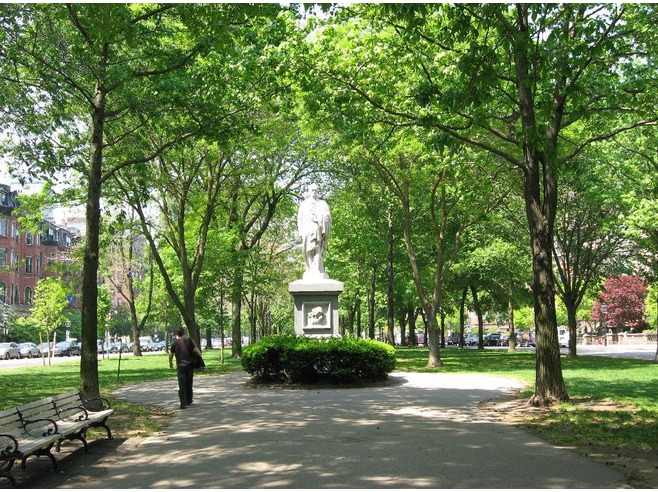
Now, imagine the impact of creating public spaces similar to Commonwealth Avenue or Park Avenue in New York City:

parkave commaveBoston is a world class city and it has the very unique advantage of 100 acres of prime real estate being developed adjacent to its downtown market, allowing it to expand its residences, offices, and shopping. As a result, tens of millions of dollars will make their way into the city’s coffers.

Now is the time for Boston to make a solid investment by making Seaport Boulevard a true boulevard with a wide, tree lined sidewalk with trees, benches and art. Let’s make this area the envy of every other city and a true attraction for families, tourists, and businesses, alike.

Bullet Trains for Boston?

photo
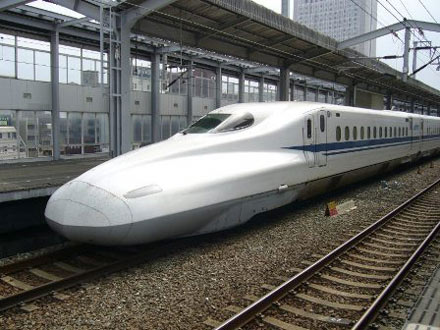
It’s an interesting time to think about investments in infrastructure, as the state legislature’s major transportation bill is now being finalized. As I experience Japan’s modern, expansive train system, I wonder what a bold transit plan for our Commonwealth, and the greater region, could do for our economic future?

For example, imagine a “bullet” train that travels, at least, 150 miles/hour (certainly, a far cry from our aging T fleet.) After years of hunting for an economic solution to our western region, what could a 30 minute commute between Boston and Springfield mean? Talk about an economic development engine that could also open up affordable housing alternatives!

Where Did All the Parking Go?


The city-owned Winthrop Square Parking Garage, at 240 Devonshire Street, recently closed due to serious structural problems. Built in the 1960s, this Boston garage accommodated 550 cars at discounted rates from the much higher priced private facilities.

This now further exacerbates the commuter parking problem, already destabilized by the continuing loss of surface parking spaces due to the heated development activities in the Seaport area. Employers may soon start to hear the complaints, as workers begin to personally absorb these increased costs.

The “dirty secret” is that the only reason the Financial District’s parking freeze has worked for so long was that there was a large surplus of low-cost parking nearby.  The same goes for the Seaport’s parking freeze.  As more buildings eat up the surface lots, fewer spaces will remain – as demand increases substantially.

Commercial parking freezes are an ineffective means of providing cleaner air, especially when they are targeted exclusively at a particular municipality.  An unintentional result of a parking freeze is its negative effect on economic development, limiting the ability of new businesses to create jobs, existing businesses to expand, and leading, in many cases, to shifting growth to areas without such restrictions.

Maybe now is the time to rethink this outdated method of controlling auto emissions.


The Time is Now – Investments in Transportation Critical to Economic Growth

mbta-livefeed
Transportation Secretary Richard Davey and Governor Deval Patrick recently unveiled the Administration’s 21st Century Transportation Plan.  This statewide plan would add $10 billion over the next 10 years to the state’s investments in roads, bridges, and transit – including critical upgrades to the existing system and expansion through select, high priority projects.

The plan calls for:

  • $1.18 billion in bridge repairs
  • $1.25 billion in hundreds of local and regional highway projects;
  • $930 million for Interstate 91 in Springfield and the Interstate 93 and 95 interchanges in Woburn and Canton
  • $430 million for bicycle and pedestrian improvements
  • $1 billion for Chapter 90 municipal road maintenance projects
  • $2.4 billion to purchase new cars for the T’s Red, Orange and Green lines (replacing cars purchased in the 60’s and 70’s!)
  • $850 million to replace MBTA and RTA buses
  • $300 million for MBTA power and facilities upgrades
  • expansion of commuter rail options that includes the South Coast rail extension ($1.8 billion), the Green Line extension ($674 million), and rail service between Springfield and Boston ($362 million), Boston and Hyannis ($21 million) and a connection between Pittsfield and New York City rail ($114 million), and an $850 million expansion of South Station.

The cost for all of this is about $1 billion per year over 10 years to get a modern, convenient transportation network to enable sustained economic growth across the Commonwealth.

I just returned from a trip to Korea and saw a truly modern, extensive, and reliable transit system.  Like Korea, the Massachusetts economy is fueled by a highly skilled mobile workforce, but without a first class transportation system, businesses will not be able to continue to grow.

Now is the time for all of us to get together and support these necessary investments.  There will be much debate on how to pay for all of this and the Governor will soon propose a menu of revenue options tapping a multitude of taxes and fees.  While discussion of these revenue sources is needed, it is critical that we move forward to ensure continued economic growth.  The time is now. Inaction is not an option.