The Changing Face of Downtown Boston

The following blog post was submitted by Ally Quinby, Account Executive at Solomon McCown.

Real estate professionals gathered last week to discuss the significant transformation happening in our city’s core. The office, retail and residential sectors are all growing and working together to create a true 24/7, live, work, play environment in downtown Boston.

Even with the boom in the Seaport, Downtown is seeing an influx of new office tenants who want to be in the heart of the city. David Greaney of Synergy Investments told us that of the 70 leases his firm has completed this year, 59 of them were located downtown. And these tenants are looking at more than just the office space. Mark Smith said that Equity includes the amenities of the surrounding area on tours with potential tenants. He also told the room that tenants want comfortable, communicative environments.

All these companies have employees who want to be within walking distance of work. Despite the thousands of apartment units that are planned and currently being constructed, Bill McLaughlin of AvalonBay Communities said that the demand is there because young people aspire to live in the city; we are well-positioned to absorb the deliveries we will see in the next five to six years.

Retail is growing too. Andrea Matteson of CBRE/Grossman Retail Advisors highlighted Walgreens, Equinox, Scholars and the coming Legal Seafoods as game changers who have helped Downtown Crossing look better than ever. She said that first floor tenants are key in providing character for downtown buildings.

Foreign investment and continued development make Boston one of the U.S.’s most dynamic cities, and our panelists agreed that downtown is going to be an integral part of Boston’s growth in the coming years.
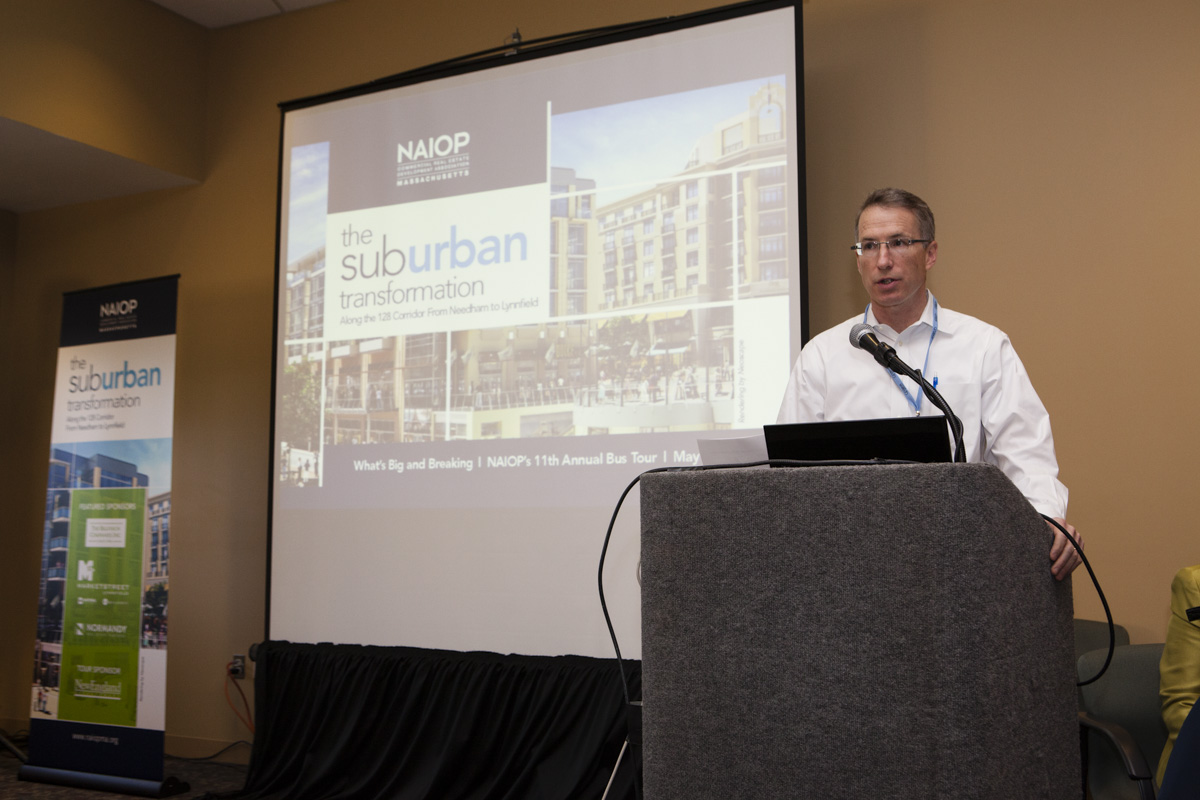
2013 Bus Tour Recap: The Suburban Transformation

The following blog post was submitted by David Fleming, Principal at PACE Communications Group, a marketing and PR firm that specializes in commercial real estate and retail.Elisif_20130501_0150

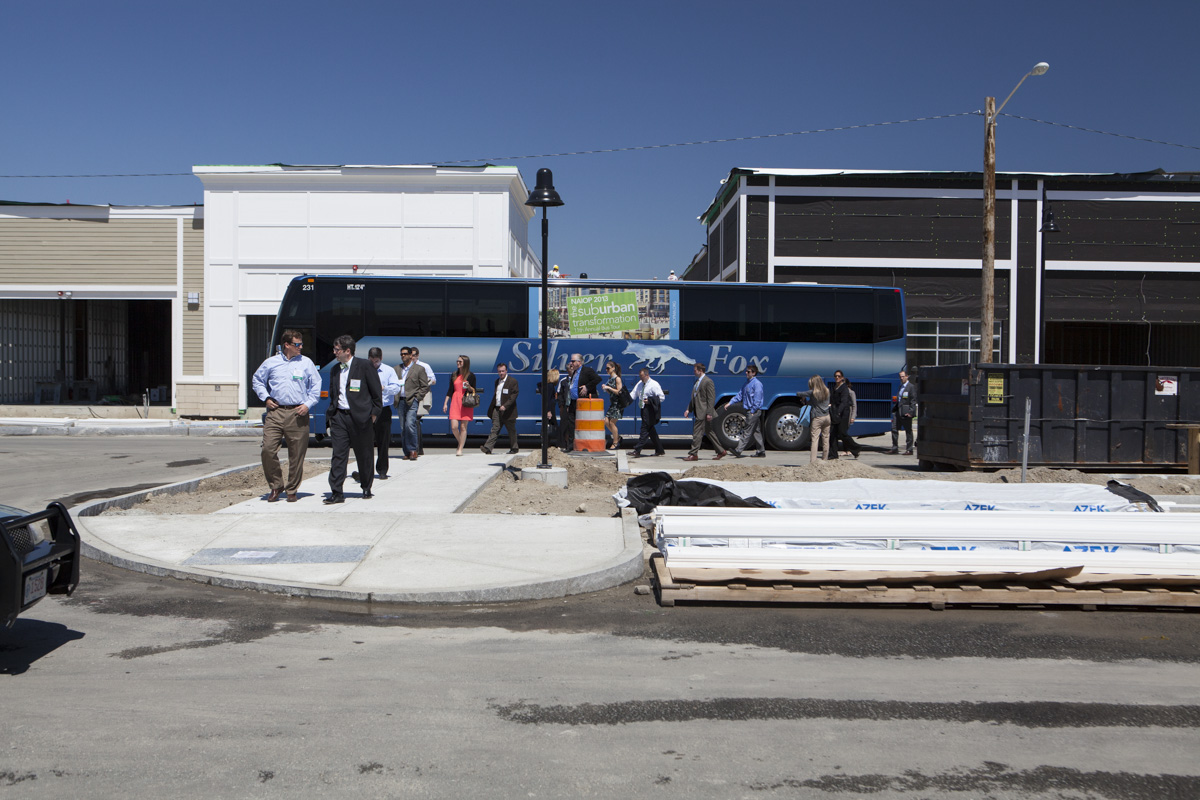
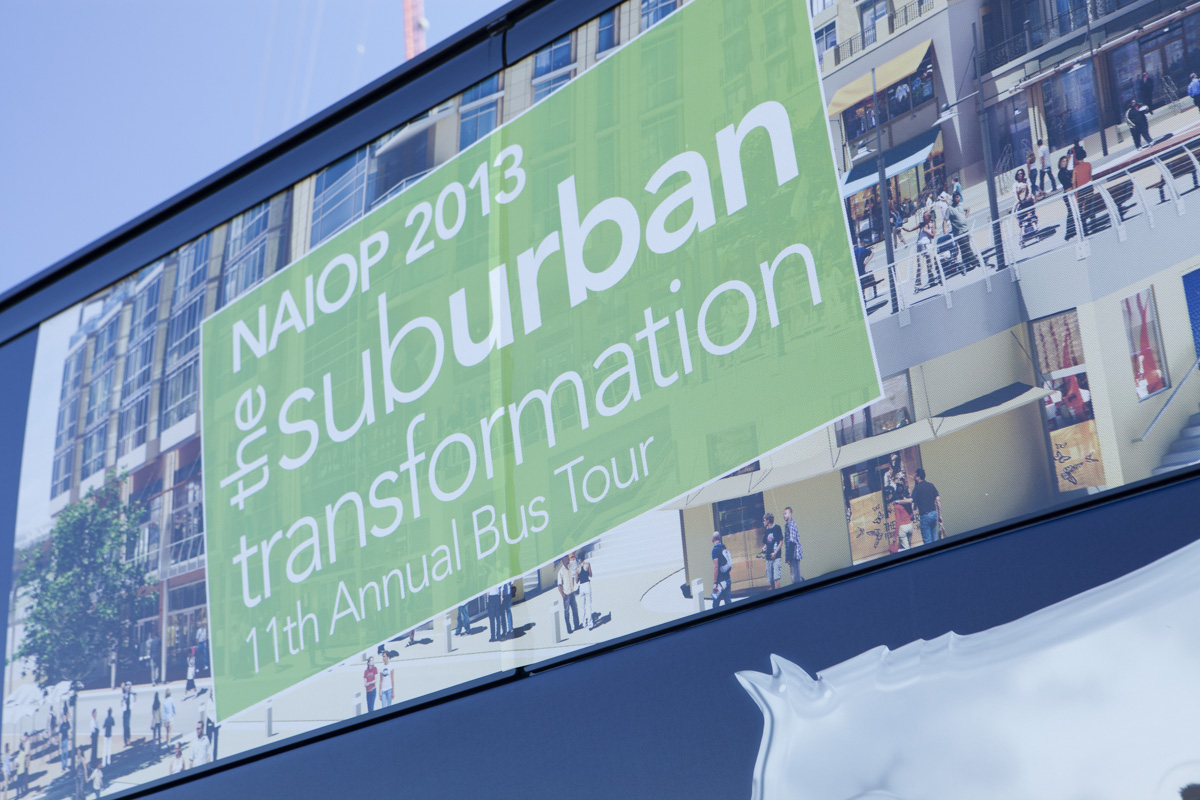
Three signs that spring has finally arrived in Boston: 1) green grass on the Esplanade, 2) the Red Sox back at Fenway Park, and 3) NAIOP MA’s Annual Bus Tour. The 11th edition of the tour took place on Wednesday as more than 250 people aboard five buses toured properties along what is suddenly one of the hottest stretches in commercial real estate in the region: the Route 128 Corridor from Needham to Lynnfield. Here’s a summary:

Elisif_20130501_0115Kickoff at Needham Crossing

  • Needham’s Economic Development Director Devra Bailin, discussed efforts to rebrand the former New England Business Center as Needham Crossing
  • Justin Krebs and Mark Roopenian described two of Normandy Real Estate Partners’ projects along the route:
    • Center 128, which will redevelop Needham’s former New England Business Center into an 825,000-square-foot “super-park,” including a Marriott Residence Inn Hotel
    • Station at Riverside, which will transform MBTA’s Riverside Station into a mixed-use development featuring 295 apartments, a 10-story 225,000 square foot office building, and a 20,000 square foot retail village
    • Mike Wilcox of The Bulfinch Companies discussed development at Needham Crossing and the branding and leasing efforts at Atrium Center. Wilcox concluded with an exciting Atrium Center video that you can see here.
    • In his market overview, Jeremy Grossman of CBRE/Grossman Retail Advisors noted the “flight to quality” among retailers, New Urbanism, the continued expansion of restaurants, the intensifying battle among grocers, and the strengthening of regional markets such as Chestnut Hill, Lynnfield, and Northborough as key trends

Elisif_20130501_0215Bus Tour Highlights

Six tour buses, escorted by members of the MA State Police, traveled along Route 128 beginning in the Needham/Newton area and ending in Lynnfield. Here are a few highlights:


Elisif_20130501_0268Lunch and Learn at MarketStreet Lynnfield

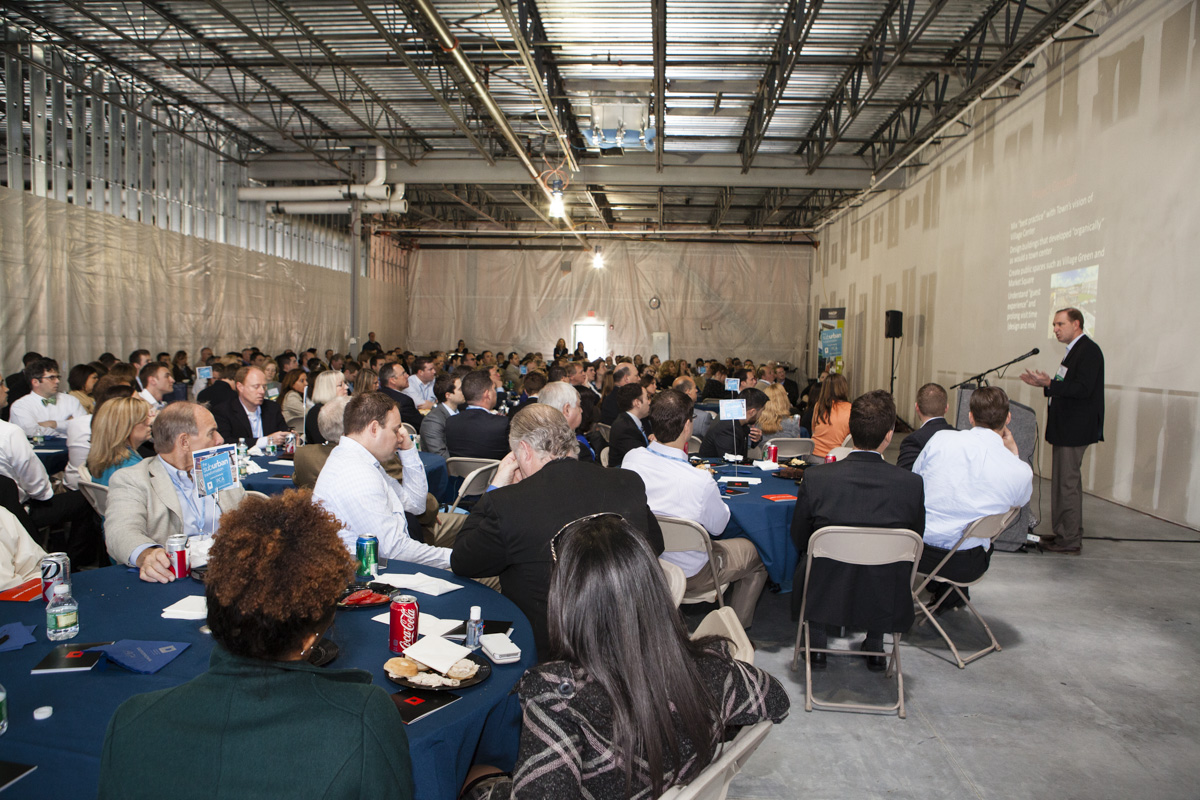
The tour stopped in Lynnfield for lunch at MarketStreet Lynnfield, a 680,000 square foot mixed-use development currently under construction. Inside a space that will become a Shoe Market store, WS Development’s Tom DeSimone and National Development’s Ted Tye shared details of the joint venture scheduled to open in August 2013.

When complete, MarketStreet Lynnfield will include 395,000 square feet of shops and restaurants, 80,000 square feet of office space, 180 residential apartments known as Arborpoint at MarketStreet, and the 9-hole King Rail Reserve golf course.

Elisif_20130501_0282Voices on Tour

I caught up with a few people on tour. Here’s what they had to say:

  • Tom DeSimone, partner, WS Development: “There’s no better way to understand real estate than to actually be there. The NAIOP Bus Tour gets you closer to the real estate by providing an introduction. Then you can go back and look at whatever may have peaked your interest.”
  • Ted Tye, managing partner, National Development: “It’s great to people out here having a nice day, getting out from behind their desks, and seeing some projects that are being built. And, it’s incredible that in 2013 that we actually have things being built.”
  • David Chilinski, co-founder and president, PCA: “The best part of the NAIOP Bus Tour is that you really get a sense of what’s happening and, importantly, what’s new in the marketplace.  We all know the tried and true properties, but the tour lets you see new projects as well as cases where people are reinventing or adding to projects. That’s the importance of this tour.”
  • Sarah Walker Weatherbee, managing director, Keller Augusta: “You get a sense of history as well as what the future holds for the Boston-area markets like the ones we saw today. And, the networking that the Bus Tour enables is unique to NAIOP—that really makes the day exceptional.”


While here, please read David’s important post below about National Development’s Roseann Sdoia, who was seriously injured in the Boston Marathon bombings. David includes a link to
Roseann’s Recovery Fund for those who wish to donate toward expenses for Roseann’s treatment and recovery.

Grim Optimism for Real Estate and the Economy

Goodwin Procter’s Real Estate Capital Markets Conference was recently held in New York City in partnership with Columbia Business School.  GP-REConferenceAn exceptional group of speakers discussed the real estate markets, investments, and the economy.

The keynote presentation was delivered by Austan Goolsbee, former chairman of President Obama’s Council of Economic Advisers, and now a Professor of Economics at the University of Chicago’s Booth School of Business. Goolsbee spoke with “grim optimism” about the US economy.  The US has the most productive work force in the world and low energy and new-energy sources will benefit our growth.  Relative to the rest of the world, our fiscal imbalance is manageable. All in all, he believes that the next six to twelve months will be a bumpy ride, but prospects in the long-run look good.

The following are a few interesting observations made during the panel discussions:

  • Demographics are playing a key role internationally, especially in the US. Effects of this will be seen in an increased demand for apartments, senior housing, and retail.
  • With accounting standards likely to change in the future, as relating to corporate leasing and ownership, more businesses will likely choose owning large amounts of their space.
  • Retail sales continue to be impacted by online competition, but retail is still a growing market. The future may move towards more hybrids that have both online and storefront locations.
  • Office space needs are dropping in terms of space requirements per new job. However, there is a sense that over time businesses will start to swing back towards a need for greater space.
  • Multifamily housing rents are back to pre-recession highs and it is likely that rents will experience slower growth going forward.
  • Record amounts of capital were raised both in the public and private markets last year. With less growth worldwide, real estate is very attractive to investors.  Investor interest is focused on yields and risk management. Where in the past, “cash is king”, now, “cash flow is king”.
  • Rates should not be rising in the short term, but that is a big risk for all asset classes. The markets could wake up to a starting spike in rates that, in hindsight, will have seemed inevitable.

Seaport, the hottest neighborhood in Boston – Part Two

In yesterday’s post I looked at the history of Boston’s Seaport Area and the new Innovation District, with insights from last week’s “Windows on the Waterfront” program. Today I finish up with a closer look at residential and retail activity, Liberty Wharf, and what to expect next as projects make the move from drawing board to construction site.

The Silver Line helped Boston's Seaport become a viable destination to work, shop, play, and live.

Interest in residential use dates back to artists’ lofts in Fort Point Channel, which  eventually led to Beacon Partners’ development of Channel Center with over 200 new condominiums.   Then came the award-winning FP3 residences and restaurants developed by Berkeley Investments.

It was Liberty Wharf, though, that brought a whole new group of visitors to the Seaport with its 70,000 sq. ft. office and retail development that includes Legal Harborside, Del Frisco’s, Temazcal Tequila Cantina, and Jerry Remy’s Sports Bar & Grille. Two-hour waits and a vibrant neighborhood buzzing with excitement are the result. Ed Nardi, working with Massport and the Jimmy’s Restaurant family was able to produce a concept that not only satisfied stakeholders, but far surpassed their expectations.  Hot off this success, Cresset recently committed to purchasing another property in the area for redevelopment.

In an excellent overview of the neighborhood’s history and future promise, architect David Manfredi gave the NAIOP audience a summary of the last 10 years of development in the area:

  • Work:    2.3 million square feet of new office space
  • Live:       750+ new residences
  • Play:      +4.7 acres of new public park and the extended Harborwalk
  • Visit:      1,639 guest rooms
  • Learn:   ICA & BCEC
  • Dine:     40 restaurants, cafes, food venues
  • Shop:    Louis

What’s coming next?

  • 1,160,000 square feet of innovation space
  • 1,500+ residences
  • BCEC expansion
  • More restaurants, cafes, food venues
  • 360,000+ square feet retail

New apartments are arriving with John Drew and HYM Development at Waterside Place, Steve Karp with Hanover Company at Pier 4, and John Hynes at Seaport Square. Innovation centers for start-up companies will be built by Drew and Hynes. And retail is finally on the drawing board for Waterside Place and a major joint venture with W/S Development at Seaport Square.  Who will get the first supermarket?  Both companies report they are currently in talks with grocery chains.

The hotel question still lingers.  With the Waterfront Renaissance Hotel in foreclosure, it is clear the market is not ready for a new hotel right now.  Some feel the elephant in the room is the BCEC expansion and that new hotel(s) will be dependent on the deal cut with the convention center.

As for the office market, as Charles Reid from Boston Global Investors indicated, there are a lot of parking lots right now and it will take some time before the Financial District feels the pinch as the Seaport lots get transformed into new development.  Other than build-to-suits (e.g. Vertex), spec development is highly unlikely in the near future.  However, there are some large blocks of space coming up for renewal in downtown – it’s possible one of those businesses could decide to relocate to a new state-of-the-art building in the Innovation District.

The bottom line is that the Innovation District has come a long way from the days when Anthony’s, Jimmy’s, and the No Name were the only major draws to cross the Fort Point Channel.  And while it may be a long way from its final build-out, there is no doubt this hot new neighborhood is here to stay.

The Changing Face of Retail

Yesterday’s NAIOP Main Event, New Rules for Retail: The Post-Recession Reality, had a standing room only crowd, and for a good reason. (See event photos here.)  The retail landscape is changing more quickly than ever before due, in part, from the influence of the internet and the changing demands of the consumer.  ICSC and NAIOP members heard from a panel of industry experts: David Smookler, Principal, The Dartmouth Company; Tom DeSimone, Executive Vice President, WS Development; Jeff Gellerman, Director Real Estate, Lowes Home Improvement, and Bill Moscarelli, Vice President Real Estate, National Amusements

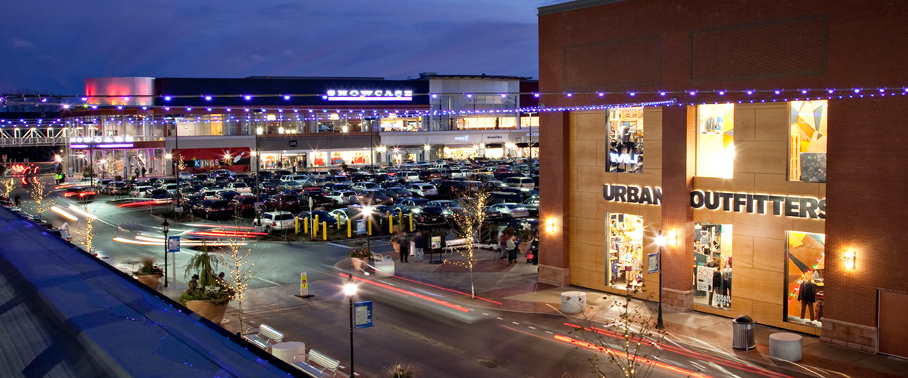
Legacy Place (photo by Michael Blanchard)

Based on the presentations, it’s clear that the cookie-cutter approach to retail development is history.  To succeed, new retail development must be customized to the community, the site, and the market.  The design of the successful Legacy Place is not going to be replicated in Lynnfield’s mixed use partnership with WS Development and National Development – it will be its own unique blend of uses and public spaces.  The stand-alone Cineplex developed by National Amusements has changed dramatically in just 15 years.  Stadium seating, 3-D movies and restaurant-style dining have made going to the movies a totally different experience. And there seems to be no doubt that even with hundreds of channels on TV and endless options for shopping and entertainment online, people will still continue to go out to have fun.  

That said, the influence of the internet continues to expand and cannot be ignored.  Shoppers are doing much of their “homework” online and shopping experiences (good, but mostly bad) are shared through social media channels and can quickly go viral. Lowes discussed the importance of staying ahead of the curve by offering customers tutorials on home improvement projects with links to purchase the supplies needed to complete the job.  

When it comes to retail, what seems to be the rule now, as before, is that change will continue to be a critical part of this industry.