
Boston-Haifa Innovation Zones

I’m on a Boston-Haifa “City to City” tour to help Boston get insights for the creation of an Innovation Zone in its Seaport District.

A group of 27 members of the Boston business and civic community are meeting with municipal, technology, and university leaders in Haifa and Tel Aviv, Israel through the City to City program run by Northeastern University and Mayor Menino.

Israel is one of the world leaders in producing a high quality skilled workforce that has attracted many of the leading global technology companies including Intel, who has here its largest R&D/production facility outside the US. (A great read: the new book: “Start-up Nation.”)

The first day we spent time with Haifa’s Mayor Yonah Yakov and the city’s Haifa Economic Corp. (HEC). To get companies to invest in their tech park, the City offers a 20% discount on municipal taxes. In their incubator building, start-ups get 3 years income tax free and 1:1 investment match with the government up to $200,000.
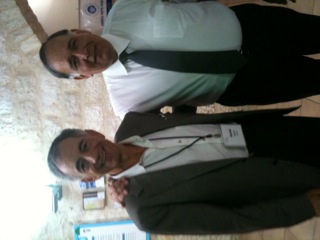
The Mayor was very generous with his time. He is a visionary, willing to risk political & infrastructure capital to get major projects started. Need a permit in 3 weeks? He can deliver. He took an abandoned area of the downtown, put in public areas and walkways, brought a new college into the district with classrooms and dorms and 2,500 students in only 3 years. Now they have restaurants, shops and galleries moving in.

Haifa is on the move!

Tribute to Ed Linde

NAIOP Massachusetts just held its awards dinner honoring Boston Properties with its 2010 Distinguished Real Estate Award and the late Ed Linde with its Public Service Award.

Edward H. Linde

When I started out in this business in the 70s, it was hard not to notice this dynamic duo of Ed and Mort.  They were a prime example of the new developer: thoughtful, analytic, creative, methodical, and visionary.  I had a number of opportunities to talk with Ed over the years.  For me and for so many others, he was always accessible and provided sage counsel.     

For Ed, the time and charitable investments he made in the community were an integral part of his life.  When he was on a volunteer board, he was there to be an active participant, regardless of the  time commitment required. 

So, a lesson from Ed to all of us; yes, it is important to do well, but equally important to do good!

NAIOP chose to honor the memory of Ed Linde in recognition of the impact he had on countless charitable and civic causes throughout the city. Known as a tireless supporter of the arts and other philanthropic causes, Ed was co-founder and Chief Executive Officer of Boston Properties until his death this January.

Throughout his career, he led by example in business as well as in philanthropy, serving as a mentor to many in the business and non-profit communities. Together with his family foundation, he was a major supporter of many of Boston’s most respected organizations, including the Massachusetts Institute of Technology, Museum of Fine Arts, Boston, Boston Symphony Orchestra and the Dana-Farber Cancer Institute.  But his support of these organizations was just the tip of the iceberg, as his civic and charitable commitments ran deep through the city, including: The Beth Israel Deaconess Medical Center, Boston World Partnerships, Jobs for Massachusetts, and WGBH, among many others.

In honor of his lasting contributions to our city and our industry, NAIOP Massachusetts has decided to rename this award the Edward H. Linde Public Service Award, so that his legacy may live on to inspire future generations of philanthropists.

A Tale of Two Cities: Commercial Real Estate Investment in Boston

The BBJ reports that a PricewaterhouseCoopers national survey confirms what we, here in Boston, have been seeing for this past year, that real estate values are living a double life.  There is a very healthy market here for core assets with low vacancies and long term leases – long enough to get through this downturn and, hopefully hit inflation in rents.

With low interest rates, credit becoming more available for credit worthy borrowers, and a ton of investor money looking for low risk real estate investments, cap rates are falling (and prices are climbing for sellers.)  More owners are considering the sale of their properties, not only due to financial pressures, but because this is a good market to sell class A properties into.  There are already a number of apartment projects that have hit the street with asking prices in the 4-6% cap range – and they will most likely sell at those prices.

Except for the other real estate. You know, the kind of property that the opportunity funds were looking to buy at a deep discount.       

Oh that there were more of that product out there.  But that is the problem.  Generally, banks and/or regulators have not pushed borrowers over the cliff (ala 1990s.) So, with limited core and distressed product and a crush of investor dollars, there is no sign that prices will moderate anytime soon for the quality stuff, or that the problem property will be priced to sell.

At the NAIOP Main Event breakfast: “Investors Unplugged,” this seemed to be the theme.  But there were some concerns voiced even about the core quality product.  The big question seemed to be can you buy at the current low returns and have an exit strategy that justifies the acquisition price.  What if interest rates rise?  Generally, cap rates rise too.  And if you can’t count on cap rates dropping to appreciate your investment, then you must be convinced that vacancies are going to drop sufficiently for rents to go up.  Will that happen in all markets?  Only those with the ability to grow the job market.  (Note, Massachusetts employment has been relatively flat from 1990 to 2010!)

And for those distressed properties counting on leasing up the vacancies, how long an absorption period are you plugging into your underwriting assumptions and how much will those rents need to rise?

Lastly, the answer to the question for each of the NAIOP participants of what can you pay for an asset today, was what is the appropriate rate of return on your capital?  That is going to be very different for the pension fund, opportunity fund, sovereign fund or REIT.

So, get ready for a bumpy ride through 2011.  Some players are rooting for the FDIC to pull the plug on life support, while others are just looking for a little more forebearance.  How that works out will be the key to the pricing of real estate product.

Windshield Tour of Boston’s Four Hottest Markets

What if you could get to know a key sector of the Greater Boston commercial real estate market in a half day?  How would you like to get in-depth insight and analysis on existing and proposed development projects, and the latest sales, lease, and development activity? 

You can do this on October 6th at the NAIOP Massachusetts Annual Bus Tour: “Markets in Transition: Today’s Projects and Tomorrow’s Opportunities.” 

Networking at NAIOP Bus Tour

If you never have participated in one of these tours, you are missing out on a great opportunity to understand what is happening in the market from the leading brokers in the area. The 2010 NAIOP Bus Tour will visit Boston’s Seaport area, Cambridge, North Inner Suburbs, and Waltham.  

You’ll be able to ask the experts questions, while networking with the region’s owners, investors, developers, brokers and real estate professionals. 

Contact Pauline Rand at 781-453-6900 ext. 4 or rand@naiopma.org or visit our website to register today.

NAIOP Enters the Blogosphere!

Welcome to the NAIOP Massachusetts blog, Policy & Trends. The blog was created to provide you with information and commentaries on  events, trends, and legislative issues affecting the commercial real estate industry in Massachusetts.

What you’ll find here: commentaries from CEO David Begelfer and industry leaders on the latest real estate deals, regulatory initiatives or news stories; updates on NAIOP events; and opportunities to Connect with NAIOP.

We look forward to hearing from you.  Stay tuned for more and we welcome your comments!