NAIOP Welcomes New MassDevelopment CEO

We are very excited that Marty Jones will be the new President and CEO of MassDevelopment 

The MassDevelopment Board made a great strategic move by attracting such an experienced real estate professional to this position. There is no question she will be a tremendous asset to the organization. 

Many of us know Marty through her longstanding role as President of the Boston-based Corcoran Jennison Companies where she oversaw development and management operations.  Recently, Marty was elected to the NAIOP Massachusetts Board of Directors.

With its substantial financial and human resources, MassDevelopment will play an integral role in the Administration’s recently restructured Economic Development operations. MassDevelopment will be critical to stimulating growth across the Commonwealth. 

We look forward to working with Marty in her new position and continuing our collaborative working relationship with MassDevelopment.

Without “Bricks,” Boston’s Greenway Needs Vision

With the YMCA’s decision to pull the plug on their Boston Greenway site, the dream of non-profit institutional involvement to activate this vast swath of open space finally comes to an end. It all sounded quite optimistic a few years ago, but reality dashed those early hopes.  Although the groups that sought these sites were quite different, they all failed for some similar reasons – some within their control, but others well outside their influence. 

Most of the proponents developed their concepts at a very different time – a bull market economy.  There was a sense that endless funding would be readily available from “flush” donors. Therefore, the plans were grand and the prospects of success seemingly assured.  But even without the financial crash, there were far too many institutional capital campaigns already in the works (universities, hospitals, and cultural/arts) to allow these new projects any realistic hope of being funded, no matter how strong Greater Boston’s philanthropic community. The recession killed off all but those campaigns that were in their last phases (e.g. MFA.), leaving the Greenway projects out in the cold.

Another problem was that the state basically ran out of money on the Big Dig.  That meant that some aspects of the project suffered.  In particular, the ramps now stand out as an orphan in search of a benefactor.  The costs to cover the ramps and fully deliver a seamless parkland were too expensive for the Turnpike, so the costs were transferred to eager non-profits who were looking for downtown sites.  Unfortunately, these groups had no idea as to the ultimate premiums they would be forced to absorb.  At one point, the Turnpike actually hoped they might even be paid for the rights to develop these “challenged” sites. Now the state has to accept that these open sores will most likely remain for the foreseeable future.

Finally, we are all left with a serious problem.  Open space is simply not sufficient to attract the public to activate this long stretch of parkland.  On any given day during the summer, it is rare to see the area stretching from China Town to the Zakim Bridge used anywhere close to the extent of other city parks.  

We may not be able to attract institutional interest to the Greenway any time soon, but we must to work to find a way to make this civic space as usable and attractive as our Emerald Necklace.  Readers – what do you suggest?

Economic Development Strategies for Patrick’s Second Term

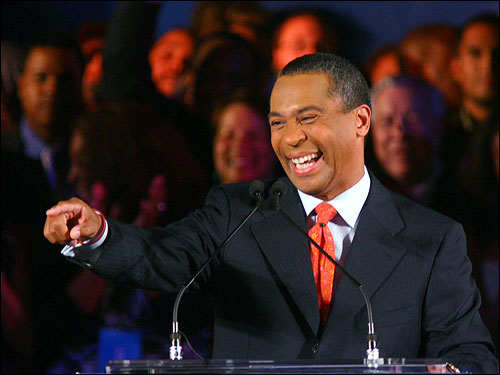
Governor Deval Patrick

Governor Deval Patrick

Kudos to Governor Patrick for his focus on jobs and economic development for his second term. Travelling within the Commonwealth, across the country, and globally to attract economic development to the state can be an effective way to market the benefits of one of the top concentrations of skilled talent in the world.

In addition, opportunities for improving the Commonwealth’s economic environment exist here at home. Recently, John Schneider wrote in MassINC’s “INCSPOT blog” about three suggestions for the Administration:

  1. Conduct a top to bottom review of regulations that affect the state’s business environment.
  2. Make higher education reform a cornerstone of your second term.
  3. Get a handle on rising costs, especially health care, energy, and local government.

I completely agree with these ideas, especially regarding the cost of doing business in the Commonwealth. Many of us know about the direct costs: taxes, fees, health care and unemployment insurance. However, the cost in both time and money that arise from the multiple layers of regulations for existing businesses are an enormous burden and make us less competitive for new growth.

We should encourage our political leaders to get out of the office and aggressively market Massachusetts, but at the same time, we need to do a top-to-bottom assessment of the rules we impose on business. The better we do on the latter, the more success we will have attracting businesses to Massachusetts.

Boston’s Investment Market in 2011 – What Would Leventhal Say?

News of the recent sale by The Fallon Co. and Cornerstone Real Estate Advisers of the 465-unit Park Lane Seaport apartment towers to a group of institutional investors comes as no surprise. Neither was the price tag at over $195 million.

Well located and leased commercial properties as well as multifamily rental properties are being bid-up by pension funds, foreign investors and investment funds.  There is plenty of money, but a limited supply of this quality product.

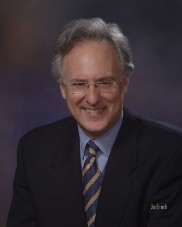
Alan Leventhal

With a limited supply and increasingly restive investors, Boston’s investment market looks ready for a comeback, and expert investors are already showing signs that 2011 could be the year.  I’ll be listening closely at our Annual Meeting next Wednesday, when investing guru Alan Leventhal speaks with NAIOP Chairman Kevin McCall about his company’s plans and predictions.

As reported in the BBJ, Fitch Ratings provided outlooks for 2011 and concluded that Boston is “one of five markets with economic vitality and tenant demand to remain a viable option for investors in real estate debt.”

Alan’s company, Beacon Capital Partners’ investment strategy focuses primarily on office properties in a select number of target markets, including Boston, Washington, D.C., New York, Los Angeles, San Francisco, Seattle, Chicago, London, and Paris.  They believe that these markets are more resilient to the peaks and valleys of the real estate cycle and offer greater and more consistent strength over the long term.

Beacon has had a great track record in evaluating prospective investments in constrained markets that offer them opportunities to capitalize on the market inefficiencies and to add value through operating expertise.    Let’s see what he has to say about this market and what we can expect to see in 2011. Register to hear A Conversation with Alan Leventhal, part of the NAIOP Annual Meeting, from 8-9:30 on Wednesday, Dec. 15 at the Seaport Hotel.

MIT Professor William Wheaton to Speak at NAIOP/SIOR Forecast

MIT Professor William Wheaton – who is speaking at our Dec. 2 NAIOP/SIOR Annual Market Forecast – has been generating national media coverage lately with his calls for lenders to “split the difference” on mortgages facing foreclosure. From an email sent out by the MIT Center for Real Estate, where Wheaton teaches a popular course on the economics of real estate markets: 

“With the release of MIT/CRE Professor William Wheaton’s recent proposal for fixing the housing mess, three of the nation’s premier media outlets (Fortune MagazineNational Public Radio, and CNBC) have sought him out for further comment and forecasting. Professor Wheaton proposes that the 2-sides of the equation “split the difference”.  Lenders write down the mortgage to current value, and then take a significant (but not complete) share of any equity appreciation that does occur. This gives the borrower a deal good enough to prevent “walking”, and also provides the lender with an asset (the contingent claim on appreciation at sale) that is much better than taking the write down alone. It’s a win-win, although the devil is always in the details.” 

Professor Wheaton will turn his attention to the commercial side of things at our always-popular Forecast, where his economic overview will look at current conditions, their impact on the market, and what to expect in the coming year.  Don’t miss this opportunity to hear the latest economic news from a local expert! Click here for more info on the Forecast.

Tribute to Ed Linde

NAIOP Massachusetts just held its awards dinner honoring Boston Properties with its 2010 Distinguished Real Estate Award and the late Ed Linde with its Public Service Award.

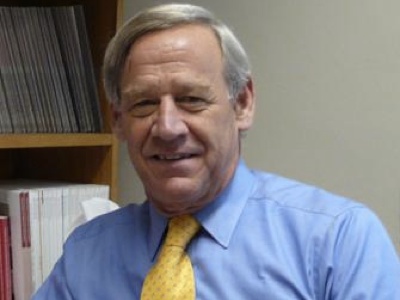
Edward H. Linde

When I started out in this business in the 70s, it was hard not to notice this dynamic duo of Ed and Mort.  They were a prime example of the new developer: thoughtful, analytic, creative, methodical, and visionary.  I had a number of opportunities to talk with Ed over the years.  For me and for so many others, he was always accessible and provided sage counsel.     

For Ed, the time and charitable investments he made in the community were an integral part of his life.  When he was on a volunteer board, he was there to be an active participant, regardless of the  time commitment required. 

So, a lesson from Ed to all of us; yes, it is important to do well, but equally important to do good!

NAIOP chose to honor the memory of Ed Linde in recognition of the impact he had on countless charitable and civic causes throughout the city. Known as a tireless supporter of the arts and other philanthropic causes, Ed was co-founder and Chief Executive Officer of Boston Properties until his death this January.

Throughout his career, he led by example in business as well as in philanthropy, serving as a mentor to many in the business and non-profit communities. Together with his family foundation, he was a major supporter of many of Boston’s most respected organizations, including the Massachusetts Institute of Technology, Museum of Fine Arts, Boston, Boston Symphony Orchestra and the Dana-Farber Cancer Institute.  But his support of these organizations was just the tip of the iceberg, as his civic and charitable commitments ran deep through the city, including: The Beth Israel Deaconess Medical Center, Boston World Partnerships, Jobs for Massachusetts, and WGBH, among many others.

In honor of his lasting contributions to our city and our industry, NAIOP Massachusetts has decided to rename this award the Edward H. Linde Public Service Award, so that his legacy may live on to inspire future generations of philanthropists.