Seaport by Foot: Walking Tour Recap

Every year, NAIOP takes its members on a walking tour that explores the latest real estate development projects in a specific neighborhood. This year, NAIOP members toured the Seaport, where they had the chance to see recently opened buildings and get an invaluable sneak peek of what’s to come. A still evolving neighborhood, the Seaport has seen incredible investment in everything from office and lab space, to residences along the water, and innovative retail. The district is 23-acres of mixed-use zoning, including 10 acres of open space, and has become a new hub of commerce, culture, and innovation in the City of Boston.

Icon Theater

The sold-out walking tour kicked off at the Icon Theater. The group got a lesson on the history of the neighborhood from David Martel of Newmark Knight Frank, and an important reminder that what is happening in the Seaport now is the result of over 30 years of work from visionaries, investors, and developers who came together to transform the Seaport into what it is today. Yanni Tsipis of WS Development discussed the billions of dollars of public investment, including the Harbor cleanup and Big Dig, that catalyzed the growth of the Seaport. He also discussed his firm’s massive, transformative development, Seaport Square, including the forthcoming 88 Seaport, a mixed-use retail and office project, and 111 Harbor Way, future home to Amazon.    

121 Seaport Boulevard

The group then headed to 121 Seaport, home to PTC’s global headquarters and Alexion Pharmaceuticals. Developed by Skanska, the project officially opened earlier this year. Carolyn Desmond of Skanska discussed the development of this 17-story, 450,000 square foot elliptical tower, which included the discovery of a long-buried ship during construction! Marc Margulies of MPA then covered the cutting-edge design of the PTC headquarters.  The building’s unique shape provided increased opportunities to build out a truly unique space for the offices, providing optimal light and functionality.  Attendees then toured the PTC office, including its incredible rooftop terrace.

Photo of 121 Seaport
Bruce T. Martin Photography 508-655-7557 btm@bruceTmartin.com 154 East Central St Natick MA 01760

Harbor Way

Outside of 121 Seaport, Martin Zogran from Sasaki discussed his firm’s work to create an expansive public realm program, which weaves together a unique fabric of residences, offices, shops, restaurants, civic uses, and hotels.The master plan is designed to encourage walkability and alternative mobility options with 39% of the total project area being exclusively devoted to pedestrian-only open space. As an example, a tree-lined pedestrian path, Harbor Way, punctuated by plazas and amenity spaces serves as the district’s cultural corridor and north-south connector between the Institute of Contemporary Art (ICA) and the Boston Convention and Exhibition Center (BCEC). Their work will bring a diverse mix of uses, pedestrian-oriented public space, and greater coherence and connectivity to the Seaport.

Photo of Harbor Way

EchelonSeaport

A quick walk across the street brought attendees to EchelonSeaport. Developer Michael Schumacher of The Cottonwood Group and Phil Casey of CBT gave an overview of this 1.33 million square foot community, featuring two condominium towers and one multifamily tower with 60,000 square feet of indoor and outdoor residential amenity spaces. The design, focused on the intersection of art and commerce through the lens of luxury hospitality, will include significant public space and promises to be a striking addition to the Boston skyline. With amenities for both towers ranging from pools to private dining rooms, EchelonSeaport promises to provide residents with much more than just a place to live.

Rendering of EchelonSeaport

The St. Regis Residences, Boston

Attendees then went to the former Whiskey Priest location, which will soon be the St. Regis Residences, Boston. Sean O’Grady of Cronin Development and Rebecca Eriksen of Elkus Manfredi Architects discussed the project, which broke ground in Fall 2018. The project faced a unique caveat in initial design – the property borders the Harbor on two sides. Rising to the challenge, the latest residential waterfront development in the Seaport promises to evoke nautical themes in every aspect of its architecture and décor. Currently slated to open in early 2021, the 114 residences will provide a highly curated experience, featuring signature design, dramatic views, an 8,000+ square foot bistro with additional terrace space, on-site spa, and other luxury amenities.

Rendering of The St. Regis Residences, Boston

Thomson Place

From there attendees went to the Seaport’s Fort Point Channel, where Jamie Carlin and Paul Connolly of Crosspoint Associates discussed the future of Thomson Place – a renovation and reinvigoration of one of the area’s historic warehouses. Scheduled to open in Fall 2019, the project will include office, retail and mixed-use space. Currently home to Trillium Brewing, Bartaco, and a new public plaza, the project brings new energy to the neighborhood, while preserving its historic character.

Rendering of Thomson Place

Networking

The group wrapped up the day at The Grand for a networking cocktail hour sponsored by WS Development. Attendees had the opportunity to chat with brokers, project teams and each other to wrap up a successful tour with a well-deserved cocktail in hand. Plans are already underway for next year’s tour. We look forward to seeing you then!  

CEO TAMARA SMALL TESTIFIES IN SUPPORT OF NAIOP LEGISLATION REGARDING UTILITY ACCOUNTABILITY

On Tuesday, July 9 NAIOP CEO Tamara Small testified before the Joint Committee on Telecommunications, Utilities and Cable in support of NAIOP bill H. 2861, An Act to Encourage Predictability in Utility Connections. Introduced by Representative Thomas Golden of Lowell, the legislation is targeted at addressing the frustrations the commercial real estate sector has expressed for years regarding the lack of transparency and predictability for utility connections at development projects. If passed, the bill will ensure that commercial customers, as well as new connections and relocations of existing connections, are included in the service quality standards.

NAIOP CEO Tamara Small testifying before the Joint Committee of Telecommunications, Utilities and Cable July 9,2019

Currently, when utilities request a rate increase, they are “graded” based on how they perform under the Department of Public Utilities’ Service Quality Standards.  Customer satisfaction, response times for service outages, and repairs and maintenance are some of the criteria considered under M.G.L. Chapter 164 §1E.  However, utilities are only judged based on their performance with residential customers, not commercial customers.  In addition, only existing connections, and not new connections, are included in the service quality standards.

“As we saw with the gas moratorium and lockout last fall, new utility connections are absolutely critical for economic growth,” testified Small. “Small business owners could not open their doors, companies could not relocate to new office space, and tenants who had signed leases for new apartments did not have a place to call home.”

NAIOP believes that by including commercial projects, the relocation of existing connections, and new connections in the review process, we will have greater transparency and accountability in the regulation of our utilities statewide. NAIOP will continue to advocate for the passage of this bill so that future real estate development projects could benefit from the proposed change.

Planning for a Changing Climate is a Shared Responsibility: Private, Public and Philanthropic Sectors Must Work Together

The following column was published in the July 7 edition of Banker & Tradesman.

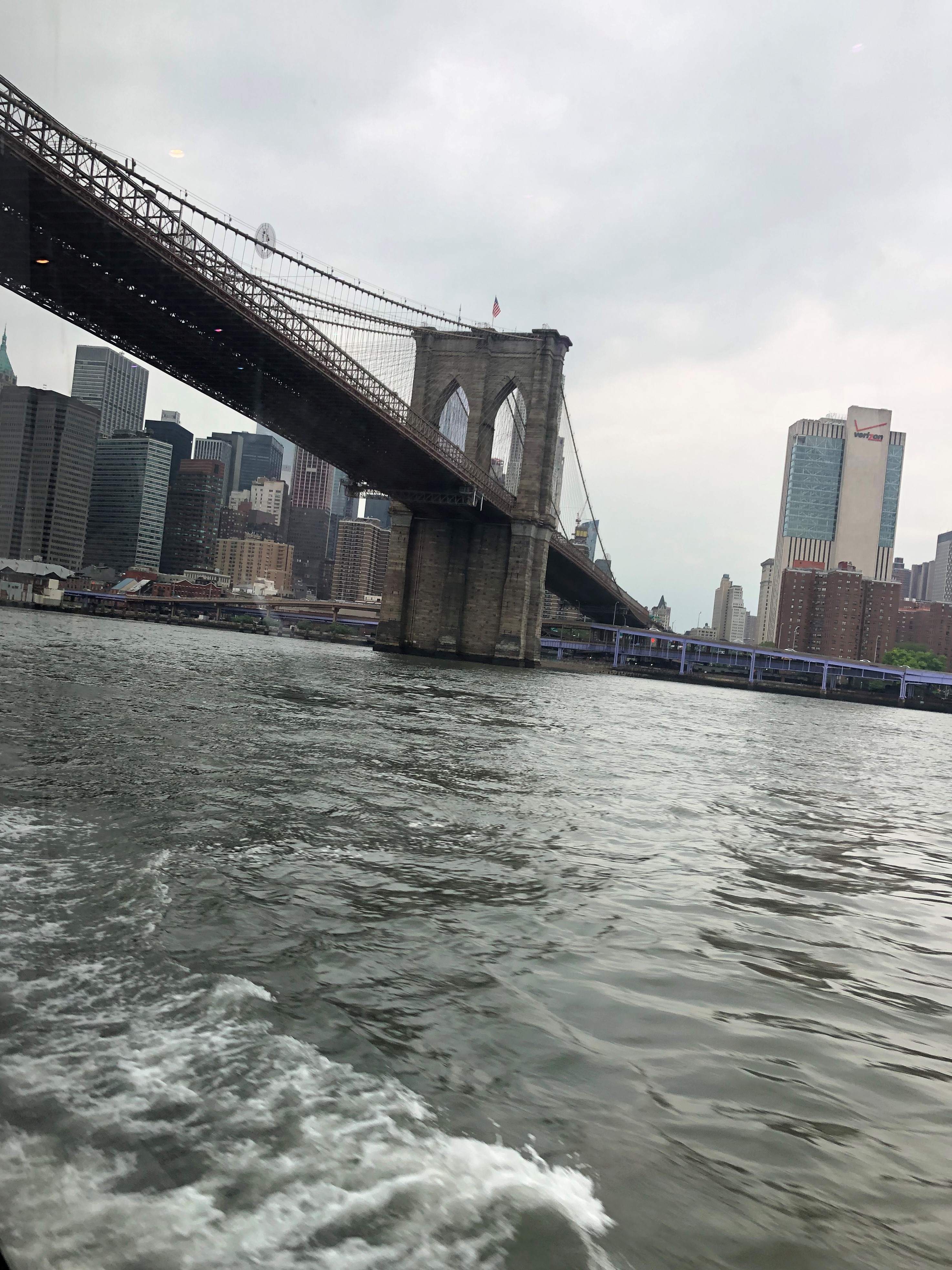
NYC CLIMATE TRIP JUNE 2019In June, a group of business leaders, philanthropists and environmental advocates joined Boston Mayor Marty Walsh and his environmental team on a “City to City” trip to New York hosted by the Environmental League of Massachusetts and the Greater Boston Chamber of Commerce. As the CEO of an organization that has made climate change resiliency one of its top policy priorities, I was honored to be part of this distinguished group.

The trip was designed to provide attendees with an inside look at how Lower Manhattan responded to Hurricane Sandy and how the public and private sectors are planning for the future. During the walking tour, it quickly became clear that building owners and developers were the “first responders” post-Sandy. Whether through the installation of flood protection measures, nature-based solutions, the elevation of mechanical systems or innovative design measures, the commercial real estate industry is spending millions of dollars on climate change resiliency.

While these types of investments are critical, having a “climate–proof” building in the middle of a neighborhood without power or transportation provides no real public or private benefit.

During Hurricane Sandy, a 9.5-foot storm surge flooded the Hugh L. Carey Tunnel, which connects Brooklyn and Manhattan, with 60 million gallons of contaminated salt water, causing extensive damage. After the storm, the city installed 50,000-pound steel flood gates to protect against a 500-year flood event. Watertight flood walls were installed around the tunnel’s ventilation shafts. Hundreds of millions of dollars in FEMA funds were spent on the project.

If that was the cost for just one project, then one thing is very clear – addressing climate change through mitigation and adaptation will require massive amounts of funding and collaboration between federal, state, local, private and philanthropic entities.

What Does This Mean Locally? 
Boston is taking this issue very seriously.

In October, Walsh released the Resilient Boston Harbor Plan, which is designed to protect the city against the impacts of rising sea level and climate change. The plan includes elevated landscapes, enhanced waterfront parks, flood–resilient buildings and increased access to the waterfront. The city of Boston also became one of the first cities to set a target of carbon neutrality by 2050. Flood overlay zones are being developed, which will affect new construction and existing buildings.

At the state level, aggressive goals for reducing greenhouse gas emissions have been set, new energy efficiency codes have been adopted and comprehensive adaptation and mitigation plans are now being implemented. Nearly all of these policies and plans will affect the real estate industry.

For commercial real estate developers in the Boston area, climate change resiliency is a top priority. Extreme weather events, eroding shorelines and sea level rise have the potential to impact properties and tenants. As a result, new development projects are the most climate resilient. They are designed to take on the storms of the future and often include measures that will protect surrounding neighborhoods from the impacts of climate change.

Recognizing that while climate change cannot be ignored, economic realities still apply. If one sector of the market is overly burdened with new regulations and costs, resiliency measures will fail.

What’s the Solution? 
As the state and cities move forward with their climate resiliency efforts, flexibility is required so that the real estate industry can effectively address climate change without restricting future housing and economic development, which produce crucial property tax revenue. Regulations should provide owners and developers with the ability to make decisions based on the needs of the individual properties, tenancy and product type. Both costs and risks must be evaluated when considering climate change-related investments or regulatory changes.

Given the impact of climate change on all residents of the commonwealth, the burden for addressing this issue should be shared equitably. While an increase in the transfer tax has been proposed as a solution, it’s not the right approach. It only targets a subset of the population and may have the unintended consequence of driving up the cost of housing.

Lowell’s Rep. Thomas Golden, with the support of House Speaker Robert DeLeo, recently filed H3846, An Act Relative to GreenWorks. This proposal is a $1.3 billion energy and resiliency bill designed to offset climate change, creating a new grant program for cities and towns throughout Massachusetts to fund projects focused on climate resiliency. It is modeled after the successful MassWorks infrastructure program and builds on the Environmental Bond Bill passed in 2018.

Given the magnitude of this issue, no one piece of legislation can fully address climate change, but the GreenWorks legislation will set the commonwealth on a path towards improved resiliency. Its passage, combined with public-private partnerships and innovative solutions, will ensure continued economic growth and quality of life in Massachusetts as we tackle one of the greatest challenges threatening the future of the planet.