State Proposing Energy Asset Rating for Commercial Buildings

Yesterday I attended a Department of Energy Resources (DOER) hearing on its draft Commercial Building Energy Asset Labeling Program in Massachusetts. It would be the first energy asset labeling program of its kind in the world.

Initially a two – three year pilot, the goal is to require all existing commercial buildings to acquire an energy asset rating before a specific “trigger event” (e.g., building sale, re-finance, or major renovation). The lower the energy efficiency, the lower the rating. DOER’s goal is to motivate owners to invest in energy efficiency to avoid a bad score and a devaluation of the property. The proposed program would rate buildings against a “zero net energy benchmark.” As a result, most commercial buildings would be branded with a low score.

NAIOP is concerned that no business group was informed of this initiative until the white paper went out for public comment – especially given the significant impact this will have on investment and lending in the Commonwealth. The comment period closes on February 12 and NAIOP will be submitting detailed comments. In the meantime, here are the highlights from my testimony at yesterday’s hearing: Continue reading

Get the Most Out of Membership: 5 Tips for You and Your Firm

Everyone knows effective networking is a key to continued business success, personally and for your company.  It is through the cultivation of long-term business relationships that existing business expands and new opportunities open up.

One of the best opportunities to network with peers and potential clients is by being an active member of one or more trade associations.  There is an association for almost every niche, locally and nationally, and beyond networking , they offer many other benefits including seminars, workshops, social events, and issue advocacy.

NAIOP at Night, a popular networking event

But just joining an association is not enough. To get a good return on your investment, follow these five tips to building relationships through associations:

1.  Join the right organizations for you.  There is probably more than one association you should consider. Go beyond the obvious and think about who you want to network with.  If you are an attorney, of course you will benefit from learning and sharing with your fellow lawyers, but you won’t get nearly as many business leads as from a group that represents your target industry (which is why so many top real estate lawyers belong to NAIOP.) Find out from friends and colleagues who the association’s members are, and ask yourself if those are the people you need to be developing relationships with. If so, then join!

2.  Participate.  Just being listed as a member of an organization has limited benefits – you must get involved to reap the full value of your membership.  Get started  by attending  programs and introducing yourself,  especially once you’re seated at a table (and don’t always sit with people you already know!)  Remember, you are there to get to know people and for them to get to know you.  Like any kind of relationship building, don’t race to the “finish line” and don’t use these meetings as selling opportunities.  But do come prepared with business cards and be ready to share a clear, concise, and brief description of what you do.

3.  Join a Committee. The gold mine of networking is within the association’s committee structure.  Organizations are always looking for members to volunteer on their many committees, such as program, membership, government affairs, social, and charitable events. There is no better way to get to know others and develop business contacts than by working with them on a common goal.  It’s enjoyable and you get to contribute your ideas and see their effect. (Learn more about NAIOP’s committees)

Networking at NAIOP's 2010 Bus Tour

4.  Speak up!  Talk to people at programs and events.  If there are coffee breaks, discuss the subject matter of the educational event.  Best kept secret for networking: while listening to the presentation, prepare a relevant question for the speakers if there is a Q&A period.  Often no one is ready to ask the first  question, so stand up, say your name and company and ask away.  It’s a  great way to get noticed.

5.  Get on the leadership track.  Once you have a better knowledge of the association and have sampled some of their committees, consider becoming a part of the volunteer leadership.  Choose a committee you have a strong interest in and where you feel you can contribute.  Make a commitment to attend regularly and to consistently contribute to the group in some way, whether it be suggesting program ideas, finding speakers, hosting meetings, recruiting new members, etc. Organizations promote from within and generally choose those members that show leadership qualities.

Bottom line: Join, participate, and enjoy; the benefits will come your way.

Economic Development Strategies for Patrick’s Second Term

Governor Deval Patrick

Governor Deval Patrick

Kudos to Governor Patrick for his focus on jobs and economic development for his second term. Travelling within the Commonwealth, across the country, and globally to attract economic development to the state can be an effective way to market the benefits of one of the top concentrations of skilled talent in the world.

In addition, opportunities for improving the Commonwealth’s economic environment exist here at home. Recently, John Schneider wrote in MassINC’s “INCSPOT blog” about three suggestions for the Administration:

  1. Conduct a top to bottom review of regulations that affect the state’s business environment.
  2. Make higher education reform a cornerstone of your second term.
  3. Get a handle on rising costs, especially health care, energy, and local government.

I completely agree with these ideas, especially regarding the cost of doing business in the Commonwealth. Many of us know about the direct costs: taxes, fees, health care and unemployment insurance. However, the cost in both time and money that arise from the multiple layers of regulations for existing businesses are an enormous burden and make us less competitive for new growth.

We should encourage our political leaders to get out of the office and aggressively market Massachusetts, but at the same time, we need to do a top-to-bottom assessment of the rules we impose on business. The better we do on the latter, the more success we will have attracting businesses to Massachusetts.

Mismatch in the Labor Market

A newly published study by Alicia Sasser Modestino from the New England Policy Center of the Federal Reserve Bank of Boston points to a growing mismatch with the supply and demand for an important component of our skilled labor pool, “middle-skilled” jobs.  A gap of 780,000 workers could exist by 2018.  She observes that:

  • Since 1990, the region’s population of working-age adults with any postsecondary education has been growing slower than that in the rest of the US due to slower population growth and greater net domestic out-migration.  Over time, New England’s labor force will likely shrink, while that of the nation is likely to grow.
  • While the region has led the nation in terms of increasing the “high-skill” share of its population, it has consistently under-performed in terms of increasing the share of “middle-skill” workers (individuals with some college or an associate’s degree). The supply of skilled workers will not grow fast enough to keep pace with demand once the economy recovers.

According to the report, we need to ”grow our own talent” by increasing postsecondary educational attainment – especially utilizing the Community College system – through career-oriented programs that focus on preparing students for high demand middle-skill jobs. 

However, with limited state resources, putting more funding into community colleges must be tied with the responsibility to make sure that those resources are spent efficiently and effectively.

Suggested actions include:

  • Programs in other states have shown that financial aid along with offering stipends, child care, and transportation during periods of study can boost completion rates.
  • Greater communication between firms that hire “middle-skill” workers and the institutions that educate them could better align training curriculum with employer needs.
  • Better collaboration among community colleges could provide a cost effective, strategic direction needed to achieve these goals.
  • A single, unified system of community colleges could be an important part of an overall workforce development strategy, including other postsecondary education and training options such as employer and vocational training, certificate and apprenticeship programs, career centers, and ESL programs.


Strengthening community colleges can be a win-win-win for students, employers, and the region.

Gerald Hines’ Five Principles of Success

Gerald Hines

At MIT’s Center for Real Estate’s 25th anniversary graduation weekend, Gerald D. Hines gave the keynote address sharing his five principles of success. (Gerald is founder and CEO of Houston-based Hines, one of the largest and most respected real estate investment, development and management firms in the world.)

For anyone involved in development or looking to understand what it takes to be a successful, world class developer, read on:

  1. Create Quality Architecture. Hines’ love affair with great architecture is the stuff of legend. Long ago he made a commitment to collaborate with great architects — prominent architects such as I. M. Pei, Philip Johnson, Cesar Pelli, Frank Gehry, and Robert A. M. Stern have all worked with Hines. He urged the audience to build “something that endures.” 
  2. Commit to Sustainability. In the Hines lexicon, sustainability means two things. First, it refers to the durability of the buildings. Second, sustainability reflects the flexibility built into the design and construction of buildings. Hines is a leader in the EPA’s Energy Star program.
  3. Opportunities Exist in Acquiring Buildings – But Make Sure You Can Add Value. “You have to know when the cycle is at the top,” he said. “When you can borrow all the equity, it’s time to sell.”
  4. Mixed Use Developments Promote Better Communities and Also Lower Risk. Hines showcases prominent developments that exemplify the advantages of mixed use, all of which incorporate a range of uses, including offices, retail, hotels and condominiums.
  5. Human Talents Are Hidden Assets. Hines’ management structure is decidedly lean. Below a handful of very senior executives, other company leaders are compensated through 50 percent equity in the projects they are working on, not in the company as a whole. This arrangement reduces company risk while empowering the leaders and inspiring them to do their best work. 

To view Gerald Hines entire talk, please click here.
To learn more about the MIT Center for Real Estate, click here.
To learn more about Gerald Hines and his firm, click here.

Boston’s Investment Market in 2011 – What Would Leventhal Say?

News of the recent sale by The Fallon Co. and Cornerstone Real Estate Advisers of the 465-unit Park Lane Seaport apartment towers to a group of institutional investors comes as no surprise. Neither was the price tag at over $195 million.

Well located and leased commercial properties as well as multifamily rental properties are being bid-up by pension funds, foreign investors and investment funds.  There is plenty of money, but a limited supply of this quality product.

Alan Leventhal

With a limited supply and increasingly restive investors, Boston’s investment market looks ready for a comeback, and expert investors are already showing signs that 2011 could be the year.  I’ll be listening closely at our Annual Meeting next Wednesday, when investing guru Alan Leventhal speaks with NAIOP Chairman Kevin McCall about his company’s plans and predictions.

As reported in the BBJ, Fitch Ratings provided outlooks for 2011 and concluded that Boston is “one of five markets with economic vitality and tenant demand to remain a viable option for investors in real estate debt.”

Alan’s company, Beacon Capital Partners’ investment strategy focuses primarily on office properties in a select number of target markets, including Boston, Washington, D.C., New York, Los Angeles, San Francisco, Seattle, Chicago, London, and Paris.  They believe that these markets are more resilient to the peaks and valleys of the real estate cycle and offer greater and more consistent strength over the long term.

Beacon has had a great track record in evaluating prospective investments in constrained markets that offer them opportunities to capitalize on the market inefficiencies and to add value through operating expertise.    Let’s see what he has to say about this market and what we can expect to see in 2011. Register to hear A Conversation with Alan Leventhal, part of the NAIOP Annual Meeting, from 8-9:30 on Wednesday, Dec. 15 at the Seaport Hotel.

Barriers to an Economic Recovery in Massachusetts

I just finished reading a recent interview with Northeastern University’s Andrew Sum in MassINC’s CommonWealth Magazine.  Andrew is the Director of the Center for Labor Market Studies, which he founded in 1971, so he is no newcomer to the issues plaguing the Commonwealth.

In the interview, Sum makes some powerful observations that illustrate the serious challenges facing the Massachusetts economy:

We are still down 240,000 jobs below where we were in 2001.  We have the fifth worst job creation record in the country. If you take it back to 1988, we are up only 13,000 [net] jobs from where we were 22 years ago.  Back in 1984 in Massachusetts, we were making a recovery back to full employment faster than just about any state in the country.  That year we created 140,000 jobs.  We created the equivalent of 13,000 a month. And that’s how many we’ve created in the last 22 years.

Clearly, we have a long-standing problem that has affected our economic activity for over two decades.

A few other points from Andrew that should catch your interest:

  • We had the highest ratio of male job loss from the end of 2007 through the end of 2009 in the entire country — there was nobody close to us.
  • Out-of-wedlock birthrates have risen and now represent over half the births to women under 30.  That means more single parent families facing severe income inadequacy.  These kids have a very high drop-out rate, very low college attendance rate, and an even lower college graduation rate.
  • Teenagers are working at the lowest rate since World War II. (And there is a direct correlation between work experience at an early age and success in school and work.)

There are no simple solutions, and quick fixes without funding are not going to make a dent in the problem.  Avoiding these issues will only create additional barriers to growth.  Now is the time to determine the full range of action steps needed to end this downward trend. The future of the Commonwealth depends on it.

The Boston – Haifa Connection for Innovation

This is the final report on Boston’s “City to City” trip to Israel to learn about the best management practices of the major two cities in Israel to successfully attract and grow innovative businesses. 

I am not sure what the City of Boston can do to transform the Seaport District into an Innovation Zone.  There will be many more meetings of this group to discuss that goal.  However, what is very clear to me is that there is a great opportunity to attract Israeli businesses to the Commonwealth, in general, and to Boston, in particular.

A recent study by Stax Inc. showed that Israeli entrepreneurship is a significant driver of the Massachusetts economy with 100 Israeli companies employing nearly 6,000 Massachusetts workers, generating more than $2.4 billion in direct revenues in 2009 alone.

Israel is a global leader in innovation and this has not gone unnoticed by many other state economic development agencies.  California, Georgia, Virginia, New York, New Jersey, and Maryland have established strong ties with Israel.  Though 83% of respondents to the Stax survey indicated that Massachusetts is their top choice to locate their businesses, our advantage may be at risk unless we do more to create a true economic partnership. 

On a human services basis, we have had a Boston-Haifa Connection for years established through the local agency, the Combined Jewish Philanthropies, and I can tell you that the leadership in Haifa very much appreciates that partnership.  However, the City of Boston needs to take the next step to formalize an economic development relationship.

Just a few recommendations from the Stax report:

  • Open a trade office in Israel (the Mayor of Haifa has offered Boston free office space!)
  • Send trade delegations
  • Form strategic industry partnerships (e.g. life sciences and clean-tech) with the Israeli government
  • Promote direct flights to Tel Aviv from Boston
  • Enhance our academic exchange programs
  • Promote Massachusetts tourism in Israel

Israeli businesses are innovative and benefit from the support they get at home. However, when it comes time to grow their businesses globally, they first look to the United States.  By implementing the recommendations listed above and by publicly advocating such a partnership, I believe we make Boston their only choice!

MIT Professor William Wheaton to Speak at NAIOP/SIOR Forecast

MIT Professor William Wheaton – who is speaking at our Dec. 2 NAIOP/SIOR Annual Market Forecast – has been generating national media coverage lately with his calls for lenders to “split the difference” on mortgages facing foreclosure. From an email sent out by the MIT Center for Real Estate, where Wheaton teaches a popular course on the economics of real estate markets: 

“With the release of MIT/CRE Professor William Wheaton’s recent proposal for fixing the housing mess, three of the nation’s premier media outlets (Fortune MagazineNational Public Radio, and CNBC) have sought him out for further comment and forecasting. Professor Wheaton proposes that the 2-sides of the equation “split the difference”.  Lenders write down the mortgage to current value, and then take a significant (but not complete) share of any equity appreciation that does occur. This gives the borrower a deal good enough to prevent “walking”, and also provides the lender with an asset (the contingent claim on appreciation at sale) that is much better than taking the write down alone. It’s a win-win, although the devil is always in the details.” 

Professor Wheaton will turn his attention to the commercial side of things at our always-popular Forecast, where his economic overview will look at current conditions, their impact on the market, and what to expect in the coming year.  Don’t miss this opportunity to hear the latest economic news from a local expert! Click here for more info on the Forecast.

City to City: Universities & the Innovation Economy

I’m in Tel Aviv, Israel after several days in Haifa as our “City to City” team completes its investigation of this country’s experience with start ups and  innovation.

Israel leads the world in percent of GDP spending on civilian R&D and in the number of engineers, scientists, & PhDs per capita. It also has more companies listed on NASDAQ than any country other than the US.

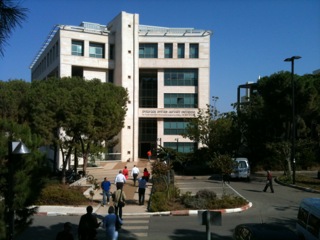
Technion, Israel's University of Technology

The universities play a critical role and one we should emulate. The first is obvious – they emphasize science and math in K-12 and produce more engineers and scientists! I am a big fan of liberal arts education, but in this digital world, the new industries require more PhDs in these areas.

Second, their universities drive innovation and technology transfer to the private sector. We met with the president of Technion (Israel’s MIT), the president of Haifa University, and local entrepreneurs. The schools encourage the creation of start ups, and have structured a support system that is coordinated with a national initiative that reviews and funds new ideas.

We have more schools per capita than any other state. We need to follow Israel’s lead and ensure these types of partnerships exist at many other schools besides just MIT. Connecting our colleges and universities with an economic development strategy will secure our position as an innovative leader now and in the future.