Will We See More Development Over the Pike?

A recent editorial in The Boston Globe spoke about the successful conclusion of the permitting for Fenway Center, the $450 million mixed-use project over the Mass. Turnpike.   The gist of the piece was that developing air rights is no easy matter.  Besides the very high cost of developing over an eight lane highway, there are the inevitable lawsuits that can stretch an approval process out by 2-3 years.  The Fenway Center case was finally resolved in appeals court.

Columbus Center, another very worthwhile project involving air rights, was not so lucky.  While the financial crisis played a role in its demise, one of the real reasons that it did not move forward was due to the lengthy delays caused by well over 100 public meetings.  No one can deny the appropriateness of having community involvement, but there must be some limit on that process.  Are the city and neighborhood really better off with the scar of an urban highway canyon dividing the Back Bay and the South End than it would have been with a mixed-use project including affordable housing?

The Globe said that “These projects shouldn’t be the last along the Pike.”  However, predictability and transparency are necessary before any developer will be willing to risk capital on a speculative urban development involving air rights.  A few suggestions:

  1. Establish some clear guidelines for developers interested in responding to RFPs for future air rights parcels;
  2. Set a limit on the number of public hearings with the appropriate neighborhood groups within a limited time period;
  3. Allow the developer to opt in to the Permitting Session of the Land Court for any appeals;
  4. Require appellants to post a bond if they choose to appeal the decision of the court;
  5. Allow developers to count some portion of the cost of the infrastructure associated with the air rights project as part of their community betterment payments.
Boston’s parking freeze needs to be thawed

This Letter to the Editor appeared in the June 14, 2012 edition of Boston Business Journal.

To the editor:
The viewpoint expressed in your recent article titled “Seaport Squeeze” piqued my interest. I find it worrisome that the Seaport area will soon transition from servicing commuter parking for downtown Boston, to an area servicing parking for its new residents and businesses.

We should all be a bit more concerned about the results of this impending transition. The parking freeze was initially proposed in the early 1970s for downtown Boston and Logan Airport. Subsequently, parking freezes were adopted in Cambridge, East Boston and other parts of Boston. With the growth of the office market over the past three decades, many workers have certainly taken advantage of Boston’s mass transit system, but those who commute by car benefit from the low-cost parking in the undeveloped Seaport area.

With a parking inventory freeze in the Seaport, long-term availability of satellite surface parking is at odds with the construction of high-rise apartments and offices. As the amount of commuter parking diminishes, the stress on businesses in the Financial District, to keep their commuting employees, increases. Mass transit cannot absorb all these commuters. At some point, companies that have relied upon employees that commute to work may be forced to look elsewhere for office space.

There are two areas that need attention. Firstly, Boston businesses are highly dependent on the MBTA and the legislature needs to act, not just with a short-term fix, but with a multiyear plan to reduce the T’s burdensome debt, and increase the long-deferred investments to enhance, expand, and improve ridership capacity and satisfaction.

Secondly, a myriad of programs have been implemented nationwide to reduce parking and transportation demand that do not depend on freezes. Even the city of Cambridge has abandoned its parking freeze approach and implemented a Vehicle Trip Reduction programs to address parking, traffic and air-quality issues.

Maybe the time has come to take reevaluate the city’s parking freeze policy, which is one of the very few left in this country.

David Begelfer
CEO of NAIOP Massachusetts

MassDOT Looking for Opportunities

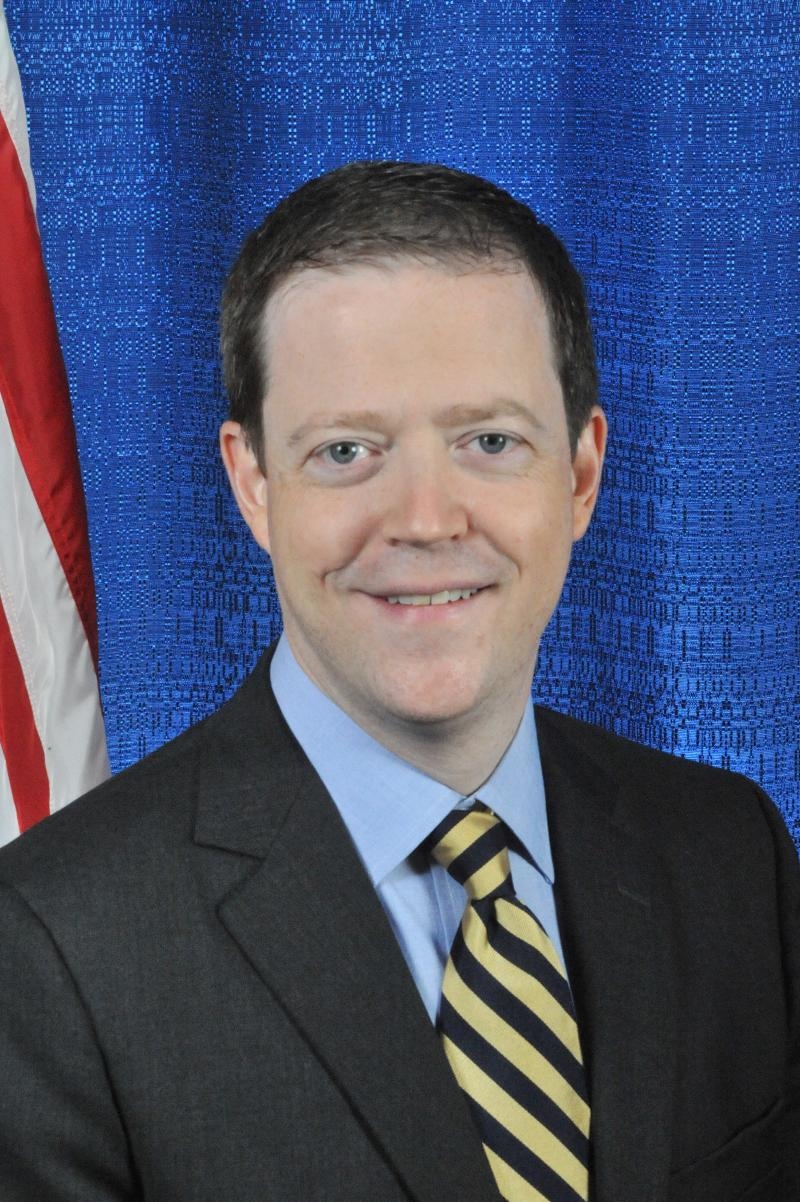
On December 6, MassDOT Secretary and Chief Executive Officer Richard Davey spoke at NAIOP’s Government Affairs Roundup.  He discussed a number of his priorities as Secretary.  First and foremost, he is committed to supporting innovation within the agency.  He is encouraging employees to do things differently and to come up with creative solutions to some of the challenges facing MassDOT.  His energy and passion for the job are clear.

A top priority for the agency has been the implementation of the transportation reform legislation passed in 2009. The impetus for that bill was the mandate that there be reform before any discussion of new revenues.  Although there was no discussion of new revenue streams at the NAIOP program, Davey made it very clear that MassDOT cannot continue to maintain current services (and certainly not expand services), given the significant reductions in budgets and staffing.

One particular area of discussion was the agency’s cataloging of its real estate holdings to determine what opportunities might be available, including public/private partnerships.  NAIOP will be closely monitoring such opportunities.  Another priority is electronic tolling.  Currently being used in a number of other states, only e-tolls will be used on the Tobin Bridge starting next year.

His remarks also illustrated the need for a complete financial restructuring of the MBTA if it wants to continue to provide current services or consider any expansion plans.  Debt is the major problem for the MBTA, with 50 cents of every $1 of revenue going to debt service.

Secretary Davey is optimistic regarding the future of MassDOT, but he is also a realist who understands that reforms can only get you so far.  We encourage a rational discussion about the historic, existing, and future requirements for infrastructure.  If we do not invest in our future, we will ultimately pay a higher price in lost businesses and jobs.

Seaport, the hottest neighborhood in Boston – Part Two

In yesterday’s post I looked at the history of Boston’s Seaport Area and the new Innovation District, with insights from last week’s “Windows on the Waterfront” program. Today I finish up with a closer look at residential and retail activity, Liberty Wharf, and what to expect next as projects make the move from drawing board to construction site.

The Silver Line helped Boston's Seaport become a viable destination to work, shop, play, and live.

Interest in residential use dates back to artists’ lofts in Fort Point Channel, which  eventually led to Beacon Partners’ development of Channel Center with over 200 new condominiums.   Then came the award-winning FP3 residences and restaurants developed by Berkeley Investments.

It was Liberty Wharf, though, that brought a whole new group of visitors to the Seaport with its 70,000 sq. ft. office and retail development that includes Legal Harborside, Del Frisco’s, Temazcal Tequila Cantina, and Jerry Remy’s Sports Bar & Grille. Two-hour waits and a vibrant neighborhood buzzing with excitement are the result. Ed Nardi, working with Massport and the Jimmy’s Restaurant family was able to produce a concept that not only satisfied stakeholders, but far surpassed their expectations.  Hot off this success, Cresset recently committed to purchasing another property in the area for redevelopment.

In an excellent overview of the neighborhood’s history and future promise, architect David Manfredi gave the NAIOP audience a summary of the last 10 years of development in the area:

  • Work:    2.3 million square feet of new office space
  • Live:       750+ new residences
  • Play:      +4.7 acres of new public park and the extended Harborwalk
  • Visit:      1,639 guest rooms
  • Learn:   ICA & BCEC
  • Dine:     40 restaurants, cafes, food venues
  • Shop:    Louis

What’s coming next?

  • 1,160,000 square feet of innovation space
  • 1,500+ residences
  • BCEC expansion
  • More restaurants, cafes, food venues
  • 360,000+ square feet retail

New apartments are arriving with John Drew and HYM Development at Waterside Place, Steve Karp with Hanover Company at Pier 4, and John Hynes at Seaport Square. Innovation centers for start-up companies will be built by Drew and Hynes. And retail is finally on the drawing board for Waterside Place and a major joint venture with W/S Development at Seaport Square.  Who will get the first supermarket?  Both companies report they are currently in talks with grocery chains.

The hotel question still lingers.  With the Waterfront Renaissance Hotel in foreclosure, it is clear the market is not ready for a new hotel right now.  Some feel the elephant in the room is the BCEC expansion and that new hotel(s) will be dependent on the deal cut with the convention center.

As for the office market, as Charles Reid from Boston Global Investors indicated, there are a lot of parking lots right now and it will take some time before the Financial District feels the pinch as the Seaport lots get transformed into new development.  Other than build-to-suits (e.g. Vertex), spec development is highly unlikely in the near future.  However, there are some large blocks of space coming up for renewal in downtown – it’s possible one of those businesses could decide to relocate to a new state-of-the-art building in the Innovation District.

The bottom line is that the Innovation District has come a long way from the days when Anthony’s, Jimmy’s, and the No Name were the only major draws to cross the Fort Point Channel.  And while it may be a long way from its final build-out, there is no doubt this hot new neighborhood is here to stay.

Seaport: The Hottest Neighborhood in Boston

If attendance is any indicator, the record-breaking 700 registrants at NAIOP’s “Windows on the Waterfront” event confirmed that the newly-rebranded Innovation District in the Boston Seaport district is indeed hot.  This is the year when the long-awaited neighborhood became a reality, spurred in large part by two key events – Vertex’s initial commitment to lease two buildings ( 1.1 million sq. ft.)  on Fan Pier, and Cresset’s opening of Liberty Wharf to the wild acclaim of restaurant and bar aficionados.

Windows on the Waterfront

An aerial shot from David Manfredi's presentation

However, as the NAIOP audience learned, that is just the beginning for development in this area. In an outstanding overview of the neighborhood, David Manfredi described the “promise” of this new district as:

  • A vibrant, new mixed use neighborhood
  • A neighborhood driven by innovation
  • A place to live, work, play, shop, dine, learn and visit

Helping developers fulfill that promise are several massive infrastructure improvements over the past decade, including: access to a redeveloped highway system that includes the Big Dig; an upgraded Logan Airport; expanded water transit; and the construction of the Silver Line.  Add to that the Boston Convention and Exhibition Center (BCEC), the Federal Court House, the beginning of a local park system and Harborwalk, the ICA relocation, and the city’s energetic branding of the Innovation District, and it’s hard to imagine why anyone wouldn’t want to be there!

At the event, Mayor Menino indicated that the city did not want the development of this area to be rushed, avoiding a cold, uninviting commercial zone.  He wanted, and now sees forming, a 24-hour, mixed use area that will attract both families and entrepreneurs.

Despite the large amount of available, buildable land adjacent to downtown (rare for most cities), the redevelopment of this enormous land mass has taken quite a while to get moving.  Early in the last decade, Seaport Place developed 1 million sq. ft. of office space and a full service hotel.  Another 600,000 sq. ft. came along with Manulife’s headquarters.  The next few years were fairly quiet for commercial development, until Joe Fallon built the first office building on Fan Pier, a speculative 526,000 sq. ft. tower at One Marina Park Drive.  Fallon had previously developed the 465 unit Park Lane apartments and partnered on the convention center’s Westin Waterfront hotel.  Soon after, the 470 room Renaissance Hotel was built.

Read more about the city’s hottest neighborhood in Part Two tomorrow – use the buttons at right to subscribe by email or RSS.  Among the topics: residential and retail uses, Liberty Wharf, and what’s next for the Seaport/Innovation District.

MassDOT Needs Mullan

President Truman was fond of saying “the buck stops here.”  Taking responsibility for problems that occurred within his administration was an important part of his leadership style. But taking responsibility did not mean his resignation or
impeachment; and that was a good thing for the country.

Secretary Jeffrey Mullan

Prompted by the appearance of a lack of transparency following the Massachusetts Department of Transportation’s (MassDOT) handling of a light fixture problem in a Big Dig tunnel, the Secretary and CEO of MassDOT, Jeff Mullan, has recently come under
fire.  The Secretary has taken responsibility for the problem and is working to resolve many of the challenges that come with merging multiple transportation agencies.

Let us not forget the size and complexity of MassDOT and this task.  It demands leadership and people skills, as well as an understanding of transportation policy issues, that few people have.

Secretary Mullan, who has been involved in Massachusetts transportation issues for more than 20 years, brings a business-like approach to state transportation. He was a key author of the massive transportation reform plan and has worked diligently to implement significant changes in culture and policy.

We cannot afford to lose such a committed public servant.  If I were the Governor, I would make it clear that his resignation will not be accepted.  There is much work to be done – from completing the massive overhaul of this agency, to investing in key transportation projects to spur economic growth, to completing the deferred repair of our aging roads and bridges.

Mr. Secretary, let the buck stop at your desk, but stick around and help the Commonwealth with your strong leadership, commitment, and willingness to be held accountable.

Direct Flights to Israel – Help Make the Case

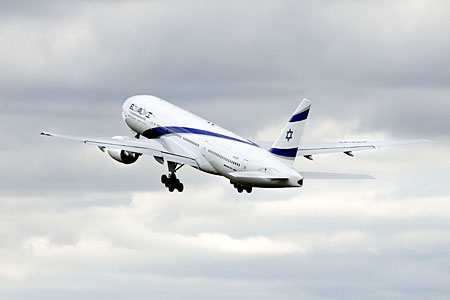
As loyal readers may be aware, NAIOP Massachusetts has been involved in efforts to strengthen economic ties with Israel.  A critical component is attaining nonstop air service from Boston to Tel Aviv. To make this happen, we need your help.   

Given how many opportunities El Al has to expand its service in the United States, we are eager to demonstrate that New England should be next on the list. We are working with the Governor’s office, Massport, and key organizations that generate large amounts of travel to Israel. We plan to make our case to El Al in the fall.

A local survey firm, Strategic Partners, has been retained by Massport to conduct a survey of businesses, organizations and individuals about their current and expected travel to Israel. If you and/or your company travels or might travel to Israel, we would like you to participate in this survey.

To opt-in to the survey, please click here. Once you have opted-in, the actual survey will follow in the coming weeks. With your help, we can make the strategic and business case to El Al about nonstop Boston-Tel Aviv service. 

Thank you for your support,
David

Direct Boston-Israel Flights Key to Economic Investment

Today, at the start of the Massachusetts – Israel Innovation Economy Partnership Mission with Governor Patrick, our first meeting of the day was with the CEO of El Al Airlines, Major General Eliezer Shkedi. A small group of us met with the General and his staff to pitch having El Al open non-stop direct flights between Boston and Tel Aviv.

General Shkedi, Governor Patrick and Robert Kraft

If there was one single action that could directly affect the growth of new Israeli businesses in the Commonwealth, it would be the convenience of direct flights. Boston is already the second largest origin-destination, business market without nonstop service and Massachusetts ranks 5th among U.S. states for air exports to Israel.

With the ties that we share with Israel in the High Tech, Life Sciences, Finance, and Higher Education sectors, our shared economic future is certain to support this important service.

Companies like EMC, Cubist, and Glasshouse Technologies all indicated their company’s strong interest in supporting direct flights.  Robert Kraft made the obvious statement that non-stop flights are not only good for their business, they would be profitable for El Al, with higher paying business passenger revenue.

Governor Patrick proposed that both “sides” have their staff work on the numbers over the next six months and reach a decision about the feasibility of these flights. General Shkedi agreed to see if it can work.

Right now, El Al is considering non-stops to Miami and Chicago. We might not be able to compete with the large Jewish population in South Florida, but we should hold up well with Chicago, especially with El Al’s partner airline’s (Jet Blue) major expansion in Boston.

Who knows, in a year or two, sitting on the tarmac in New York may not be necessary to get to Tel Aviv.

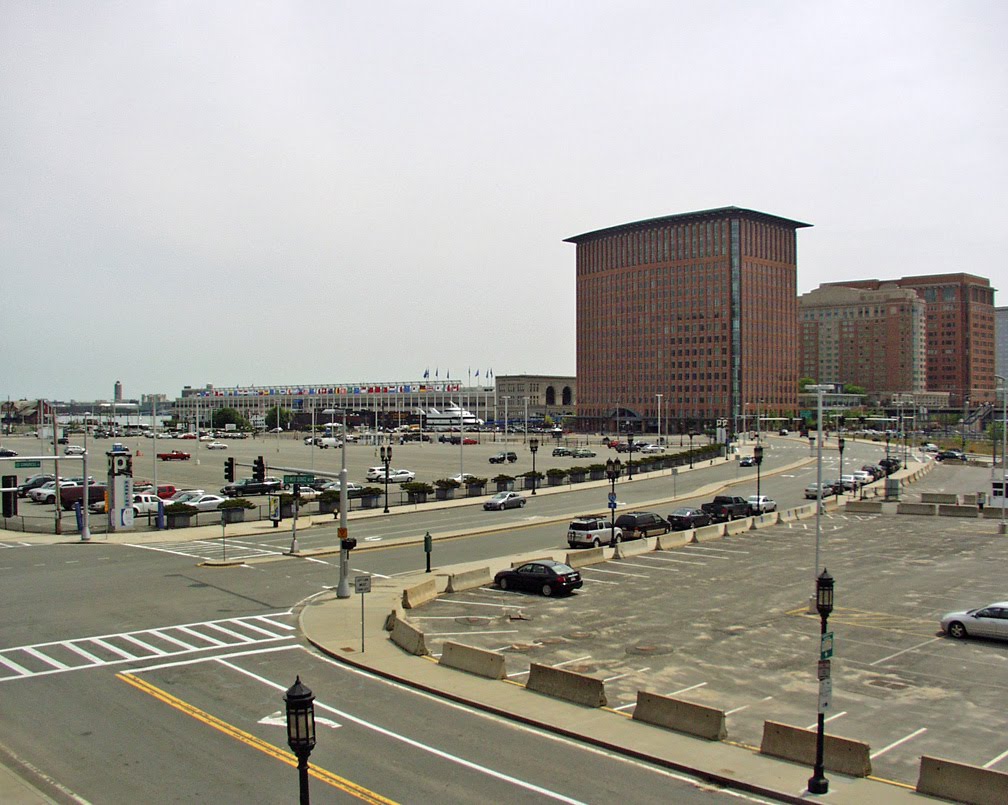
Parking in the Seaport: Here today, gone tomorrow.

Interesting Op-ed piece in the Boston Globe October 23rd by Paul McMorrow talking about the changing requirements for parking in Boston, more specifically in the Seaport District.  Basically, Paul is saying the BRA is moving more to a concept of a maximum allotment for parking for new developments rather than a minimum.  This is supposedly due to the changing commuting dynamics with employees living closer to work (and, therefore, not as dependent on the automobile.)

Parking in the Seaport

More interesting is that as the Seaport is developed, using primarily Joe Fallon’s and John Hynes’ surface parking sites, there will be less and less space available for the drivers currently using these lots.  And who are these people and where do they work?  Well, if you look over to the Financial District what you will see is a densely built office environment without much parking.  There is a parking freeze in that district which the city insists is working very well – a model for the Seaport parking freeze, as a matter of fact.

The problem is that the freeze works in the Financial District because of the availability of so much low cost parking in the Seaport.  So, when that inventory of “cheap” long term parking disappears, the businesses in the Financial District will have a problem on their hands as their employees jockey for the remaining handful of parking spots. That is, unless there is a massive investment in mass transit over the decade.  I leave you to contemplate the chances of that! (Leave your prognostications in a comment, below)