SJC Decision Affects Landlord Liability

The Massachusetts Supreme Judicial Court recently ruled in Bishop v. TES Realty Trust that a commercial landlord has a statutory duty to correct an unsafe condition, if the landlord has received written notice from the tenant.  In its decision, the Court determined that G.L. c. 186, § 19, which concerns a landlord’s duty to make repairs when notified of an unsafe condition, now applies to commercial landlords. While such an obligation has been applied to residential landlords, this would be a significant change for commercial owners.

Until now, commercial landlords have only been required to make repairs to common areas or when they specifically contract through the lease to make repairs. Under Bishop, the landlord will be liable for any injuries resulting from inaction on a written notice to make repairs. 

The Bishop decision also makes “void and unenforceable” any lease provision that attempts to waive a commercial landlord’s obligation under §19.  Even if the tenant is obligated to make repairs through the lease (e.g. triple net), the landlord must make the repairs of unsafe conditions if notified in writing by the tenant.  However, the landlord may bill the tenant for the costs of the repairs.

There is no question this decision will have far reaching consequences for the commercial real estate industry.  The decision increases liability for commercial landlords and significantly impacts how commercial leases are structured.  Serious questions remain regarding how this decision will be implemented.  NAIOP is now determining a legislative strategy to respond to the decision.

Predictions for Real Estate in 2011

This is the fifth recession and subsequent recovery I have worked through.  I have learned that business cycles have been and will always be a part of our industry.  It’s just a question of timing.  

Now that 2011 is underway, here are my predictions for the real estate market this year:

  1. Office rents:  Tower rents will break the $75 per square foot barrier. Suburban rents along 128 will hit $35.
  2. New Construction: Multi-family construction will continue to be a sure thing in Boston and the suburbs.  The only speculative commercial building construction starts in the state will be in Cambridge.
  3. Filenes in Downtown Crossing: Will be approved this year with a construction start in 2012. Besides the obvious garage, there will be at least two floors of retail, an apartment tower, and a phase two office tower.
  4. Financing: Plentiful for the well capitalized owner from multiple sources including CMBS.  Interest rates: steady in the 5-6 percent range.
  5. Cambridge market: Employment and space growth in the Life Sciences (biotech and pharma) will lead to new developments.
  6. Hospitals/Colleges: Improving endowments and lower construction costs will put back on track pre-recession expansion plans (but not Harvard’s massive Allston development.)  
  7. Multi-family construction: Twelve developments (each with over 100 units) will start this year.
  8. Foreclosures: Single family foreclosures will increase and some commercial loans for industrial and suburban office/R&D will be placed on the block.
  9. Investment sales: The number and gross sales volume will be the highest since 2007.
  10. Unemployment rate for the Commonwealth: It will be up slightly (less than 1 percentage point) by the end of the year.

Gerald Hines’ Five Principles of Success

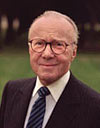
Gerald Hines

At MIT’s Center for Real Estate’s 25th anniversary graduation weekend, Gerald D. Hines gave the keynote address sharing his five principles of success. (Gerald is founder and CEO of Houston-based Hines, one of the largest and most respected real estate investment, development and management firms in the world.)

For anyone involved in development or looking to understand what it takes to be a successful, world class developer, read on:

  1. Create Quality Architecture. Hines’ love affair with great architecture is the stuff of legend. Long ago he made a commitment to collaborate with great architects — prominent architects such as I. M. Pei, Philip Johnson, Cesar Pelli, Frank Gehry, and Robert A. M. Stern have all worked with Hines. He urged the audience to build “something that endures.” 
  2. Commit to Sustainability. In the Hines lexicon, sustainability means two things. First, it refers to the durability of the buildings. Second, sustainability reflects the flexibility built into the design and construction of buildings. Hines is a leader in the EPA’s Energy Star program.
  3. Opportunities Exist in Acquiring Buildings – But Make Sure You Can Add Value. “You have to know when the cycle is at the top,” he said. “When you can borrow all the equity, it’s time to sell.”
  4. Mixed Use Developments Promote Better Communities and Also Lower Risk. Hines showcases prominent developments that exemplify the advantages of mixed use, all of which incorporate a range of uses, including offices, retail, hotels and condominiums.
  5. Human Talents Are Hidden Assets. Hines’ management structure is decidedly lean. Below a handful of very senior executives, other company leaders are compensated through 50 percent equity in the projects they are working on, not in the company as a whole. This arrangement reduces company risk while empowering the leaders and inspiring them to do their best work. 

To view Gerald Hines entire talk, please click here.
To learn more about the MIT Center for Real Estate, click here.
To learn more about Gerald Hines and his firm, click here.

Boston’s Investment Market in 2011 – What Would Leventhal Say?

News of the recent sale by The Fallon Co. and Cornerstone Real Estate Advisers of the 465-unit Park Lane Seaport apartment towers to a group of institutional investors comes as no surprise. Neither was the price tag at over $195 million.

Well located and leased commercial properties as well as multifamily rental properties are being bid-up by pension funds, foreign investors and investment funds.  There is plenty of money, but a limited supply of this quality product.

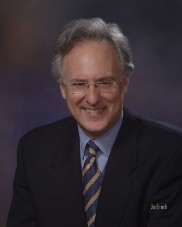
Alan Leventhal

With a limited supply and increasingly restive investors, Boston’s investment market looks ready for a comeback, and expert investors are already showing signs that 2011 could be the year.  I’ll be listening closely at our Annual Meeting next Wednesday, when investing guru Alan Leventhal speaks with NAIOP Chairman Kevin McCall about his company’s plans and predictions.

As reported in the BBJ, Fitch Ratings provided outlooks for 2011 and concluded that Boston is “one of five markets with economic vitality and tenant demand to remain a viable option for investors in real estate debt.”

Alan’s company, Beacon Capital Partners’ investment strategy focuses primarily on office properties in a select number of target markets, including Boston, Washington, D.C., New York, Los Angeles, San Francisco, Seattle, Chicago, London, and Paris.  They believe that these markets are more resilient to the peaks and valleys of the real estate cycle and offer greater and more consistent strength over the long term.

Beacon has had a great track record in evaluating prospective investments in constrained markets that offer them opportunities to capitalize on the market inefficiencies and to add value through operating expertise.    Let’s see what he has to say about this market and what we can expect to see in 2011. Register to hear A Conversation with Alan Leventhal, part of the NAIOP Annual Meeting, from 8-9:30 on Wednesday, Dec. 15 at the Seaport Hotel.

Tribute to Ed Linde

NAIOP Massachusetts just held its awards dinner honoring Boston Properties with its 2010 Distinguished Real Estate Award and the late Ed Linde with its Public Service Award.

Edward H. Linde

When I started out in this business in the 70s, it was hard not to notice this dynamic duo of Ed and Mort.  They were a prime example of the new developer: thoughtful, analytic, creative, methodical, and visionary.  I had a number of opportunities to talk with Ed over the years.  For me and for so many others, he was always accessible and provided sage counsel.     

For Ed, the time and charitable investments he made in the community were an integral part of his life.  When he was on a volunteer board, he was there to be an active participant, regardless of the  time commitment required. 

So, a lesson from Ed to all of us; yes, it is important to do well, but equally important to do good!

NAIOP chose to honor the memory of Ed Linde in recognition of the impact he had on countless charitable and civic causes throughout the city. Known as a tireless supporter of the arts and other philanthropic causes, Ed was co-founder and Chief Executive Officer of Boston Properties until his death this January.

Throughout his career, he led by example in business as well as in philanthropy, serving as a mentor to many in the business and non-profit communities. Together with his family foundation, he was a major supporter of many of Boston’s most respected organizations, including the Massachusetts Institute of Technology, Museum of Fine Arts, Boston, Boston Symphony Orchestra and the Dana-Farber Cancer Institute.  But his support of these organizations was just the tip of the iceberg, as his civic and charitable commitments ran deep through the city, including: The Beth Israel Deaconess Medical Center, Boston World Partnerships, Jobs for Massachusetts, and WGBH, among many others.

In honor of his lasting contributions to our city and our industry, NAIOP Massachusetts has decided to rename this award the Edward H. Linde Public Service Award, so that his legacy may live on to inspire future generations of philanthropists.

Filenes Site in Downtown Crossing: “Let’s Get Real”

In a recent Boston Globe OpEd, Paul McMorrow supports the proposal suggested earlier in the year by the developers Vornado and Gale to phase in the redevelopment of the Filenes site in Downtown Crossing.

Their concept was to construct not just the garage and the retail space as originally proposed, but also the foundations necessary to accommodate the future development of the towers. What a great idea!  Not only does this resolve the city’s frustration with the open “hole”, but it gives a shot in the arm for the retail activity in the area.

An earlier rendering of the site

An artists rendering of the site

It is easy to throw verbal rocks at the developer for their failure to honor commitments made before the downturn to move forward with this project. But let’s get real. This is the worst national recession since the Great Depression.  You can look around the whole country and I will challenge you to find a single major speculative office building starting construction.

The city of Boston will be a big winner with this alternative approach. They get the project started, new jobs are created, retail gets a boost, and much needed tax revenues will be maximized once the second phase gets built.

Let’s encourage the start of phase one of this project and allow the market to recover before we make an unreasonable demand to the owners to make a failed investment ahead of its time.

Permit Me to Glow: The Permit Extension Act Will Help Massachusetts Grow

On August 5, Governor Deval Patrick signed into law an economic development bill (Chapter 240 of the Acts of 2010) that included the Permit Extension Act (Section 173 of the new law).  In response to the credit crisis and market crash of late 2008, NAIOP Massachusetts promoted the Permit Extension Act from the very first day of the legislative session in January 2009.

At that time, none of us could have imagined how or if the country would emerge from one of the worst downturns since the Great Depression.  What was clear was that it would be a long time before any of us would see any new construction from the private or institutional sectors. 

It seemed obvious that if this Commonwealth was to have “shovel-ready” projects set to move forward when the economy turns, those projects could not lose the many permits and licenses already issued by either the local or state authorities.  

It takes years to get a new project approved – starting with numerous local hearings and going through everything from zoning changes, to special permits, to wetlands permits, to traffic mitigation, to environmental reviews at the state MEPA office.  Compound this with numerous appeals, and then you miss your economic cycle! Allowing these permits and approvals to expire would have killed countless projects.

The Permit Extension Act:

  • Extends permits in effect at anytime between 8/15/08 – 8/15/10 for two years (including those that expired during this time).
  • Takes effect immediately for projects that had approvals in place for even a single day of the two year window.
  • Applies to a wide range of permits including wetlands, MEPA, building permits, waterways, and approvals under Chapter 21, 40A, 40R, 43D, as well as variances, and all local bylaws and ordinances. 
  • Goes into effect automatically and no approval is needed by the state or local permitting authority.

Continue reading