A Little Late, But Welcome to Massachusetts, Steve!

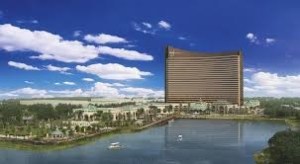
WynnEverettIt appears that the lengthy, sometimes contentious, legal battle between Wynn Resorts Chairman Steve Wynn and Boston Mayor Marty Walsh is over. A “surrounding community” agreement was reached by both parties for the development of an Everett casino. The agreement includes:

  • $31 million over 15 years for community impact
  • $25 million over 10 years for Sullivan Square infrastructure improvements
  • $11 million for traffic mitigation in Charlestown
  • $250,000 for a regional working group on a “long-term fix” for Sullivan Square
  • a “good faith effort” to purchase $20 million annually over 15 years from Boston businesses
  • $1 million for reimbursement of Boston’s professional (legal) expenses.

Wynn Resorts Everett will be a $1.7 billion, five-star, premier destination resort with a 600 all-suite room hotel in Everett, located off Lower Broadway, at the site of the heavily contaminated, former Monsanto Chemical plant. Millions of dollars will be invested to clean and remediate the site and to construct infrastructure and traffic betterments.

The Commonwealth will receive a licensing fee of $85 million, along with 25% of gross gaming revenues, which are estimated to be $260 million annually.

There will be 4,000 full time jobs, as well as over 3,600 construction jobs.

For Everett:

  • $30 million in advanced payments for a Community Enhancement Fund payable during the construction period
  • $5 million Community Impact Fee, increasing annually
  • $20 million for real estate taxes, increasing annually (almost 25% of the city’s tax base)
  • $250,000 contribution to Everett Citizens Foundation
  • $50,000 annual payment to purchase vouchers/gift certificates from Everett businesses to be distributed by Wynn as part of its loyalty programs
  • An estimated $2.5 million per year in hotel and restaurant taxes
  • An active waterfront park with a winter garden and harbor walk will be created

That’s quite a financial commitment by an out-of-state company to the Commonwealth. In case you haven’t heard it before, welcome to Massachusetts!

A Great Start for Economic Development Under the Baker/Polito Administration

BakerGovernor Charlie Baker and Lieutenant Governor Karyn Polito just filed the administration’s Economic Development bill with $1 billion to be invested over the next five years into economic development, housing and job training across the Commonwealth.

A core principal of this legislation is to take various existing programs and make enhancements to them so that they become more widely used, more effective, recapitalized, and more user-friendly:

  • MassWorks ($500 million proposed capital authorization): Reauthorizes a capital grant program that provides municipalities and other public entities with public infrastructure grants to support economic development and job creation.
  • Brownfields Redevelopment Fund ($75 million proposed capital authorization): Moves funding for the state’s Brownfields Redevelopment Fund to the capital program, providing a reliable long-term funding stream for a fund that is the Commonwealth’s primary tool for facilitating the redevelopment of contaminated properties.
  • Housing-Related Tax Increment Financing: Supports housing production in town centers by reforming a seldom-used local-only smart growth tax incentive program, removing onerous regulations, and allowing communities to set their own affordability requirements.
  • Housing Development Incentive Program (HDIP) Reform: Supports the development of market-rate housing in Gateway Cities by allowing credits to support new construction, and by raising the formula that sets housing development incentives.
  • I-Cubed Reform: Reforms the I-Cubed infrastructure program by removing unnecessary program requirements (such as eliminating the per-municipality cap on the number of projects that may participate and raising the aggregate limit of funds from the I-cubed program that may be used in any one municipality from 31% to 50%) building flexibility into the program, and aligning program requirements with the demonstrated project pipeline.
  • Economic Development Incentive Program (EDIP) Reforms: Builds accountability in the state’s primary job-creation incentive program by strengthening the link between the issuance of tax credits, and job creation that would not otherwise occur; adds flexibility to the incentive program by eliminating obsolete formula-driven incentive categories, and by creating a new Extraordinary Development Opportunity designation.

In addition, the bill creates two important provisions:

  • Site Readiness Fund ($25 million proposed capital authorization): Advances regional job creation by creating a new fund for site assembly and pre-development activities (including site assessment and cleanup) that support regionally significant commercial or industrial development opportunities.
  • “Starter Home” Zoning: Incentivizes the creation of smaller, denser, and more affordable single-family homes by creating a new starter home option under the Chapter 40R smart growth housing program. These projects will also allow the municipality to be eligible for school reimbursements under Chapter 40S.
  • Parking Management Districts: Aligns local parking policies with broader economic development priorities by enabling municipalities to opt into creating demand-based parking fees, and allowing parking fees to support capital improvements in designated districts, like downtowns.

In addition, there are new programs with a Massachusetts Innovation Initiative, Workforce Development, and Economic Competitiveness.

We are very supportive of the bill, which contains many of NAIOP’s priorities. This legislation will be one of NAIOP’s top priorities for the remainder of the legislative session.

Welcome to Your New Home, General Electric

2000px-General_Electric_logo.svg

The Greater Boston region’s research and higher education institutions are the envy of most of the world. While financial incentives helped seal the General Electric deal, this was not a cost-driven determination. It was a desire by the company to be housed in an innovation ecosystem that can provide the highest levels of skilled talent and technology. And, as a company doing business worldwide, GE will become an integral part of the local culture that successfully produces new ideas, products and technologies.

Kudos to Governor Baker and Mayor Walsh! This is a clear endorsement for the Commonwealth’s and the City‘s ability to market the region and all it has to offer to a business that could have relocated anywhere in the country (even in locations that could have provided greater financial incentives). The Legislature also deserves recognition for the important economic development bills passed over the last 6 years, which provided many of the tools needed to attract and close the deal with GE.

We may not have an Olympics here in Boston to remind the world that we are a global leader, but we do have the vote of a $130 billion high-tech industrial company (the 8th largest U.S. corporation) who will bring over 800 jobs to the “Innovation” Seaport District. Welcome home, General Electric.

Housing Costs May Cost Us Our Young Talent

This post originally appeared in the Boston Business Journal on November 20, 2015.

ApartmentsIn the coming years, the Massachusetts economy may be at serious risk. The Commonwealth’s most valuable resource is its educated, skilled talent. Maintaining that resource is essential for continued economic growth. However, there is a threat which is making that goal harder and harder to achieve. Massachusetts has one of the highest housing costs in the nation – a significant barrier for talent recruitment and retention. Without an adequate supply of workforce housing, Massachusetts may soon lose that talent to other, more affordable, markets.

The UMass Donahue Institute’s Population Estimates Program concluded that the state’s population will increase by nearly 300,000 over a 20-year period. Good news, but the population of Massachusetts grew only by 3.1 percent between 2000 and 2010, while the U.S. population increased by 9.7 percent. Of concern, the study also projects an increasingly older population for the state.

Though a good portion of Massachusetts’ growth is driven by a net natural increase (number of births greater than deaths), a larger share of the growth is attributed to net immigration. Looking more closely, there is a net domestic outflow of residents (more people moved out of Massachusetts than into it from other parts of the U.S.), offset by a large number of international immigrants.

This is occurring during a boom time for the Greater Boston region, while the rest of the country, with a few exceptions, is still working its way out of the recession. Another way of looking at it is that, for the past few years, there have not been many job opportunities attracting our younger workers away from the state.

It was not that long ago that most of the country was experiencing stronger job growth than Massachusetts. As documented in a 2003 University of Massachusetts/MassINC report, Mass. Migration, over 200,000 more domestic residents moved out of Massachusetts than moved into the state between 1990 and 2002. And then, between 2002 and 2004, that imbalance became worse.

Fortunately, at that time, foreign immigrants helped to offset these population losses, but they frequently arrived with lower levels of education and skills than those who were leaving. Those departing tended to be younger, better educated, and more likely to be employed in a knowledge-intensive industry.

These trends will have substantial workforce and business implications and should be a call to action. The costs of both rental and for sale housing have been accelerating, reaching record highs. More and more young individuals and families are being priced out of the market. In some cases, the problem is restrictive zoning, other municipalities are shunning any housing that increases the school population, and in some markets, the cost of construction makes workforce housing uneconomical.

The solutions may be difficult, political, and costly, but without action at the state and local levels, the future of the Massachusetts economy is at risk.

Good to Great: Expanding & Implementing Statewide Regulatory Reform

The following is our weekly excerpt from NAIOP’s report, Good to Great: Recommendations for the Baker Polito Administration. Comments are encouraged!

In 2012, the Patrick Administration launched a top-to-bottom regulatory reevaluation for all state agencies. The initiative resulted in a review of 1,791 regulations for efficiency and effectiveness. In addition, 255 regulations were amended or eliminated. The goal was to determine which regulations should be rescinded, modified, or made more consistent with a national model or standard.

The Baker Polito Administration should expand upon and strengthen the Regulatory Reform Initiative through the following initiatives:

– Appoint a proactive Regulatory Ombudsman with significant authority operating out of the Governor’s office. This person and a support team will be responsible for implementing the Regulatory Reform initiative by overseeing the following:

  • Seek out and motivate agencies to respond to feedback from the regulated community on problematic policies or regulations.
  • Maintain and reinvigorate the Business Advisory Committee to help the Ombudsman and team identify problematic regulations and alternative processes.
  • Consider initially freezing and reviewing any policies or regulations approved in the final 60 days of 2014, until there is a thorough review by the agency and the Ombudsman. (NAIOP strongly supports the “Regulatory Pause” put in place by the Baker Administration.)
  • Ensure that any newly proposed regulation go through an extensive vetting process that begins first with identifying the need for the regulation and ensuring the benefits of the regulation outweigh the impacts and burdens on business and the public. Any agency proposing a new regulation must complete a “small business impact statement” documenting the potential financial and time costs. This impact statement must include feedback from the regulated community. The Ombudsman and team will be responsible for ensuring the small business impact statement meets certain established standards.
  • Provide authorization on the public comment period for draft regulations.
  • Ensure the implementation of the ongoing periodic review of existing regulations required under the economic development bill passed in 2012 to identify those that should be amended or repealed.

– When regulations are approved for public comment, draft regulations must be posted online and emailed to a list of affected stakeholders (via voluntary sign-up as now done with DEP, DOR, and a few other agencies).

– While guidance can be helpful, it should be clarified by the Baker Polito Administration that guidance is just that, guidance, and does not take the place of regulations in any way.

– The Baker Polito Administration should seriously consider amending or eliminating current state regulations that exceed federal standards or duplicate federal processes.

Good to Great: Creating Workforce Housing

BakerPolitoCoverThe following is our weekly excerpt from NAIOP’s report, Good to Great: Recommendations for the Baker Polito Administration. The report is the result of significant input from NAIOP members and focuses on a wide range of ideas – big and small – affecting the Executive Office of Housing & Economic Development (EOHED), the Executive Office of Energy & Environmental Affairs (EOEEA) and transportation (MassDOT). Each week will cover a different recommendation. Comments are encouraged!

EOHED: Creating Workforce Housing

The Commonwealth’s economy depends on its ability to attract and retain a talented workforce. Massachusetts has one of the highest housing costs in the nation – a significant barrier for talent recruitment and retention. This is a supply problem due, in part, to a shortage of single family and multi-family housing. Lengthy and unpredictable local permitting, combined with high land and construction labor costs, put new housing out of reach of many of the state’s working families.

Massachusetts communities have some of the strictest zoning in the region, with large minimum lot sizes, restrictions limiting multi-family housing, and unworkable cluster zoning ordinances. Communities have tightened permitting, making it harder to build and meet the demand for housing, in general, and moderately priced and affordable units, in particular. Zoning requirements have become more onerous with local rules and special by-laws, making the development process longer and more unpredictable. Currently, there is a serious lack of permits issued for housing for families.

Therefore, NAIOP suggests that the Baker Polito Administration and EOHED work to increase the production of a wide range of housing types through the implementation of a plan that allows for the construction of family-friendly apartment housing as well as smaller, denser, affordable, single family starter homes. The plan should eliminate barriers to housing production and provide new ways of meeting the existing need for workforce housing by addressing the following (among other things):

  • Expand Chapter 40S to Address School Budget Challenges: The most frequent argument used to oppose apartment construction is the burden it will put on local school budgets. That is not always the case. Although Chapter 40S has been adopted to help offset the cost of student education for projects developed under Chapter 40R, it should be expanded to incentivize and assist those communities that would substantially increase their school-age population through new housing development of any kind. An important place to start would be to include Ch. 40B projects under this school “reimbursement” program, removing one of the objections to affordable housing projects.
  • Encourage Production of Starter Homes: There is a serious lack of moderately priced single family homes (starter homes) for many working households. A goal should be set to encourage cities and towns to establish zoning districts that permit the construction of a modest number of small, single family homes that are affordable for middle-income families. “Starter Home” zoning districts could be established in the most appropriate locations for these new neighborhoods. Incentives could include qualifying for Chapter 40S funds, assistance grants, and an increase in local aid. To keep the land cost per unit down, density bonuses would be needed for this type of housing, with the requirement that the scale of the homes be smaller (e.g. 1,500 square feet.)

Making the Olympic Argument with NAIOP: 2024 and Beyond

The following blog post was written by T.J Winick, Vice President at Solomon McCown & Company.

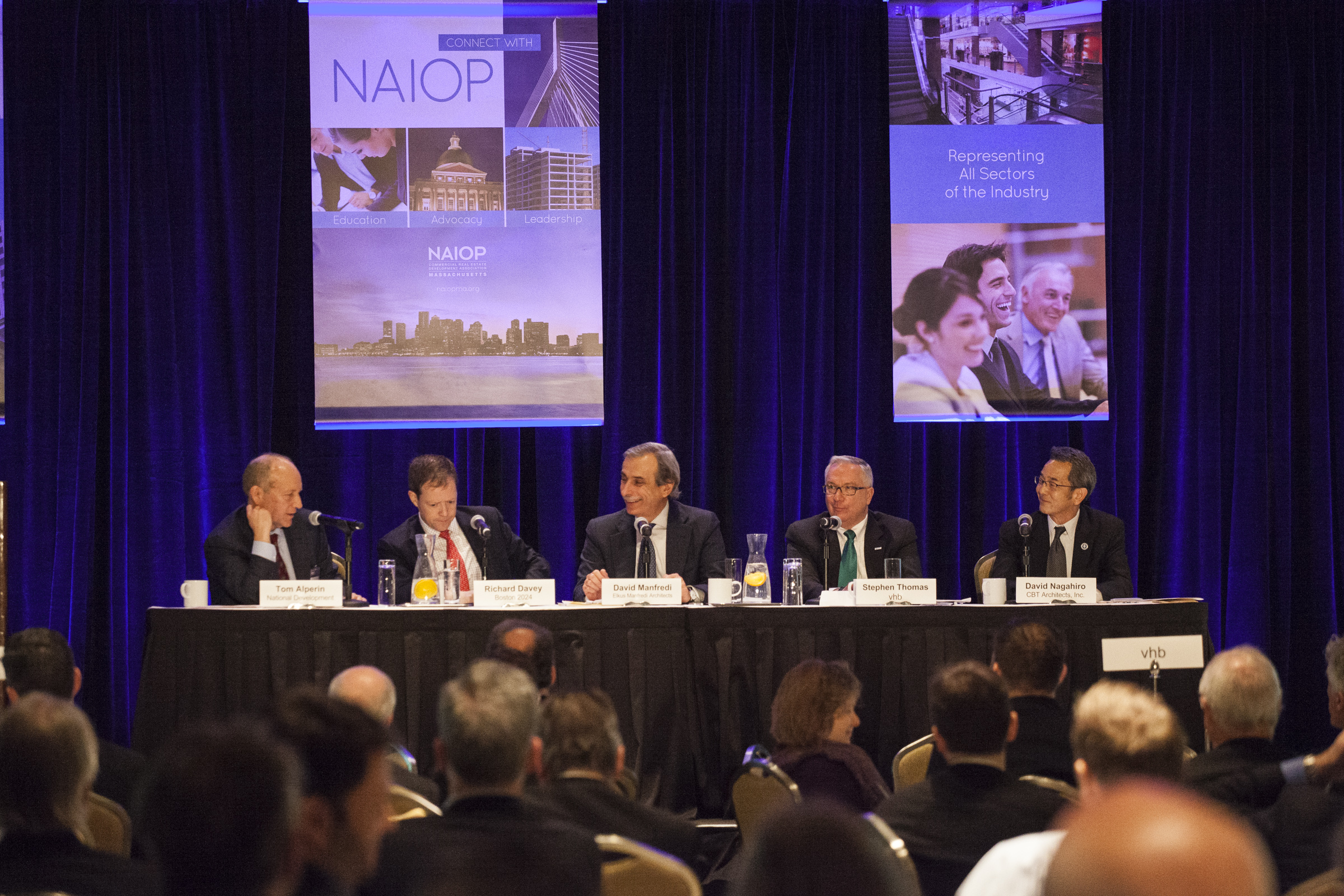
It’s only been about 50 days since the Elisif_20150224_0962United States Olympic Committee officially named Boston as America’s bid city for the 2024 Summer Olympics. Yet it was quite apparent at Tuesday morning’s NAIOP Massachusetts’ Breakfast Panel that Boston 2024 has settled on its pitch to the public: The quest to host the Games is all about “the future of Boston”. The phrase repeated over and over at the event (entitled 2024 Olympics: Vision, Opportunity and a Catalyst for Change) was “2030 and beyond.” As in, “This isn’t about those 30 days in the summer of 2024, it’s about what we want our city to look like in 2030 and beyond.”

Moderator Tom Alperin, President of National Development, remarked, “We can win by losing,” meaning that Boston will benefit from a fierce debate over infrastructure and sustainably whether we’re awarded the games or not. That sentiment was echoed by panelists Rich Davey, CEO of Boston 2024 and former Mass. Secretary of Transportation; David Manfredi of Elkus-Manfredi Architects; David Nagahiro of CBT Architects and Stephen Thomas of VHB. However, winning, as Manfredi noted, is the name of the game.

This was a coming out party of sorts for Davey, who was only recently named CEO of the effort to submit Boston’s bid to the International Olympic Committee. He’s pledging that ours would be a new type of Olympics: Sustainable, largely privately-financed with no cost overruns, and that leaves a positive legacy. He cited a quarter of a billion dollars in foundation grants that have been handed out by Los Angeles over the past 31 years, financed by their hosting the 1984 games. That’s the type of legacy the Boston Games would leave, Davey insists, not the fraud, waste and abuse the anti-Olympics crowd argues would cripple the region.

It was Manfredi’s presentation that focused on real estate: in this case, potential Olympic venues. One of the reasons Boston was chosen to represent America (over New York, Washington, D.C. and San Francisco) was the viability of hosting the most “walkable” Olympic Games in history, with 28 of the 33 proposed venues within a 10 kilometer radius and an average of 5.3 kilometers between each venue. The Olympic Village, which must house 16,000 individuals, would be built on Columbia Point, which is currently home to UMass Boston. About 5,000-6,000 of those beds would later become UMass student dorms, helping to satisfy the school’s goal of adding student residences. The remainder would be transformed into affordable and workforce housing, helping Mayor Walsh achieve his goal of 53,000 units of new housing by 2030.

David Nagahiro, whose firm CBT is focused on the village, underscored the concept of a sustainable games when he noted that, “UMass students are interchangeable with Olympic athletes” in benefitting from modern dorms and amenities overlooking Boston Harbor and the Harbor Islands. It’s this type of development that would help transform the University, typically thought of as a commuter school, into a more residential campus. Nagahiro, who recently visited London and Barcelona to speak with former Olympic officials there, gushed about long-term benefits enjoyed by the former Olympic hosts. Back in Boston, infrastructure improvements would also mean UMass students would enjoy a new transportation “Superhub” at the JFK-UMass Stop along the MBTA’s Red Line.

Moving 635,000 athletes, media, staff, volunteers and spectators between the city’s two Olympic “Clusters” (A Waterfront Cluster downtown and a University Cluster encompassing M.I.T., Harvard and B.U.) is Thomas’ and VHB’s domain. He insisted that Boston proves its ability to host multiple, massive events annually with the Boston Marathon and a morning Red Sox game every Patriots Day. While the MBTA is currently is crisis mode, everyone on the panel agreed that the T must be a catalyst for moving this bid forward and that public transportation is the key to economic opportunity and growth. While not as “sexy” as new train cars, Davey pointed out that signal and power systems, along with capacity improvements, would benefit Greater Boston long after the games are gone. The numbers being cited by Boston 2024 are $5 billion in transportation investment already underway and an additional $5 billion planned. However, some of those numbers were called into question in a Boston Globe article that came out the same morning as the panel.

In 2017, Boston will find out if its quest to host the games was successful. If it is, it could mean beach volleyball on the Boston Common and Olympic baseball at Fenway Park, not to mention more than 600,000 visitors to our city over a 30 day stretch. But for those looking to make the games a reality, clearly 2024 would be just the beginning.

Good to Great: Recommendations for the Baker Polito Administration

BakerPolitoCoverDuring the first week of January, NAIOP Massachusetts provided the Baker- Polito Administration (including select cabinet secretaries and commissioners) with the report, Good to Great: Recommendations for the Baker Polito Administration. The report is the result of significant input from NAIOP members and focuses on a wide range of ideas – big and small – affecting the Executive Office of Housing & Economic Development (EOHED), the Executive Office of Energy & Environmental Affairs (EOEEA) and transportation (MassDOT).

Over the course of the next few months, we will highlight one recommendation per week on this blog. Comments are encouraged! NAIOP looks forward to working with the new Administration to implement these recommendations and find new ways to encourage economic growth in Massachusetts.

EOHED: Establishing Economic Priorities & Initiatives
The Secretary of Housing & Economic Development should be the empowered advocate for the business community, both within the Cabinet and externally. Nearly all policies and regulations have an impact on the business community – including the businesses that are already located in Massachusetts, as well as those relocating to the Commonwealth. NAIOP urges the Baker Polito Administration to make the Secretary of Housing & Economic Development the vocal advocate for business interests through the following initiatives:

  • Work closely with the leading business trade groups to ensure the state is providing the kind of incentives and programs needed to foster broad-based growth, not simply those favored by the Administration (i.e., don’t pick winners, make decisions based on need).
  • Expand and strengthen the Regulatory Reform Initiative created in 2012, an Administration-wide regulatory reevaluation for all state agencies. Start by appointing a Regulatory Ombudsman and consider freezing any policies or regulations approved in the final 60 days of 2014.
  • Simplify the administration of all of the state’s business incentives and consolidate economic development agencies. The Baker Polito Administration should examine the current list of economic development agencies and quasi-publics and determine if there should be some consolidation. In addition, incentives should be coordinated and streamlined – too many agencies are overseeing incentives right now, resulting in confusion and missed opportunities for businesses.
  • Identify opportunities for privatization and public-private partnerships. There are numerous opportunities for privatization (e.g., transportation, water infrastructure, etc.) However, the “Pacheco” law makes it virtually impossible to actually do any of these. The Baker Polito Administration should consider a targeted “pilot” program to break through this problem, with EOHED taking a lead in advocating for such a concept.
  • Create incentive packages for start-ups. Most of the net job growth in the country is attributable to companies in operation five years or less. Many states are aggressively looking to attract and nurture start-ups (e.g. New York’s startup.ny.gov). Massachusetts, led by EOHED and working with organizations like the Cambridge Innovation Center, should consider strategies that provide the necessary ecosystem for start-ups within Massachusetts to thrive and grow into profitable companies. Concepts like “LabCentral,” a shared laboratory space designed as a launch-pad for high potential life sciences and biotech start-ups, could be expanded to most any of the industries in the state offering the space and resources start-ups need.
  • Identify ways to build on the Commonwealth’s innovation economy to strengthen and improve government services, while better serving the business community. Massachusetts leads the way in innovation. The many start-ups and globally recognized institutions like MIT and Harvard are an untapped resource for state government. Possible opportunities may exist for apps or innovation companies to improve services for Massachusetts residents and businesses.

Developers take steps to reinvent suburban office parks

The following article was written by Jay Fitzgerald and appeared in the July 27, 2014 edition of The Boston Globe:

When the exodus to the suburbs got underway more than a half-century ago, employers followed, and the office park was born. But today, as younger workers return to the city, and employers again follow the labor, these isolated campuses of low-slung buildings, parking lots, and company cafeterias face challenges, from new competitors to aging facilities to high vacancy rates.

As a result, owners and developers across Eastern Massachusetts are seeking to reinvent the suburban office park, taking a page from urban revitalization that transformed old mill and factory buildings into mixed-use developments of housing, retail, and office spaces. In communities such as Burlington and Marlborough, developers are adding restaurants, hotels, and other amenities, as well as housing, to compete with the “live, work, play” attraction of the city.

In Marlborough, for example, Atlantic Management Inc. of Framingham purchased the former Hewlett-Packard campus three years ago to launch a more than $200 million rehab of the 110-acre site, which dates back to the 1960s. The project is well underway, with Atlantic refurbishing the two office buildings, while AvalonBay Communities of Virginia, which purchased 26 acres at the site, builds 350 luxury apartments.

Atlantic Management also plans to develop a 153-room hotel and 50,000 square feet of retail and restaurant space that may one day include a farmers market. Already, this redevelopment of the Marlborough Hills office park has attracted a major corporate tenant, Quest Diagnostics of New Jersey, which plans to locate more than 1,000 lab workers there later this year.w

“The number-one challenge for many companies is how to attract talent,” said Joseph Zink, chief executive of Atlantic Management.“Companies need to attract talent and this is one way to do it. I think we’re going to see more of this in Massachusetts.”

Suburban office parks across the nation are trying to respond to tenants insisting on more amenities, said David Begelfer, chief executive of NAIOP Massachusetts, a real estate trade group. In Massachusetts, there’s no precise figure on how many office parks are undertaking renovations large and small, Begelfer said, but “it’s dozens of them and they’re easily spending billions of dollars.”

“The market is demanding it,” he said.

Commercial real estate specialists say the trend in office park redevelopment is driven by two forces. First, property owners need to renovate aging, outdated buildings, some of which are a half-century old. Second, they must meet increasing competition from Boston, Cambridge, and other nearby urban communities.

Along Interstate 495, the vacancy rate for Class A offices is hovering at nearly 18 percent, compared with 11.5 percent in Boston and less than 6 percent in Cambridge. Commercial rents are depressed. Offices lease for only $20 per square foot in the region, less than half of what similar space fetches in Boston and Cambridge, according to Jones Lang LaSalle, a commercial real estate firm.

The site of the former headquarters of data storage giant EMC Corp. in Hopkinton is an extreme case of a struggling suburban property. The 160,000-square-foot building, just off I-495, has sat empty for 13 years, ever since EMC moved to newer offices elsewhere in town, said Steven Zieff, a partner with Hopkinton’s Crossroads Redevelopment LLC.

Crossroads has an option to buy the 38-acre property, which also includes four one-story buildings, and hopes to redevelop the site into a mixed-use complex of housing, retail stores, restaurants, and office space.

“People are looking for something different,” said Zieff. “It’s the entire ‘live, work, play’ environment that people want. They don’t want to go to just an office park with a cafeteria and parking lots.”

Along Route 128, the situation is not nearly as dire, with the office vacancy rate between Woburn and Needham running at 6.4 percent, below Boston’s. Rents near that stretch of the highway are rising as the economy continues to improve, averaging about $34 per square foot, about $20 less than office space in Boston and Cambridge.

But office park owners still feel pressure from intensifying competition with cities. In recent years, a number of suburban companies have moved to Boston or Cambridge, including ad firm Allen & Gerritsen, which moved to the Seaport District from Watertown. Biogen Idec soon will move from a Weston office campus to a new headquarters under construction in Kendall Square.

At the 13-building New England Executive Park in Burlington, the vacancy rate is 10 percent, with tenants that include tech firms BAE Systems, Charles River Systems, and Black Duck Software. Still, National Development, the park’s owner, is convinced it needs improvements to stay competitive.

Later this year the firm plans to start a major overhaul that includes demolishing an office building — all 13 buildings were built between 1969 and 1986 — and constructing 300,000 square feet of new development. The new additions will include a 170-room hotel, three full-service restaurants, and new retail and office space.

“We’re seeing this great rush to the city [by tenants],” said Ted Tye, managing partner at the Newton-based National Development. “What that’s doing is forcing suburban properties to stay on their toes. And we’re responding to that.”

National Development, however, won’t add housing to its New England Executive Park mix. Tye said he’s not convinced that housing within office parks is a smart idea. Some towns might end up getting financially hurt because commercial and industrial properties are usually taxed at higher levels than residential properties, he said.

He added that it’s also hard to duplicate urban settings within suburban parks if they’re not near public transit and don’t have easy pedestrian access to offices. “This is a source of some disagreement within the industry,” he said of housing’s role in office park redevelopment.

In contrast, Nordblom Co., owner of Northwest Park in Burlington, is a firm believer in “live, work, play.” Three years ago, it launched a massive $500 million project to redevelop about half the 285-acre office park to include 600,000 square feet of retail space, 300 new apartments, a 225-room hotel, and 3.5 million square feet of new or refurbished offices.

Todd Fremont-Smith, senior vice president of Nordblom, said the redevelopment, which could take another 10 years to complete, has already attracted new office tenants, a steakhouse restaurant called The Bancroft, and a new Wegman’s supermarket, which opens in October.

“By mixing the uses, you have a more dynamic environment — and it’s more rentable,” Fremont-Smith said. “People are seeking urban-like amenities where they work. I think we’re going to see more of this at both office and industrial parks. People want it.”

View the original article here.

Highlights of NAIOP’s You Can’t Get There from Here

Elisif_20140207_3248This post was submitted by Allyson Quinby, Account Supervisor at Solomon McCown.

View event photos  |  Read Curbed article  |  Watch event video

Real estate professionals gathered at NAIOP’s “You Can’t Get There from Here” event to discuss one of the top priorities in Boston right now: improving transportation. It was exciting to hear about all the projects that are in the works, upgrades to the system already underway, and new technology that will allow commuters to get from point A to point B more efficiently.

The audience was fortunate enough to hear from Secretary of Transportation Richard Davey, who served as the keynote speaker, followed by a panel of experts including Michael Cantalupa of Boston Properties, Donald Cooke of VHB, Marilyn Swartz-Lloyd of MASCO and Yanni Tsipis of Colliers International.

Secretary Davey explained how MassDOT will make numerous improvements to the city’s existing infrastructure with a $12.4 billion Capital Investment Plan that aims to make the lives of commuters easier and spur economic development. The much-needed green line extension to Somerville and Medford as well as the South Coast Rail extension to Fall River and New Bedford will make a huge difference for those who live outside Boston. These new public transit lines will deliver an option that’s much less expensive than driving, which means fewer cars on the road and a significant reduction in traffic congestion and of greenhouse gases (something the Secretary said was a major initiative for MassDOT).

Additionally, a Silver Line Gateway will provide a new route from Logan International Airport to Chelsea to service one of the greatest transit-dependent populations in Greater Boston. Secretary Davey called it a “game changer.” As panelist Michael Cantalupa further noted, transportation plays a vital role in any city’s development. As Boston continues to boom with new office buildings and other high-rise projects, it’s critical these new developments remain accessible through increased transportation options.

Secretary Davey assured the audience that money is being invested in the system’s aging infrastructure, which means the need for new transit cars will finally be addressed. In fact, the state will purchase new Red/Orange Line cars and make upgrades to signal systems in an effort to eliminate the on-going problem of constant breakdowns. Millions will also be poured into the state’s highway system. For example, the alignment of the I-90 Turnpike Allston Interchange will reconfigure ramps and straighten the highway to simplify the roadway, as well as allow more room for development.

Diesel Multiple Unit (DMU) Service is another initiative MassDOT will be implementing. The service will allow more affordable cars to utilize our existing commuter rail line that runs from the South Bay Rail Yard to the South Boston Waterfront. This will open up whole new possibilities for those looking to travel from the Seaport District to Back Bay, a route for which there is currently no efficient method of transportation.

It’s no secret here in Eastern Massachusetts that traffic has a paralyzing effect on local transportation on a daily basis. So it was welcome news to hear that MassDOT is collecting and analyzing years of data to deliver real-time traffic technology. This will not only inform commuters where traffic is, but how bad it will be at what time and why. Secretary Davey announced that by the end of 2014, the real-time traffic message signs that have appeared on major highways will be instituted across the Commonwealth; making Massachusetts the first state in the country to do so.

While the planned investments are exciting, a proposed ballot question could prevent many of these important projects from moving forward. Under the landmark transportation legislation passed last year, the gas tax will be indexed to inflation in the coming years. This will be only a penny or two per gallon at most, but will provide the funding needed to ensure these projects are a reality. The proposed ballot question would repeal the gas tax indexing and would eliminate this crucial source of funding. NAIOP and other business groups are strongly opposed to the ballot question and will be working to fight this initiative in the coming months.

Transportation impacts all of us, and it was fascinating to hear Secretary Davey and the featured panelists give us a sneak peak of what’s in store for the city of Boston and throughout Massachusetts.