
Unknown's avatar

About Tamara Small

Tamara Small is the CEO of NAIOP Massachusetts.

Ridesharing May be Saved by Technology

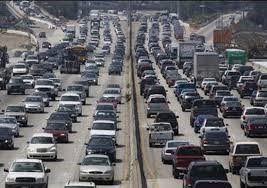
RideshareThe Clean Air Act was created to respond to the ever-increasing air pollution that has come from industrial expansion and a reliance on fossil fuels for energy and transportation. Automobiles are a major source of air pollution (e.g. hydrocarbons, nitrogen oxides and carbon monoxide). It is estimated that road traffic accounts for about 40 percent of the pollution that contributes to ground-level ozone (the main ingredient in smog).

Single occupancy vehicles have long dominated the roadways, especially for commuters. In an effort to reduce pollution, states, like Massachusetts, have adopted Rideshare Programs. Ridesharing is the sharing of vehicles by passengers to reduce vehicle trips, traffic congestion and automobile emissions. Ridesharing (carpooling, vanpooling, public transport), as well as bicycle commuting and walking, are all goals of these programs.

Locally, the idea has been for Massachusetts Department of Environmental Protection (MassDEP) to work with large employers (with more than 1,000 employees) to promote commuting options. The program depends on corporate surveys of worker commuter patterns, providing a menu of commuting options, offering incentives, and documenting the resulting annual changes in patterns, hopefully to successfully meet a specific performance goal of reducing by 25 percent the number of times commuters drive alone to work.

Unfortunately, for various reasons, these programs have had limited success, but continue to burden the employer with annual compliance costs. Part of the problem has always been the difficulty of organizing car-pooling and the uncertainties due to the drivers’ and passengers’ daily schedules.

We are all getting accustomed to technology searching for logistical problems to solve. The ridesharing conundrum is one of those problems and “real-time ridesharing” are the solutions beginning to be provided by Transportation Network Companies, such as LyftUber and Sidecar. These companies, with their mobile apps, arrange one-time rides on an on-demand basis.

Both Lyft (Lyft Line) and Uber have now introduced a carpooling service in Boston. Passengers along a route get in the car at a price cheaper than the ride-for-hire alternative. The trip has to maintain its original route as it picks up other customers, who have to be ready immediately to get in the car when it arrives for them.

Although this service is currently limited to the Boston/Cambridge market, there is no question that an expansion of this service into the suburban market is inevitable.

It is also not very difficult to foresee an app that allows single occupancy drivers to easily connect with fellow commuters heading in the same direction, on a ride by ride basis. With no long-term commitments and many scheduling alternatives available, it seems like an easy fix. Yeah, we’ve got an app for that!

MBTA Control Board’s First Report Shows Urgent Need For Change

The MBTA’s new Fiscal and Management Control Board (FMCB) has just issued its first 60-day report identifying the scope of the challenges facing the T. The GreenLineFMCB has been tasked with identifying and shaping solutions to improve operations and performance. The report is extensive, probing, and extremely candid. The Board members should be congratulated on producing such a clear case for moving from the status quo to a system that is reliable, transparent, and sustainable.

It is no surprise that the some of the underlying problems are even more serious than originally thought. Firstly, the MBTA’s annual operating budget is unsustainable, with expenses increasing at nearly three times the rate of revenue growth. Secondly, annual capital spending on deferred maintenance and capital investment is substantially below the $472 million annual spending needed to prevent the backlog from further increasing. The prolonged under-spending has caused the backlog in capital investment to rise to $7.3 billion. The report states that the management team has committed to ensuring that available capital funds are spent, maintaining the MBTA system at a level that will prevent the backlog from further increasing while improving the overall condition of the system and its facilities as expeditiously as possible.

The FMCB has reported some progress:

• Total Capital spending increased to $740 million in FY2015 and is budgeted to be $1.05 billion in FY2016.
• The MBTA planned, designed, and is executing a Winter Resiliency Plan to better prepare the system to withstand major storms and extended periods of cold.
• The MBTA and Keolis Commuter Services have signed a Performance Improvement Plan and are working to address identified shortfalls in performance.
• The FMCB and MBTA management are developing a strategy to make improvements in the procurement and contracting processes and to review all existing service contracts (e.g., the MBTA issued a Request for Information for the private-sector on some low and moderate ridership bus routes, express bus routes, and late-night bus service).
• The FMCB and MBTA management are focusing on performance metrics to drive improvement in MBTA operational practices and to expand transparency and accountability with the riding public.
• The FMCB and MBTA leadership are also pursuing efforts to increase workforce productivity and to reduce absenteeism among MBTA staff.
• The FMCB is committed to a positive employee engagement program, understanding that morale, sense of mission, clear management and decision-making structures, and workforce investments are all necessary ingredients for any successful organization.

It is very clear to the reader of this report that the work of FMCB has just begun. The goal is to have a transit system that is sustainable and accomplishes its mission. Hopefully, in the not too distant future, the MBTA will be operating efficiently. It will certainly take a lot of work by a dedicated management team and workforce. However, there is no alternative. Businesses, residents, and workers must have an MBTA that is reliable.

NAIOP Files to Intervene in Costly Charles River Watershed Stormwater Court Case

NAIOP Massachusetts recently filed a Motion to Intervene in Conservation Law Foundation, Inc., et al v. United State Environmental Protection Agency, et al. The plaintiffs in that case seek to compel USEPA to impose a new regulatory program that would require owners of commercial, institutional, industrial and high density residential properties in the Charles River watershed with one acre or more of impervious area (parking lots, roofs, sidewalks) to apply for a stormwater discharge permit. NAIOP decided to intervene in the case given the significant impact this duplicative and burdensome regulatory program would have on property owners in a watershed that includes 35 communities and covers 310 square miles.

On April 28, the Conservation Law Foundation and the Charles River Watershed Association filed a complaint in federal court alleging that nutrients, including phosphorus, in runoff from a number of “commercial, industrial, institutional, and high density residential” properties are polluting the Charles River. The goal of the lawsuit is to force EPA into using its rarely used “Residual Designation Authority” (RDA) in the 35 communities that make up the Charles River Watershed to create a new stormwater permitting program. This proposed program would be in addition to the recently issued stormwater permitting program for municipal separate storm sewer systems (MS4s), which collect and manage a substantial portion of the stormwater discharged into the Charles River from developed properties. In this case, CLF is incorrect; EPA does not have a requirement to use the RDA.

This will affect all privately owned commercial and multifamily properties in the Charles River Watershed (communities including Boston, Cambridge, Needham, Newton, Natick, etc.) with more than one acre of impervious area.

In 2010, EPA proposed an RDA pilot stormwater permitting program in the towns of Milford, Franklin and Bellingham. As proposed, this program would require property owners to construct costly, retrofitted stormwater treatment systems. EPA funded a study to determine the potential costs to comply with its proposed permitting program. Though the pilot program targeted sites with two acres or more of impervious area, compared to the one acre threshold now being considered, the total cost in the three communities to comply with the draft permit was astronomical. EPA’s own consultants estimated that the costs would be at least $180 million for the three communities. Expanding such a program to all 35 communities in the Charles River Watershed would easily move that number into the billions. Costly and substantial retrofits of privately owned property would be immediately required if this is implemented. We estimate the costs to be at least $150,000 per acre for compliance. This would apply to existing owners, even if they are not redeveloping or renovating their property.

NAIOP supports the overall objective of improving water quality throughout the Charles River Watershed. However, any regulatory program developed to achieve that objective must be cost-effective, feasible and fairly allocate the regulatory burdens and costs. As we learned through the pilot program, the RDA approach is not the right tool. NAIOP has long championed alternative approaches that focus on public education, source control, and Best Management Practices. We actively supported the recent legislation restricting the use of phosphorous-containing fertilizers. Our intervention in the lawsuit will provide an important stakeholder group with an opportunity to have a seat at the table as these important policy and economic issues are being discussed.

Climate change legislation will cause a flood of regulations

The following Op Ed appeared in the Boston Business Journal on July 31, 2015.

As we saw in New York City with Hurricane Sandy, climate change can have significant impacts affecting the overall economy; directly, by damaging structures, and indirectly, by compromising transportation systems, communications, and utilities. An increasing number of extreme weather events and future sea level rise may lead to more frequent and extensive flooding along the East Coast.

A primary role for city and state governments should be to ensure the continuity and protection of public infrastructure and public safety. The business community, and the community at large, need to have a clear understanding of the government’s responsibilities and its plans for preparing infrastructure and critical services for these potentially cataclysmic events.

NAIOP Massachusetts, The Commercial Real Estate Development Association, has long been one of the leading business groups advocating for a coordinated approach between the public and private sectors with respect to climate change planning.

However, we are very concerned about a bill that was recently passed by the Senate to establish a far reaching planning and regulatory process for addressing climate change. Senate Bill 1979 contains very subjective, vague, and expansive language that could have extremely negative consequences for the Massachusetts economy today and into the future.

We believe the open-ended language the bill contains could lead to widely varying interpretations of how the legislation should be implemented, creating uncertainty and potentially stalling projects for years to come. While we believe that climate change planning is an important issue, this bill is not the solution. Under the legislation, all grants, permits, licenses, approvals, or actions of any kind for any proposed projects, uses or activities issued by any state agency or state authority could be challenged and held hostage to these ambiguous goals. This would open the “regulatory door” to a wide range of proposals, substantially changing and exceeding well established standards and procedures – with few having any direct connection to climate change.

Given how this vague and confusing language could be interpreted, the potential for lengthy and costly legal challenges is quite high.

For these and many other reasons, the bill, as written, cannot and should not be passed into law.

Addressing climate change and sea level rise requires coordination at the highest level of state government and the participation of many state agencies. There needs to be a balance of adequate planning and a risk-based, cost-benefit analysis to ensure that funds are prudently expended by the public and private sectors when considering climate change-related investments. Through such an effort, climate change resiliency will become a more attainable goal.

NAIOP Testifies in Support of Transportation Legislation

Yesterday, building off of our ongoing advocacy on this issue and the statement we recently signed with 24 other business groups, NAIOP testified before the Joint Committee on Transportation urging legislative leaders to fix the the Commonwealth’s broken public transit system by adopting the recommendations outlined by the Governor’s Special Panel to Review the MBTA. We will continue to work with the Baker Administration, legislative leaders and business groups to advocate for real reforms that will quickly address the needs of the Commonwealth’s citizens and businesses.

NAIOP’s testimony from the hearing follows:

NAIOP Massachusetts, The Commercial Real Estate Development Association, Supports House Bill 3347
May 11, 2015

NAIOP Massachusetts, The Commercial Real Estate Development Association, would like to express its support for House Bill 3347, An Act Relative to a Reliable, Sustainable Massachusetts Bay Transportation Authority.

NAIOP Massachusetts represents the interests of companies involved with the development, ownership, management, and financing of commercial properties. NAIOP’s 1,600 members are involved with more than 240 million square feet of office, research & development, industrial, mixed use, retail and institutional space in the Commonwealth.

This winter, businesses across Massachusetts felt the impact of the Commonwealth’s failing transportation infrastructure. Employees simply could not get to work. The T, in particular, illustrated the negative impact an unreliable transit system has on the economy. Those who normally relied on the T, but had the option of driving, caused roadways to be more congested and commuting times to grow exponentially. There is no question that without a reliable public transit system, the economic wellbeing of the Commonwealth will continue to suffer. The time for action is now.

NAIOP and 24 other business organizations from across the state recently signed a statement urging policymakers to act quickly to make the changes needed to transform the MBTA into a modern, world-class public transit system. House Bill 3347, which includes many of the recommendations outlined by the Governor’s Special Panel to Review the MBTA, would be an important first step in the right direction.

The bill contains a number of important provisions. It will provide greater accountability and transparency for the T’s governance and management practices through the establishment of a Fiscal and Management Control Board. It sets performance metrics so progress can be measured and goals can be achieved in a reasonable amount of time. It addresses the T’s procurement and maintenance practices so that the system is safe, reliable and in a state of good repair. Most importantly, it requires the Control Board to implement a plan designed to stabilize and strengthen the finances, management, operations and asset condition of the MBTA and to ensure a safe, reliable, fiscally stable, modern transit system for Massachusetts.

We urge the Committee to give this bill a favorable report and to take the steps needed to create a world class public transit system that will meet today’s needs and accommodate the growing demands of future economic growth.

President Obama Signs Energy Efficiency Improvement Act of 2015

Energy BillPresident Obama recently signed into law the Energy Efficiency Improvement Act of 2015 (S. 535), which creates a new “Tenant Star” to encourage energy efficiency in leased commercial spaces. Tenant energy usage can account for 50 percent or more of a building’s total energy usage. Like its predecessor, “Energy Star”, Tenant Star is a voluntary, market based, cost free program that is expected to encourage optimum energy efficiency in leased commercial spaces, helping the environment by cutting greenhouse gases.

This program has been championed by the real estate industry through the direct efforts of the Real Estate Roundtable. The U.S. Environmental Protection Agency, in consultation with Department of Energy, will start developing standards for the Tenant Star designation within 180 days.

Along with Energy Star (which is aimed at encouraging energy efficiency within the building core), this new designation will encourage office tenants with their landlords to design and construct cost-effective energy investments in the building’s leased spaces.

NAIOP believes that the Tenant Star program can be an effective educational program that leads to voluntary, smart, cost-effective energy efficiency investments.

Business Coalition Urges Governor and Legislature to Create World-Class Transit System

A broad coalition of 25 business associations representing large and small employers from a wide range of industries today issued the following statement urging the Governor and the Legislature to adopt the recent recommendations made by the Special Panel to Review the MBTA and to swiftly begin the task of fixing the state’s public transit system:

Business Coalition Statement in Support of a World-Class Transit System

The Challenge
The winter of 2015 highlighted the Commonwealth’s transportation vulnerabilities, particularly for the MBTA. While school and business cancellations, a dramatic drop in retail sales, and an increase in public safety risks result from many major winter storms, the complete shutdown of the MBTA followed by a prolonged reduction in services for the subways and commuter rails are not the norm.
The unreliability of our public transit system caused many businesses to lose substantial revenues from the loss of productivity due to delays and/or the inability of workers to get to work. Many hourly workers forfeited wages; many retailers forfeited sales; many restaurants forfeited patrons; and the Commonwealth forfeited the income, sales and meals tax associated therewith. A sub-optimal public transit system also caused roadways to be more congested than usual and commuting times to grow to unreasonable lengths for those who opted to drive or were transporting goods. The adverse financial impacts totaled in the billions of dollars. This is unacceptable and must not be repeated.

The Framework
Due to the urgency of fixing the MBTA and the need for the public transit system to be reliable and fully functional, the undersigned business organizations are requesting policy makers to address the following issues:
• Make the T a customer-focused organization that provides first-rate service and clear communication while instilling confidence in its ridership.
• Provide greater accountability and transparency for the T’s governance and management practices to ensure the entity is efficiently and effectively run while employing a productive workforce.
• Develop a long-term strategic and capital plan for the T that efficiently uses its resources to enhance the current capabilities and future needs of the T, businesses and workers, while providing sufficient funding to cover the costs.
• Overhaul the T’s procurement and maintenance practices so that the system is safe, reliable and in a state of good repair.
• Establish metrics, milestones and regular reporting to ensure proper implementation of the T reforms within a reasonable period of time.
• Ensure that the T balances its operating budget without the need for ever-increasing state assistance each year.

The Solution
The undersigned support this position and urge the Governor and the Legislature to act swiftly so we can begin the arduous task of fixing the state’s public transit system.

Following a thorough analysis of the various recommendations from the Governor’s Special Panel to Review the MBTA, and measured against the principles outlined above, we endorse the Panel’s proposal and urge the Legislature to adopt the plan immediately.

The following business organizations support this statement:
495/MetroWest Partnership
Affiliated Chambers of Commerce of Greater Springfield
American Council of Engineering Companies of Massachusetts
Associated Industries of Massachusetts
Associated Subcontractors of Massachusetts
Construction Industries of Massachusetts
Environmental Business Council
Greater Boston Chamber of Commerce
Greater Boston Real Estate Board
Massachusetts Biotechnology Council
Massachusetts Chemistry & Technology Alliance
Massachusetts High Tech Council
Massachusetts Lodging Association
Massachusetts Petroleum Council
Massachusetts Restaurant Association
Massachusetts Taxpayers Foundation
Massachusetts Technology Leadership Council
Massachusetts Business Roundtable
Metro South Chamber of Commerce
NAIOP Massachusetts, The Commercial Real Estate Development Association
National Federation of Independent Businesses
Neponset Valley Chamber of Commerce
North Shore Chamber of Commerce
Retailers Association of Massachusetts
South Shore Chamber of Commerce

Quotes from Business Coalition Members:
“The unreliability of the public transit system has caused many businesses to lose substantial revenues from the loss of productivity due to delays and the inability of workers to get to work,” said Richard Lord, President and Chief Executive Officer of Associated Industries of Massachusetts (AIM).

Eileen McAnneny, President of the Massachusetts Taxpayers Foundation, said, “Now that the breadth and severity of the problems confronting the MBTA have been revealed and the price of inaction is evident, we have a real opportunity to move forward with a plan for transforming the MBTA into a modern, world-class public transit system.”

“The transit system experienced a ‘stress test’ and failed. The time is right to not only fix today’s MBTA, but ensure that it will meet future demands,” said David Begelfer, CEO of NAIOP Massachusetts, The Commercial Real Estate Development Association.

“The MBTA is critical to Greater Boston’s economy. Workers, customers, patients, students and tourists depend on it every day. We need to take the T to the next level right away,” said Paul Guzzi, President and CEO of the Greater Boston Chamber of Commerce.

Farewell to Real Estate Icon Norman Leventhal

NBLNorman B. Leventhal passed away April 5, 2015 and his loss is being felt not only by those who knew him, worked with him, and admired him, but by so many of the residents and workers in the state, who benefited by his vision and skills as a master builder.

He created landmarks throughout the City of Boston and in many of its surrounding communities. Each stands out as a thoughtful creation, built to endure throughout the ages.

The list of his projects would populate any list of Boston’s great buildings: Rowes Wharf, Center Plaza, 75 State Street, One Post Office Square, Meridien Hotel, South Station, and the Post Office Square park/garage.

Norman was passionate about his work, his family, and his city. His philanthropic interests were far and wide. He never stopped caring.

Our condolences go out to his wife and family.

NAIOP Supports MTF Report on MBTA

The recent Massachusetts Taxpayers Foundation’s report The T: The End of Its Line is a must read. NAIOP Massachusetts fully endorses the report and its recommendations.

According to the report, there are some critical next steps that decision makers can and must take in the near term. The Foundation recommends that the state prioritize the following nine steps to inform a more detailed analysis so that it may develop a plan for rescuing the T:

•    Tie FY 2016 state contract assistance to the release of up-to-date State of Good Repair (SGR) backlog data
The MBTA’s asset management system, which quantifies the SGR backlog and helps to prioritize maintenance projects, has been inoperative for several years and full implementation of a new Federal Transit Administration (FTA)-funded system is several years away. This is an enormous management failing and the state should withhold additional assistance until the T can produce a comprehensive SGR backlog project list that clearly and accurately states both the size of total maintenance shortfall and the cost to keep the system from deteriorating further.
•    Conduct a detailed audit of the MBTA’s maintenance protocols
The state should insist on an independent assessment of the T’s maintenance protocols, project selection criteria, and capital spending to determine whether the T has the capacity to bring its infrastructure into a state-of-good repair.
•    Require an independent fiscal audit of the T
The Governor should request an independent, third-party, in-depth analysis of the T’s finances. The T’s long history of using financial maneuvers such as debt restructurings and securitizing long-term revenue streams have complicated its debt obligations, and the T provides minimal information on unfunded pension and retiree health care liabilities. All pose substantial hurdles to the T’s ability to continue as a going concern. Full analysis and disclosure of the T’s financial exposures is necessary before solutions can be found.
•    Halt expansion contracts for the remainder of 2015
Before the MBTA undertakes any further expansion (with the exception of the Green Line Extension), it must get its current fiscal house in order. The state and the T must perform more analysis of the impact that expansions will have on the operating budget and maintenance expenditures and must identify revenue streams to cover the ongoing costs of expansions before any additional outlays are made. A brief delay will afford an opportunity to re-examine both the way in which projects are being carried through and the sustainability of each expansion as a part of the T system as a whole.
•    Reform the procurement process including a two-year moratorium of the Pacheco Law with a report on savings
Just as its maintenance systems require a careful review, so too do the T’s procurement practices. A series of problems with T procurement practices and other policies have further eroded public confidence in the T. The size and uniqueness of the T’s capital purchases warrant a centralized procurement process with in-house experts overseeing contracts to ensure purchases are delivered on time, on budget, and fully operative.
•    Reexamine the MBTA’s governance structure
The T’s long-term problems cannot be addressed effectively unless the Authority’s own leadership is fully committed to the reform effort. Currently, the T’s Board is independent and not accountable to the Secretary of Transportation, the Governor, or the Legislature and management has too often been resistant to external examination and proposals for change. The Administration should have control over the MBTA board in the short-term to ensure compliance, accountability, and full transparency. The Administration should also have the authority to select the next general manager and work with the Legislature to determine the most suitable governance structure to develop and execute a rescue plan for the T.
•    Eliminate Social Security eligibility to align with the state pension system
The unique dual pension eligibility of T employees, dating back to the state takeover of private operators, makes no sense decades later, and it imposes significant unnecessary costs on a financially stressed system.
•    Eliminate binding arbitration
Binding arbitration stands in the way of the responsible cost-conscious management the T requires. It was eliminated for most public employees a generation ago.
•    Require full disclosure of the pension system finances
Despite efforts by the Legislature, the T has not released details regarding its pension system and assets because it asserts that the pension system is a private entity. However, the T would have no hope of meeting its annual pension obligations without the annual infusion of hundreds of millions of dollars in tax revenues. At a minimum, the T pension system should release the details on its investments and cash flows and provide actuarial valuations.

Clear Those Rooftops

ROOFTOPWith one of the worst winters in history, businesses are at risk for serious structural damages and possible life safety, due to accumulating snow on large flat roof tops. Because rain and ice are expected in the coming days, efforts should be undertaken now to safely remove snow from roofs. The Massachusetts Department of Public Safety has issued the following recommendations:

Dangers Associated With Heavy Snow Loads on Roofs
Homeowners, tenants, and businesses need to be cognizant of the danger posed by  heavy snow loads on roofs, and the warning signs of potential structural weaknesses. In some instances, the risks posed by accumulated snow on roofs can be mitigated by safely removing snow from roofs of both commercial buildings and homes.

Removing snow from rooftops will minimize the likelihood of structural collapse. Flat and low pitched roofs, most often found on industrial buildings, but are also used in certain home designs, are at the greatest risk of buckling under heavy snow and ice accumulations. Lower roofs, where snow accumulates from higher roofs are also vulnerable.

How to Recognize Problems with Roofs
•         Sagging roofs
•         Severe roof leaks
•         Cracked or split wood members
•         Bends or ripples in supports
•         Cracks in walls or masonry
•         Sheared off screws from steel frames
•         Sprinkler heads that have dropped down below ceiling tiles
•         Doors that pop open
•         Doors or windows that are difficult to open
•         Bowed utility pipes or conduit attached at ceiling
•         Creaking, cracking or popping sounds

Other Safety Tips
•         Ice dams can cause major damage to a home or building. Ice dams occur after a heavy snowfall, followed by several days or even weeks of very cold weather.  An ice dam is a wall of ice that forms at the edge of the roof, usually at the gutters or soffit. When it forms, the water backs up behind the ice dams and creates a pool. This pool of water can leak into your home or business and cause damage to walls, ceilings, insulation and other areas. DPS directs consumers to the WT Phalen Insurance web site for additional information and guidance about how to cope with ice dams.
•         Clear snow away from downspouts so water has a place to go.
•         Also, please remember to shovel-out fire hydrants in\around your area in case of emergency. See the Massachusetts Emergency Management web link below for additional information about winter and fire safety tips.  http://www.mass.gov/eopss/agencies/mema/

Tips for Businesses in Removing Snow and Ice from Roofs and Other Areas
•        If you are going to use a snow blower, make sure that it has been approved by a structural engineer to be used on a roof, and that the blower is set to a high level above the roof so as not to damage roof membrane.
•        Use a snow rake for pitched roofs (available at most hardware stores) to remove snow from your roof.
•         Start from the edge and work your way into the roof. Try to shave the snow down to a 2 or 3 inches on the roof instead of scraping the roof clean, which will risk damage to your shingles or other roof covering. Keep in mind that any metal tool could conduct electricity if it touches a power line. Also, metal tools will do more damage to your roof.
Shovel snow from flat roofs throwing the snow over the side away from the building.
Most plastic shovels are better, except for the ones with curved blades-those too will do some damage to your roof.
•        Keep gutters, downspouts and drains clean. Remove large icicles carefully if they’re hanging over doorways and walkways.
•        Wear protective headgear and goggles when performing any of these tasks.

How to Recognize Problems with Roofs in Commercial Buildings
•         Sagging roof steel – visually deformed
•         Severe roof leaks
•         Cracked or split wood members
•         Bends or ripples in metal supports
•         Cracks in walls or masonry
•         Cracks in welds of steel construction
•         Sheared off screws from steel frames
•         Sprinkler heads pushed down below ceiling tiles
•         Water puddles where it never has before
•         Doors that pop open
•         Doors or windows that are difficult to open
•         Bowed utility pipes or conduit attached at ceiling
•         Creaking, cracking or popping sounds

What to do if you have problems
•         Call your local building or fire official.
•         If there is imminent danger, evacuate the building and call 911.

What other assistance is available?
•         Many fire departments have regional technical rescue teams available to local departments in case of collapse.
•        Massachusetts Task Force 1 is an Urban Search and Rescue Team in Beverly. The team is comprised of Police, Fire, EMS and Civilians who respond to major disasters under a contract with the Federal Emergency Management Agency (FEMA). Currently there are 150 people on the MATF-1 team.