NAIOP Congratulates Governor Charlie Baker

karyncharlieCongratulations to Governor-Elect Charlie Baker and Lt. Governor-Elect Karyn Polito for winning the gubernatorial race.

NAIOP looks forward to working with the Baker-Polito Administration to move the Commonwealth forward and expand economic opportunities, so that all the residents of the state will have the chance to participate in our future successes.

NAIOP would also like to thank Attorney General Martha Coakley for her leadership and dedication to public service. We have enjoyed working with her and wish her the best in her future endeavors.

Zoning Legislation Will Hinder Housing Production In Massachusetts

In response to the June 2, 2014 Boston Globe editorial, “Sprawl takes a fall?,” NAIOP Massachusetts submitted the following Letter to the Editor: 

A recent Boston Globe editorial titled “Sprawl takes a fall?” urges the Legislature to pass zoning legislation with the incorrect assumption that the bill will result in the production of more reasonably priced housing. Unfortunately, the legislation would actually hinder, not encourage, the production of this much needed housing.

The bill makes a number of changes to the zoning law, Chapter 40A, which would apply statewide. However, many of the other changes would apply only in “opt-in” communities.  Key parts of the bill would limit predictability and add financial risks for expanding businesses in the Commonwealth. For these reasons, all of the industry trade groups in the state representing builders and developers strongly oppose this legislation.

The lack of workforce housing is a barrier to economic growth, limiting the ability of business leaders to attract the best talent when competing with other states with lower costs of living. Instead of passing this very problematic bill, we urge the Legislature to work with the Administration, municipalities and the business community to create a new program that truly encourages the production of denser and more affordable housing.

David I. Begelfer
CEO
NAIOP Massachusetts, The Commercial Real Estate Development Association


Coakley Discusses Issues at NAIOP/AIM/Denterlein Forum

This post was written by Christopher Geehern and originally appeared on the AIM Business Insider Blog.

Attorney General and Democratic candidate for governor Martha Coakley outlined her opinions about health-care cost control, economic development and other issues this morning during a forum sponsored by AIM, Denterlein and NAIOP Massachusetts.

It was the first of a series of conversations that the three organizations are hosting with the major gubernatorial candidates. Coakley shared her views in an interview format with former news anchor and current Denterlein advisor R.D. Sahl.

The objective is to allow employers to review each candidate’s positions on important issues. AIM posted a video from a portion of today’s event.

Republican candidate Charlie Baker will appear next Monday, May 12, at 7:30 a.m. at the UMass Club in Boston. Democratic candidate and current State Treasurer Steven Grossman will speak on Monday, May 19 in the same location.

NAIOP members are welcome to attend the two remaining sessions, though seating is limited. Please make your reservations by contacting Nicole Iannucci at niannucci@denterlein.com or by calling 617-482-0042.

Climate Change Preparedness: Commonwealth’s Investment an Important Step in Collaborative Process

DB_testimonyAt Governor Patrick’s press conference today at the New England Aquarium, he announced  Climate Change Preparedness Initiatives funded by a $50 million state investment. Following Mayor Marty Walsh and Secretary Rick Sullivan, I spoke at the event representing the business community.

Climate change can have significant impacts affecting the overall economy; directly, by damaging structures, and indirectly, by compromising transportation systems, communications, and utilities.  There is no question that an increasing number of extreme weather events combined with future sea level rise require local and state agencies, building owners, lenders, insurance underwriters, and tenants to consider how to prepare for and respond to such events.

The business community believes that preparing for storm related events should be a shared responsibility between the public and private sectors. A primary role for city and state governments should be to ensure the continuity and protection of public infrastructure and public safety.  Stakeholders should be at the table with state and local decision makers early on in the process to prioritize short-term and long-term public and private responses. The business community, and the community at large, need to have a clear understanding of the government’s responsibilities for infrastructure and critical services.

Especially with New York City’s experience with Hurricane Sandy, we feel that Best Management Practices developed in other cities should be shared among public and private sector stakeholders, and their applicability to the Commonwealth should be carefully considered.

Finally, both costs and risks need to be evaluated when the public and private sectors consider climate change-related investments and improvement. With scarce resources, there will need to be a balance of adequate planning and a risk-based, cost-benefit analysis in order that funds are prudently expended.

Along with other business groups, we look forward to a true collaboration with state and local governments to safeguard all our valued resources.

A New Day for Boston: NAIOP Welcomes Mayor Walsh

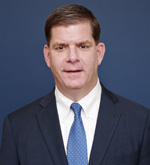
martin_j_walshNAIOP Massachusetts was proud to support yesterday’s inaugural events welcoming Boston’s 54th Mayor, Martin J. Walsh. The day was filled with inspirational speeches, musical performances and hope for the future.

During his inaugural address at Boston College, Mayor Walsh outlined his priorities including creating jobs, improving public safety, ending gun violence, and strengthening Boston’s schools.

NAIOP looks forward to working with Mayor Walsh and his team on the many issues affecting the commercial real estate industry and economic development overall. Among other things, NAIOP will provide input on the proposed changes to the Boston Redevelopment Authority, the need for more affordable and middle-income housing, and improved workforce training programs.

Congratulations Mayor Walsh!

Climate Change Preparedness: A Shared Responsibility

Climate change can have significant impacts affecting the overall economy; directly, by damaging structures, and indirectly, by compromising transportation systems, communications, and utilities. An increasing number of extreme weather events and future sea level rise may lead to more frequent and extensive flooding along the coast and inland waterways.  In response, local and state agencies, building owners, lenders, insurance underwriters, and tenants are now considering how to prepare for and respond to such events.

NAIOP has developed guiding principles regarding climate change preparedness and the commercial real estate industry:

  • Preparing for storm related events should be a shared responsibility between the public and private sectors. The primary role for city and state governments should be to ensure the continuity and protection of public infrastructure and public safety. (Having a “climate change proof” building in the middle of a flooded neighborhood, without power or adequate transportation, provides no real public or private benefit.)  Stakeholders should be at the table with state and local decision makers early on in the process to prioritize short-term and long-term public and private responses.
  • Best Management Practices developed in other cities should be shared among public and private sector stakeholders, and their applicability to the Commonwealth should be carefully considered.
  • Not all properties will be affected by climate change in the same way. Owners should have the flexibility to make decisions based on the needs of the individual properties, ownership, tenancy, and product type. Tenants will have varying expectations for building accessibility during and after severe weather events. (e.g., Institutional owners, such as hospitals, may be more likely to make significant investments in order to prevent a shutdown of any kind, while commercial offices may not need the same investments since a safe shutdown and simple return to service would be sufficient).
  • Both costs and risks need to be evaluated by the ownership when considering climate change-related investments or upgrades to buildings, as well as regulatory changes (e.g., if the costs are high and the risks are low, owners cannot be expected to incur unsustainable expenses that result in uncompetitive rents).
  • A combination of incentives and regulatory flexibility may be needed to make the investments in storm preparedness measures viable for the commercial real estate industry (e.g., Zoning changes that would allow for increased building heights, exceptions from gross floor area calculations, or allowing fuel tanks to be stored on a floor above the basement.)
  • The real estate industry, through the actions of owners, investors, lenders, and insurance carriers, will lead to appropriate property preparation and responses to existing and projected weather trends. Regulatory mandates from the government are not the best way to address this issue, because they inappropriately assume industry inaction, and lack the necessary flexibility to accommodate building and site specific variables.

This is an important issue, but the solution should not be aimed solely at commercial building owners.  If we are all affected by the challenges, we should all be doing our part to protect our residents and businesses.

State Adopts New Energy Code

On Tuesday, the Board of Building Regulations & Standards (BBRS) voted to adopt the latest version of the International Energy Conservation Code (IECC), making Massachusetts one of the first states in the nation to have it take effect statewide. This change represents a 20% increase in energy efficiency over the current statewide energy code. Under the Green Communities Act, the Massachusetts state energy code must be updated within one year of any revision to the IECC, so there was a statutory requirement to adopt this code.

The IECC is widely recognized as one of the most energy efficient codes. There is no question there are significant costs and design impacts associated with this code change. The IECC 2012 is approximately equal to the energy efficiency requirements of the stretch energy code, now in place in 131 communities in Massachusetts. Because of the Green Communities Act, Massachusetts will continually be updating its energy code to ensure it has the most energy efficient requirements in the nation.

Yesterday, the Legislature held a hearing on several bills addressing the concept of local option codes. NAIOP strongly opposes such codes, including the stretch energy code. Given that Massachusetts is required to have a very aggressive and energy efficient statewide code, NAIOP does not believe there is a need for a stretch energy code that would go beyond the latest version of the IECC. NAIOP testified in support of legislation that would ensure the IECC would be the energy code for all communities in Massachusetts. It would create one uniform, statewide energy code. By discontinuing the use of two or more energy codes for the state, it eliminates confusion for local building inspectors who are responsible for safely enforcing such codes. The legislation also clarifies that communities could be designated as Green Communities, and eligible for the grants associated with such a designation, by adopting this code. Most importantly, rather than having different requirements in different communities, it puts all communities on a level playing field – helping to ensure the Commonwealth’s competitiveness.

NAIOP will be hosting a special program on the energy code changes later this year and we will continue to push for one, statewide energy code.

NAIOP Testifies on Energy Disclosure Ordinance

On March 28th, I testified on Mayor Menino’s proposed Energy Disclosure Ordinance before Boston City Council’s Committee on Government Operations.  Neither of the two major real estate trade associations were asked to be involved in the development of this ordinance.  After it had been developed, NAIOP submitted detailed comments in October on a draft summary of the ordinance.  Unfortunately, none of our recommendations were incorporated in the final version that went out for public comment in February.

Brian Swett, Boston’s Chief of Environment & Energy, testified at the hearing in support of the ordinance along with representatives from other cities that have energy disclosure programs in place.  They agreed that because of these programs owners were better able to make investment decisions for their properties once they had information about their tenants’ energy use.  Interestingly, no one explained the value (if any) of publicly disclosing this information (as is required under the current draft ordinance).  While some property owners did testify in support of the program, many others expressed serious concerns with what was proposed.

During my testimony, I offered the following four critical changes to the ordinance:

 1.      Utility companies should be required to obtain tenant energy data and the reporting requirements should be delayed until such a system is in place.
In many buildings, owners do not have access to the energy data for separately metered tenants.  NAIOP believes that the utility companies should be responsible for submitting this data to building owners, and the reporting requirements should be postponed until such a system is in place.  Furthermore, utilities should provide such information to building owners no later than 4 months prior to the first reporting deadline to ensure adequate time for compliance.

 2.      Multifamily properties should not be included in the ordinance.
As currently drafted, this program would be very difficult to implement for multifamily property owners, due partly to the fact that the Energy Star Portfolio Manager tool is not designed to adequately measure multifamily properties.  Like many of the other cities that have adopted similar energy disclosure requirements, we believe that Boston should not include multifamily properties in the ordinance.  However, if the City chooses to require them to comply, the reporting dates should be delayed by two years.  Furthermore, owners should not be required to comply until a tested and proven tool for this product type is developed with input from an industry advisory committee.

 3.      Involve landlords & owners in determining the disclosure strategy and allow for changes to the program before publicizing data.
Given the significant impact such a rating could have on individual buildings, property managers and landlords must be involved in determining how such information would be made public.  Several other cities that have required energy disclosure allowed for a one year trial where the energy data was reported, but was not available to the public.

 4.     Involve NAIOP, other industry groups, and property managers & building owners in developing regulations and overseeing the program’s implementation.
Much of this program will be left to interpretation by those developing the regulations.  We urged the City to formally include representatives from multiple industry groups representing retail, residential, lab, and office space, as well as individual property managers and building owners on the regulatory task force.

A vote on the ordinance is required by April 25.  The Chair of the Committee, Councilor Matt O’Malley, has indicated that he will be scheduling a working session in the near future to discuss potential modifications to the ordinance.  NAIOP looks forward to participating in the working session. If the City Council votes favorably on this ordinance, we are hopeful that our comments and those of the vast majority that testified will be included in the final language.

NAIOP Pursues Ambitious Government Affairs Agenda in 2013

The following appeared in the February 24, 2013 edition of Banker & Tradesman:

Cranes are once again dotting the landscape.  Boston, Cambridge and the suburbs are bustling with new economic development opportunities featuring office, retail, residential, lab, and mixed use projects.  Absorption rates are up and previously proposed developments are seeing new life.  The commercial real estate industry in Massachusetts is alive and well.  Through its government affairs efforts, NAIOP Massachusetts, the Commercial Real Estate Development Association, worked diligently in 2012 to stimulate the industry’s recovery.  Increasing predictability and eliminating red tape were top priorities. Advocacy-sm

As an example, NAIOP strongly supported the Jobs Bill, An Act Relative to Infrastructure Investment, Enhanced Competitiveness & Economic Growth in the Commonwealth, which was signed into law in August.  The law included many of NAIOP’s top legislative priorities including an extension of the Permit Extension Act.  Permits and approvals in effect at any time between August 15, 2008 and August 15, 2012 were extended by four years.  This affected all properties: commercial, housing, business expansions, universities, hospitals, and infrastructure projects.  The bill also made important improvements to District Improvement Financing and the Infrastructure Investment Incentive (I-cubed) program.  In addition, it created a new Local Infrastructure Development Program that provides developers and municipalities with a new tool for leveraging private funding to finance critical infrastructure projects.  The bill was the result of a close collaborative effort by the House, Senate, the Governor’s economic team, and the business community.

Looking ahead, NAIOP is gearing up for an action packed year.  The 2013 – 2014 legislative session kicked off in January and NAIOP filed numerous bills affecting the development, ownership, management, and financing of office, lab, industrial, multifamily, and retail space in Massachusetts.

A top priority for NAIOP is the extension of the Brownfields Tax Credit, which is set to expire this summer if no legislative action is taken.  This tax credit is a proven success.  It protects public health by providing an incentive to clean up contaminated land and redevelop formerly blighted sites into economically vibrant properties.  However, developers need certainty and predictability – especially when making long-term investments.  Without swift action by the Legislature to renew this tax credit, many new projects will not move forward.

NAIOP will continue to advocate for reform of the Facilities of Public Accommodation requirements under Chapter 91, the law governing waterfront development.  Existing law requires virtually all of the ground floor of a waterfront building to be accessible by the public.  This requirement results in countless vacant and underused spaces.  NAIOP’s bill would create more flexibility for ground floor uses, while continuing to create public access to the waterfront.

NAIOP will also pursue legislation that would create a single, uniform statewide energy code.  The bill would ensure Massachusetts remains a leader in energy efficiency while creating a level playing field for all communities.  Building on that concept, NAIOP will also be focused on climate change preparedness.  Given the impact of recent storms, the industry must be prepared for more frequent and severe weather events.  Practical steps are needed to shield existing properties and infrastructure from irreparable damage.  The Commonwealth’s economic survival is at stake.

On the regulatory front, NAIOP will continue to support the Patrick Administration’s massive, top-to-bottom regulatory review for all state agencies. NAIOP was part of the Business Regulatory Review Advisory Committee that recommended which regulations should be rescinded, modified, and or made more consistent with a national model or standard.  Earlier this year, Governor Patrick announced that 446 sets of regulations had been reviewed, leading to 286 opportunities for reform.  NAIOP looks forward to the continued implementation of this effort.  The Massachusetts Department of Environmental Protection is expected to finalize and implement 21 regulatory reforms in the coming weeks.  Also supported by NAIOP, the reforms will make a substantial improvement on the cost and time expended by the regulated community, without diminishing environmental protection.

While Massachusetts is doing well compared to the rest of the nation, the Commonwealth’s recovery is still fragile.  In 2013, NAIOP will continue to urge legislators and regulators to do all they can to ensure Massachusetts retains its competitive advantage.

Governor Patrick signs Jobs Bill into law

The “Jobs Bill” – An Act Relative to Infrastructure Investment, Enhanced Competitiveness & Economic Growth in the Commonwealth – was signed into law August 7, 2012 by Governor Patrick.

As I was quoted in the Governor’s press release: “This bill is the result of a close collaborative effort by the House, Senate, Governor’s economic team, and the business community. Although the Commonwealth has fared better than most of the country, this wide-ranging bill creates a welcoming environment for innovation and growth. Combined with the ongoing, system-wide regulatory review process, Massachusetts continues to be attractive for business expansion.”

A summary of the various sections of the bill is available for review.  NAIOP is most pleased with the extension of the Permit Extension Act (Section 173 of Chapter 240 of the Acts of 2010).  Permits in effect or existence at any time between August 15, 2008  and August 15, 2012 will be extended by a total of 4 years (an addition of two years to the previous extension and four years for permits issued during the past two years). The extension will preserve state and local permitting decisions, allowing permitted projects to move forward without costly and time consuming delays to reissue permits. This impacts  all properties: commercial, housing, business expansions, universities, hospitals, and infrastructure projects.

In addition, the bill creates a new Local Infrastructure Development Program (Chapter 23L) that gives municipalities another tool for leveraging private funding to finance infrastructure improvements that are needed to support economic growth. It would fund infrastructure for homeowners and commercial projects without using local or state funds.  This is strictly a local municipal option to assist property owners who desire to finance infrastructure (e.g. roads, water, sewer, alternative energy, etc.)  The MassDevelopment-issued bonds would be secured and paid back by betterment liens on the benefited real estate.

Another win is the expansion of the successful I-cubed (Infrastructure Investment Incentive) program, which increases the number of projects per community from two to three. It also increases the available funding for the program from $250 million to $325 million.  It will add parking garages to the definition of public infrastructure improvements, and will include the taxes generated from construction jobs and purchases as part of the calculation for new state tax revenues.  I-cubed, which originally passed in 2006, was designed to finance significant new public infrastructure improvements necessary to support major new private development.

The Act will also streamline the current District Improvement Financing (DIF) program, by eliminating the required EACC review of DIF districts and development plans, which will make the program more accessible to cities and towns.

Although the Governor did veto the Brownfields tax credit extension, we are confident that the internal review of this program will result in its extension prior to its expiration a year from now.

This fall, NAIOP will be presenting a special Governmental Affairs educational seminar on this important economic development bill, as well as an update on the many regulatory changes occurring throughout the Administration’s various Departments. Keep an eye out for details!