
Unknown's avatar

About Tamara Small

Tamara serves as the CEO for NAIOP Massachusetts.

Good to Great: Creating Workforce Housing

BakerPolitoCoverThe following is our weekly excerpt from NAIOP’s report, Good to Great: Recommendations for the Baker Polito Administration. The report is the result of significant input from NAIOP members and focuses on a wide range of ideas – big and small – affecting the Executive Office of Housing & Economic Development (EOHED), the Executive Office of Energy & Environmental Affairs (EOEEA) and transportation (MassDOT). Each week will cover a different recommendation. Comments are encouraged!

EOHED: Creating Workforce Housing

The Commonwealth’s economy depends on its ability to attract and retain a talented workforce. Massachusetts has one of the highest housing costs in the nation – a significant barrier for talent recruitment and retention. This is a supply problem due, in part, to a shortage of single family and multi-family housing. Lengthy and unpredictable local permitting, combined with high land and construction labor costs, put new housing out of reach of many of the state’s working families.

Massachusetts communities have some of the strictest zoning in the region, with large minimum lot sizes, restrictions limiting multi-family housing, and unworkable cluster zoning ordinances. Communities have tightened permitting, making it harder to build and meet the demand for housing, in general, and moderately priced and affordable units, in particular. Zoning requirements have become more onerous with local rules and special by-laws, making the development process longer and more unpredictable. Currently, there is a serious lack of permits issued for housing for families.

Therefore, NAIOP suggests that the Baker Polito Administration and EOHED work to increase the production of a wide range of housing types through the implementation of a plan that allows for the construction of family-friendly apartment housing as well as smaller, denser, affordable, single family starter homes. The plan should eliminate barriers to housing production and provide new ways of meeting the existing need for workforce housing by addressing the following (among other things):

  • Expand Chapter 40S to Address School Budget Challenges: The most frequent argument used to oppose apartment construction is the burden it will put on local school budgets. That is not always the case. Although Chapter 40S has been adopted to help offset the cost of student education for projects developed under Chapter 40R, it should be expanded to incentivize and assist those communities that would substantially increase their school-age population through new housing development of any kind. An important place to start would be to include Ch. 40B projects under this school “reimbursement” program, removing one of the objections to affordable housing projects.
  • Encourage Production of Starter Homes: There is a serious lack of moderately priced single family homes (starter homes) for many working households. A goal should be set to encourage cities and towns to establish zoning districts that permit the construction of a modest number of small, single family homes that are affordable for middle-income families. “Starter Home” zoning districts could be established in the most appropriate locations for these new neighborhoods. Incentives could include qualifying for Chapter 40S funds, assistance grants, and an increase in local aid. To keep the land cost per unit down, density bonuses would be needed for this type of housing, with the requirement that the scale of the homes be smaller (e.g. 1,500 square feet.)
Good to Great: Recommendations for the Baker Polito Administration

BakerPolitoCoverDuring the first week of January, NAIOP Massachusetts provided the Baker- Polito Administration (including select cabinet secretaries and commissioners) with the report, Good to Great: Recommendations for the Baker Polito Administration. The report is the result of significant input from NAIOP members and focuses on a wide range of ideas – big and small – affecting the Executive Office of Housing & Economic Development (EOHED), the Executive Office of Energy & Environmental Affairs (EOEEA) and transportation (MassDOT).

Over the course of the next few months, we will highlight one recommendation per week on this blog. Comments are encouraged! NAIOP looks forward to working with the new Administration to implement these recommendations and find new ways to encourage economic growth in Massachusetts.

EOHED: Establishing Economic Priorities & Initiatives
The Secretary of Housing & Economic Development should be the empowered advocate for the business community, both within the Cabinet and externally. Nearly all policies and regulations have an impact on the business community – including the businesses that are already located in Massachusetts, as well as those relocating to the Commonwealth. NAIOP urges the Baker Polito Administration to make the Secretary of Housing & Economic Development the vocal advocate for business interests through the following initiatives:

  • Work closely with the leading business trade groups to ensure the state is providing the kind of incentives and programs needed to foster broad-based growth, not simply those favored by the Administration (i.e., don’t pick winners, make decisions based on need).
  • Expand and strengthen the Regulatory Reform Initiative created in 2012, an Administration-wide regulatory reevaluation for all state agencies. Start by appointing a Regulatory Ombudsman and consider freezing any policies or regulations approved in the final 60 days of 2014.
  • Simplify the administration of all of the state’s business incentives and consolidate economic development agencies. The Baker Polito Administration should examine the current list of economic development agencies and quasi-publics and determine if there should be some consolidation. In addition, incentives should be coordinated and streamlined – too many agencies are overseeing incentives right now, resulting in confusion and missed opportunities for businesses.
  • Identify opportunities for privatization and public-private partnerships. There are numerous opportunities for privatization (e.g., transportation, water infrastructure, etc.) However, the “Pacheco” law makes it virtually impossible to actually do any of these. The Baker Polito Administration should consider a targeted “pilot” program to break through this problem, with EOHED taking a lead in advocating for such a concept.
  • Create incentive packages for start-ups. Most of the net job growth in the country is attributable to companies in operation five years or less. Many states are aggressively looking to attract and nurture start-ups (e.g. New York’s startup.ny.gov). Massachusetts, led by EOHED and working with organizations like the Cambridge Innovation Center, should consider strategies that provide the necessary ecosystem for start-ups within Massachusetts to thrive and grow into profitable companies. Concepts like “LabCentral,” a shared laboratory space designed as a launch-pad for high potential life sciences and biotech start-ups, could be expanded to most any of the industries in the state offering the space and resources start-ups need.
  • Identify ways to build on the Commonwealth’s innovation economy to strengthen and improve government services, while better serving the business community. Massachusetts leads the way in innovation. The many start-ups and globally recognized institutions like MIT and Harvard are an untapped resource for state government. Possible opportunities may exist for apps or innovation companies to improve services for Massachusetts residents and businesses.

Coakley Discusses Issues at NAIOP/AIM/Denterlein Forum

This post was written by Christopher Geehern and originally appeared on the AIM Business Insider Blog.

Attorney General and Democratic candidate for governor Martha Coakley outlined her opinions about health-care cost control, economic development and other issues this morning during a forum sponsored by AIM, Denterlein and NAIOP Massachusetts.

It was the first of a series of conversations that the three organizations are hosting with the major gubernatorial candidates. Coakley shared her views in an interview format with former news anchor and current Denterlein advisor R.D. Sahl.

The objective is to allow employers to review each candidate’s positions on important issues. AIM posted a video from a portion of today’s event.

Republican candidate Charlie Baker will appear next Monday, May 12, at 7:30 a.m. at the UMass Club in Boston. Democratic candidate and current State Treasurer Steven Grossman will speak on Monday, May 19 in the same location.

NAIOP members are welcome to attend the two remaining sessions, though seating is limited. Please make your reservations by contacting Nicole Iannucci at niannucci@denterlein.com or by calling 617-482-0042.

A New Day for Boston: NAIOP Welcomes Mayor Walsh

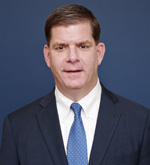
martin_j_walshNAIOP Massachusetts was proud to support yesterday’s inaugural events welcoming Boston’s 54th Mayor, Martin J. Walsh. The day was filled with inspirational speeches, musical performances and hope for the future.

During his inaugural address at Boston College, Mayor Walsh outlined his priorities including creating jobs, improving public safety, ending gun violence, and strengthening Boston’s schools.

NAIOP looks forward to working with Mayor Walsh and his team on the many issues affecting the commercial real estate industry and economic development overall. Among other things, NAIOP will provide input on the proposed changes to the Boston Redevelopment Authority, the need for more affordable and middle-income housing, and improved workforce training programs.

Congratulations Mayor Walsh!

State Adopts New Energy Code

On Tuesday, the Board of Building Regulations & Standards (BBRS) voted to adopt the latest version of the International Energy Conservation Code (IECC), making Massachusetts one of the first states in the nation to have it take effect statewide. This change represents a 20% increase in energy efficiency over the current statewide energy code. Under the Green Communities Act, the Massachusetts state energy code must be updated within one year of any revision to the IECC, so there was a statutory requirement to adopt this code.

The IECC is widely recognized as one of the most energy efficient codes. There is no question there are significant costs and design impacts associated with this code change. The IECC 2012 is approximately equal to the energy efficiency requirements of the stretch energy code, now in place in 131 communities in Massachusetts. Because of the Green Communities Act, Massachusetts will continually be updating its energy code to ensure it has the most energy efficient requirements in the nation.

Yesterday, the Legislature held a hearing on several bills addressing the concept of local option codes. NAIOP strongly opposes such codes, including the stretch energy code. Given that Massachusetts is required to have a very aggressive and energy efficient statewide code, NAIOP does not believe there is a need for a stretch energy code that would go beyond the latest version of the IECC. NAIOP testified in support of legislation that would ensure the IECC would be the energy code for all communities in Massachusetts. It would create one uniform, statewide energy code. By discontinuing the use of two or more energy codes for the state, it eliminates confusion for local building inspectors who are responsible for safely enforcing such codes. The legislation also clarifies that communities could be designated as Green Communities, and eligible for the grants associated with such a designation, by adopting this code. Most importantly, rather than having different requirements in different communities, it puts all communities on a level playing field – helping to ensure the Commonwealth’s competitiveness.

NAIOP will be hosting a special program on the energy code changes later this year and we will continue to push for one, statewide energy code.

NAIOP Pursues Ambitious Government Affairs Agenda in 2013

The following appeared in the February 24, 2013 edition of Banker & Tradesman:

Cranes are once again dotting the landscape.  Boston, Cambridge and the suburbs are bustling with new economic development opportunities featuring office, retail, residential, lab, and mixed use projects.  Absorption rates are up and previously proposed developments are seeing new life.  The commercial real estate industry in Massachusetts is alive and well.  Through its government affairs efforts, NAIOP Massachusetts, the Commercial Real Estate Development Association, worked diligently in 2012 to stimulate the industry’s recovery.  Increasing predictability and eliminating red tape were top priorities. Advocacy-sm

As an example, NAIOP strongly supported the Jobs Bill, An Act Relative to Infrastructure Investment, Enhanced Competitiveness & Economic Growth in the Commonwealth, which was signed into law in August.  The law included many of NAIOP’s top legislative priorities including an extension of the Permit Extension Act.  Permits and approvals in effect at any time between August 15, 2008 and August 15, 2012 were extended by four years.  This affected all properties: commercial, housing, business expansions, universities, hospitals, and infrastructure projects.  The bill also made important improvements to District Improvement Financing and the Infrastructure Investment Incentive (I-cubed) program.  In addition, it created a new Local Infrastructure Development Program that provides developers and municipalities with a new tool for leveraging private funding to finance critical infrastructure projects.  The bill was the result of a close collaborative effort by the House, Senate, the Governor’s economic team, and the business community.

Looking ahead, NAIOP is gearing up for an action packed year.  The 2013 – 2014 legislative session kicked off in January and NAIOP filed numerous bills affecting the development, ownership, management, and financing of office, lab, industrial, multifamily, and retail space in Massachusetts.

A top priority for NAIOP is the extension of the Brownfields Tax Credit, which is set to expire this summer if no legislative action is taken.  This tax credit is a proven success.  It protects public health by providing an incentive to clean up contaminated land and redevelop formerly blighted sites into economically vibrant properties.  However, developers need certainty and predictability – especially when making long-term investments.  Without swift action by the Legislature to renew this tax credit, many new projects will not move forward.

NAIOP will continue to advocate for reform of the Facilities of Public Accommodation requirements under Chapter 91, the law governing waterfront development.  Existing law requires virtually all of the ground floor of a waterfront building to be accessible by the public.  This requirement results in countless vacant and underused spaces.  NAIOP’s bill would create more flexibility for ground floor uses, while continuing to create public access to the waterfront.

NAIOP will also pursue legislation that would create a single, uniform statewide energy code.  The bill would ensure Massachusetts remains a leader in energy efficiency while creating a level playing field for all communities.  Building on that concept, NAIOP will also be focused on climate change preparedness.  Given the impact of recent storms, the industry must be prepared for more frequent and severe weather events.  Practical steps are needed to shield existing properties and infrastructure from irreparable damage.  The Commonwealth’s economic survival is at stake.

On the regulatory front, NAIOP will continue to support the Patrick Administration’s massive, top-to-bottom regulatory review for all state agencies. NAIOP was part of the Business Regulatory Review Advisory Committee that recommended which regulations should be rescinded, modified, and or made more consistent with a national model or standard.  Earlier this year, Governor Patrick announced that 446 sets of regulations had been reviewed, leading to 286 opportunities for reform.  NAIOP looks forward to the continued implementation of this effort.  The Massachusetts Department of Environmental Protection is expected to finalize and implement 21 regulatory reforms in the coming weeks.  Also supported by NAIOP, the reforms will make a substantial improvement on the cost and time expended by the regulated community, without diminishing environmental protection.

While Massachusetts is doing well compared to the rest of the nation, the Commonwealth’s recovery is still fragile.  In 2013, NAIOP will continue to urge legislators and regulators to do all they can to ensure Massachusetts retains its competitive advantage.

Stretch Code Changes Have Developers Seeing Red, Not Green

This article appeared in the May 28, 2012 edition of Banker & Tradesman.

“Green building” is a term that can be broadly defined. For some, it may mean building a LEED Platinum building. For others, it could be installing water and energy saving measures. There is no question, however, that most developers are more conscious of green building practices. The question is how to encourage this movement? The industry believes the market should be allowed to lead the way when it comes to green building. Mandates imposed by the government requiring specific technologies or energy efficiency measures are not the most effective way to get there. They will only increase costs and slow development of all building types.

The Stretch Energy Code mandate passed in 2009 is one example of government’s attempt to promote energy efficiency. This local option code applies to both residential and commercial buildings. More than 100 communities have adopted it to date. Under the Stretch Energy Code, commercial buildings are required to meet higher energy efficiency standards – approximately 20 percent more than the current statewide energy code.

In 2012, the statewide energy code, as required under the Green Communities Act passed in 2008, will be updated to comply with the more energy efficient International Energy Conservation Code (IECC 2012) – an energy efficiency increase of approximately 20 percent over existing standards. Massachusetts will be leading the way by adopting this new energy code (only two other states have adopted the IECC 2012 to date). Furthermore, the statewide energy code must be updated within one year of any revision to the IECC – contributing to the commonwealth’s current position as the national leader in energy efficiency.

Change Is Coming

However, a change is being proposed to the Stretch Energy Code that will jeopardize our recent, modest economic recovery. In June, the Massachusetts Department of Energy Resources (DOER) is planning to propose a 15 percent increase to the current Stretch Energy Code (to take effect when the IECC 2012 is adopted for the rest of the state). In other words, the new Stretch Code would require buildings to be 35 percent more energy efficient than the current statewide code. Such a change would increase the cost of the construction and maintenance of residential and commercial buildings. Current rents, even in traditionally high rent communities, would be challenged to cover the increased costs associated with such projects. In addition, the change would dramatically alter project design, affecting their marketability to tenants.

Many communities chose to adopt the Stretch Energy Code in order to qualify as a Green Community. By earning this designation, they became eligible for grant money that could be used to make energy efficient upgrades in public buildings. Green Communities are required to minimize the life cycle costs of buildings by utilizing “energy efficiency, water conservation and other renewable or alternative energy technologies,” but this requirement could be achieved by adopting the IECC 2012 rather than the Stretch Energy Code.

Most of these Stretch Code communities believed that once the statewide building code was upgraded to the IECC 2012, the entire state would be on a level playing field. Unfortunately, many cities and towns are now discovering that the changes to the stretch code will take effect automatically in all Stretch Code communities without any vote by City Council or Town Meeting. Furthermore, many Stretch Code communities were not aware that they would continually be subject to an automatic upgrade every three years.

Given the impact this extreme proposal will have on housing production, jobs and a very fragile economic recovery, it is time to recognize its unintended consequences. Maintaining the commonwealth’s lead in energy efficiency should not come with a price tag we cannot afford – the loss of jobs and economic growth.

NAIOP Supports Jobs Bill

Today I testified at a legislative hearing  in support of An Act Relative to Infrastructure Investment, Enhanced Competitiveness & Economic Growth in the Commonwealth (H. 4093), a comprehensive piece of legislation designed to stimulate job growth in Massachusetts. Speaker of the House Robert DeLeo and Representative Joseph Wagner, House Chairman of the Joint Committee on Economic Development and Emerging Technologies, released the bill earlier this week.  NAIOP applauds the House and the Patrick Administration for crafting a bill that will encourage economic development in Massachusetts.

We are just starting to see the beginning of a recovery for the real estate industry, but it is still a very fragile time.  This bill creates the necessary tools to ensure economic development projects can move forward. It builds on the comprehensive Economic Development Plan released by the Patrick Administration earlier this year.  It expands and strengthens I-cubed, preserves important state and local permitting decisions, and encourages the cleanup and redevelopment of brownfield sites. We strongly support its passage before the close of the legislative session on July 31.

The bill includes many NAIOP-supported concepts including:

  • Creates a new Local Infrastructure Development Program that gives municipalities a new tool for leveraging private funding to finance infrastructure improvements needed to support economic development projects. The program allows infrastructure projects to move forward without the use of public funding.
  • Expands the successful I-cubed (Infrastructure Investment Incentive) program and increases the number of projects per community from two to four. It also increases the available funding for the program.
  • Extends the Brownfield Tax Credit from 2013 to 2015, encouraging the redevelopment of brownfield sites by bringing more certainty and predictability to the process.
  • Streamlines District Improvement Financing (DIF) by eliminating the required EACC review of DIF districts and development plans, making the program more accessible to cities and towns.

The full text of the bill and a section-by-section summary of the bill are now available.

Retainage Legislation Increases Risks and Hinders Development

Yesterday I testified before the Legislature’s Joint Committee on Labor & Workforce Development in opposition to legislation that would make substantial changes to contractor retainage payments. NAIOP believes that the legislation, An Act Relative to Fair Retainage Payments in Private Construction – H. 1401 and S. 956, would hinder economic development at a time when the construction and development sectors are still reeling from the worst recession in a generation.

The bill sets an outside limit of 5% (reduced from the standard practice of 10%) for approved contract payments that can be withheld for retainage.  Retainage is traditionally held until final completion of a project in order to incentivize prompt completion of the project and guarantee that the contract is fulfilled as agreed.  The legislation changes the final payment date to within 30 days after “substantial completion” (a phrase that is unclear and likely to be the source of many legal battles) and it would create enormous uncertainty for developers.

Very few development projects are moving forward.  Financing, especially for larger projects, is extremely difficult to obtain.  Anything that increases uncertainty could make financing a project even more difficult.

Finally, though supported by the Associated Subcontractors of Massachusetts, this legislation could actually have a negative impact on the smaller, less established subcontractors.  Without adequate retainage, developers will not be willing to take a risk with a lesser known subcontractor.  As a result, the legislation would give an advantage to the bigger subcontractors.

Given the current economy, the Commonwealth should be doing all it can to encourage job creation, not find ways to slow or hinder economic development.  Though we do not think the legislation has a high likelihood of passage, we will continue to advocate against it through the remainder of the legislative session.

Shadow Bill Would Kill Jobs and Economic Development

Yesterday, I testified before the Legislature’s Joint Committee on the Environment, Natural Resources & Agriculture in opposition to H. 1169, An Act Protecting Sunlight in Certain Public Parks.  If passed, the bill would eliminate local authority to permit certain projects and would prohibit any structure that could create a new shadow on certain properties in Cambridge and Boston.

The bill would add shadows affecting Charles River Esplanade, Christopher Columbus Park, Commonwealth Avenue Mall, Copley Square Park, Back Bay Fens, and Magazine Beach Park to provisions of a law which currently exist protecting Boston Common and Lynn Common.  It would create legislative restrictions on certain developments which could not be varied locally.

There is no question that if this bill is passed, the economic impact would be staggering. At the hearing yesterday, there was compelling testimony from labor interests regarding the number of desperately needed jobs that would be lost.  Some of the most well respected developers in the city, Robert Beal and Ronald Druker, testified in opposition to the bill along with representatives from academic institutions, the Mass Municipal Association, the Boston Redevelopment Authority, and business groups.  Due to the height restrictions that would be imposed as a result of this bill, many development projects would not be viable. Lost development means lost jobs, lost property taxes, a reduction of affordable housing funds, and less housing.  The bill would affect areas including the Longwood Medical Area – a neighborhood where city and business leaders have long sought (and succeeded in) attracting research, academic institutions, and economic development.

Furthermore, there are no provisions for variances or relief from the legislation.  Therefore, the effect of the bill would be to make development projects subject to state legislative restrictions which could only be changed by additional legislation, completely removing local authority to permit these projects.  It ignores the extensive review process now in place at the local level.  For example, the City of Boston requires in-depth wind, shadow and environmental analyses as part of its review process for large projects.

Finally, it’s important to note that density, which this bill significantly limits, combined with proper planning, are what cities need to thrive and grow.  Density is smart growth and it makes economic sense.

NAIOP will continue to advocate against passage of this bill and we’ll keep NAIOP members posted on this issue as the legislative session draws to a close in July.